Key Takeaways
- Data is redefining how logistics moves and thinks.
- AI turns every supply chain decision into prediction.
- Real-time visibility builds smarter, stronger networks.
- Analytics makes sustainability a performance advantage.
- Foresight, not speed, defines the next era of logistics.
- In 2026, competitive advantage belongs to supply chains that think ahead—not move faster.
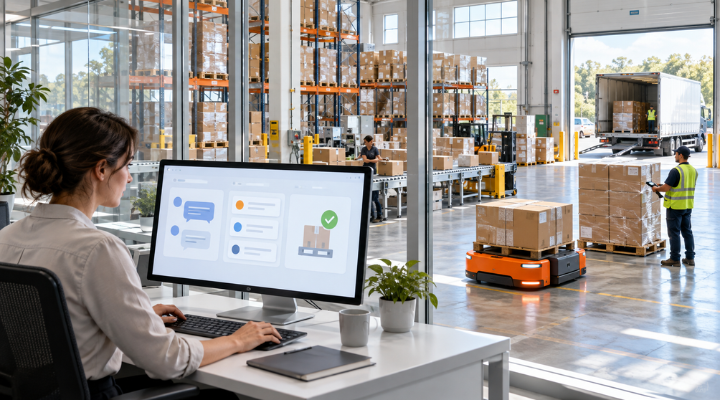
In the buzzing heart of a modern fulfilment centre, thousands of robots' glide across the floor, lifting shelves and routing orders to the exact loading dock in seconds. Packages are boxed, labelled, and dispatched almost as soon as a customer clicks “Buy Now.” Behind this seamless choreography isn’t luck; it’s logistics analytics.
Data-driven supply chain leaders use advanced analytics to predict inventory needs, minimize delivery times, optimize warehouse operations, and ensure near-perfect delivery performance. And they’re not alone. Across industries, organizations are using analytics to turn complex logistics networks into efficient, responsive machines.
According to research, companies that invest in logistics analytics see profit increases of up to 20% compared to those that rely on manual decisions.
In 2026, the global supply chain is smarter, faster, and more unpredictable than ever. Whether you’re managing a global fleet or a regional warehouse, the path to resilience and efficiency runs through data.
As we move into 2026, logistics is evolving faster than ever. Volatility is constant, customer expectations are rising, and global supply networks are becoming more intricate. The only constant advantage? Intelligence powered by analytics.
What are Logistics Analytics and Why It Matters in 2026
Logistics analytics means collecting, analysing, and acting on operational data to make better supply-chain decisions. It draws data from:
- Transport Management Systems (TMS)
- Warehouse Management Systems (WMS)
- ERP
- IoT sensors
- GPS trackers
- Customer feedback to transform raw data into clear insights.
Types of Logistics Analytics

Historically, logistics analytics fell into four categories:
- Descriptive analytics explains what happened.
- Diagnostic analytics uncovers why it happened.
- Predictive analytics forecasts what will happen next.
- Prescriptive analytics recommends what to do about it.
Today, these categories are converging into AI-driven systems that learn, adapt, and respond in real time. Modern Platforms can unify these layers, turning millions of data points into intelligent, automated decisions.
According to Gartner, by 2026, 50% of logistics companies will use advanced analytics to optimize transportation networks. In other words, the age of reactive supply chains is over.
Top Benefits of Logistics Analytics (With Evidence)
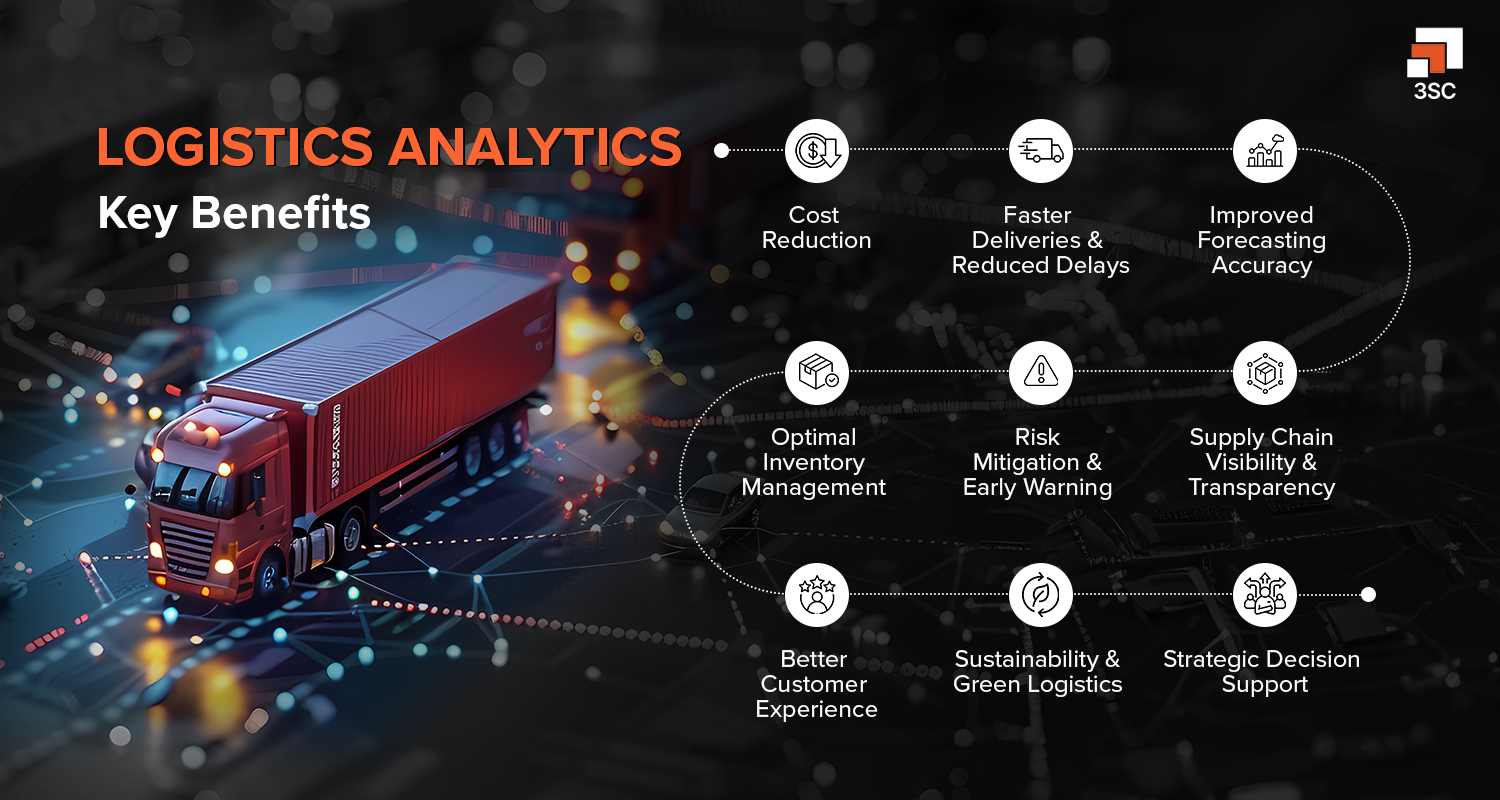
Here’s how logistics analytics is reshaping global supply chains. Each benefit is grounded in real-world data and evidence:
1. Cost Reduction
By analysing all cost drivers like transportation, warehousing, handling, returns, analytics can surface inefficiencies (e.g., underutilized lanes, slow handling) and suggest optimizations. It identifies hidden inefficiencies such as: Empty miles, poor truck utilization, slow-moving SKUs, inefficient routes, etc.
For example, one industry report notes that companies using AI and analytics in supply chains can reduce logistics costs by 5% to 20%.
2. Faster Deliveries & Reduced Delays
With real-time routing, congestion prediction, and dynamic re-optimization, analytics ensures the “right truck at the right time.” This trims idle time, avoids unexpected delays, and shrinks delivery windows, a direct boost to service levels.
3. Improved Forecasting Accuracy
Better demand forecasting helps avoid stockouts and overstocking alike. The Institute of Business Forecasting reports that a 15% improvement in forecast accuracy can raise pre-tax profit by 3% or more. Whereas McKinsey estimates improving forecast accuracy by 10–20% can yield a 2–3% increase in revenue.
4. Optimal Inventory Management
Predictive demand models and lead-time forecasts allow teams to maintain “just enough” inventory reducing capital tied up in stock while ensuring service levels. Analytics can dynamically adjust safety stock based on volatility and risk.
5. Risk Mitigation & Early Warning
Analytics helps detect early warning signals, supplier delays, port congestion, weather events, machine anomalies so logistics teams can reroute, reschedule, or trigger contingency plans before issues amplify.
6. Supply Chain Visibility & Transparency
Dashboards show a unified “map” of every shipment, warehouse, and transit leg, letting teams dig into trouble spots (e.g. which hub is chronically delayed). This visibility enables data-driven interventions and faster root-cause diagnosis.
7. Better Customer Experience
Analytics enables more precise delivery estimates, fewer delays, and fewer stockouts. That consistency builds trust. Many logistics organizations report improved retention and satisfaction metrics once analytics capabilities are embedded
8. Sustainability & Green Logistics
Analytics models carbon emissions per route (considering distance, load factor, fuel type) and helps select lower-emission carriers and more efficient routes. Through these optimizations, firms have achieved ~15% reductions in GHG output in pilot cases. Additionally, digital twin approaches help test lower-carbon routing designs, which McKinsey has highlighted as a lever to reignite revenue and deepen supply-chain resilience.
9. Strategic Decision Support
At the leadership level, analytics enables “what-if” simulations opening a new warehouse, shifting lanes, adjusting tariffs and quantifies trade-offs. These insights lead to better capital allocation, smarter network design, and more confident long-term planning.
Top 7 Applications of Logistics Analytics
As logistics networks grow more complex, the role of analytics has shifted from simply tracking performance to orchestrating every decision from forecasting and routing to sustainability.
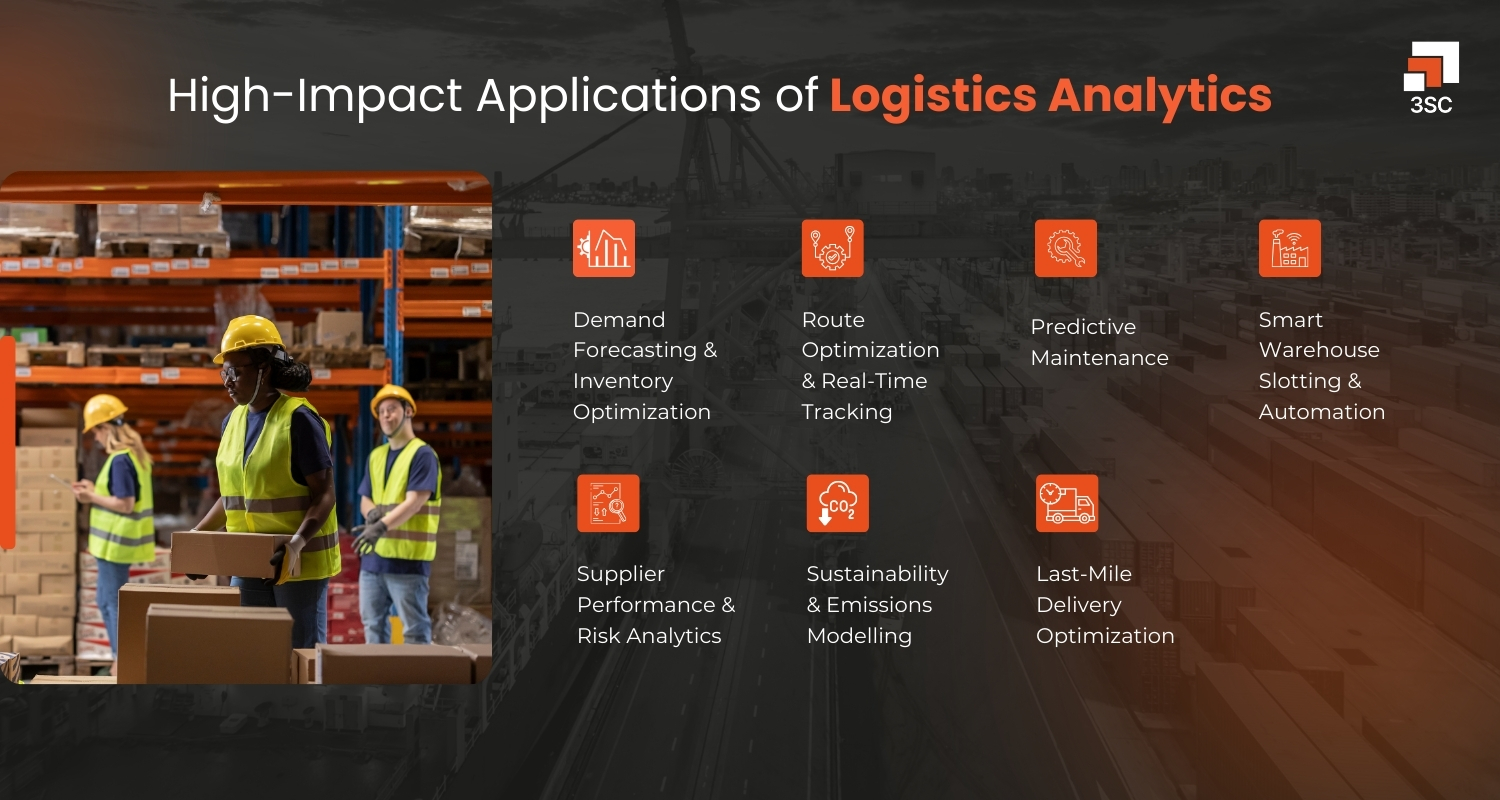
Here’s how the world’s smartest logistics teams are using analytics to stay ahead of disruption.
1. Demand Forecasting & Inventory Optimization
Imagine knowing exactly which warehouse will need which product weeks before orders arrive. That’s what modern forecasting models enable. They combine historical sales, promotions, weather data, and even local events to predict demand at the SKU-and-location level.
With that foresight, logistics teams can allocate stock efficiently, balance inventory between regions, and prevent both stockouts and overstocking. This predictive visibility reduces storage costs, minimizes waste, and improves cash flow all while keeping shelves stocked precisely when and where customers need them.
2. Route Optimization & Real-Time Tracking
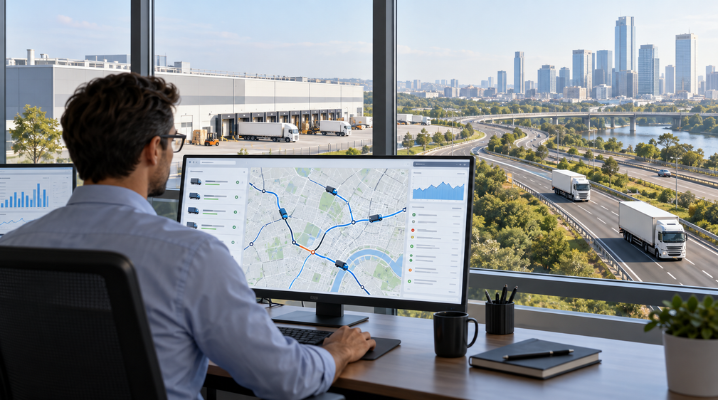
Every minute counts in logistics. One traffic jam or weather delay can ripple through hundreds of deliveries. Analytics solves this by bringing real-time intelligence to fleet routing. Models process data from GPS trackers, traffic sensors, and weather feeds to dynamically re-calculate the best path often while the driver is still on the road.
Instead of rigid, pre-set routes, dispatchers now have adaptive plans that evolve second by second. The result? Fewer empty miles, lower fuel costs, and on-time deliveries even when conditions change.
3. Predictive Maintenance
Breakdowns are costly, not just in repair bills but in lost time, missed SLAs, and damaged reputations. Predictive maintenance flips this narrative by using data from IoT sensors (measuring vibration, heat, or fluid levels) to anticipate failures before they happen.
4. Smart Warehouse Slotting & Automation
Inside a high-volume warehouse, every extra step a worker takes costs time and money. Analytics-driven slotting optimization solves this by constantly analysing order frequency, SKU velocity, and layout efficiency.
Robotics + analytics = dynamic layouts that adjust overnight.
Fast-moving items automatically shift closer to pick zones, while slower products migrate outward. With robotics and real-time analytics, warehouse layouts now adjust dynamically reshuffling inventory overnight to minimize picker travel.
5. Supplier Performance & Risk Analytics
A supply chain is only as strong as its weakest link. Analytics provides continuous visibility into supplier performance tracking metrics like on-time delivery, defect rates, and lead-time variability.
These insights allow procurement teams to benchmark suppliers, flag high-risk partners, and renegotiate underperforming contracts before issues escalate.
The payoff is a more resilient supply network and fewer unexpected disruptions downstream.
Companies using supplier analytics report up to 15% improvement in on-time delivery and stronger cost control across vendor portfolios.
6. Sustainability & Emissions Modelling
Sustainability is no longer optional; it’s a competitive advantage. Analytics plays a central role by calculating emissions at every stage: fuel type, route distance, load utilization, and handling processes.
This visibility lets logistics teams compare the true environmental and financial cost of each mode for example, road versus rail and test “what-if” scenarios to find greener routes.
Today, Digital twin simulations can model thousands of network variations to uncover the one that delivers the best balance of speed, cost, and carbon impact.
7. Last-Mile Delivery Optimization
Analytics transforms this challenge into an opportunity. By analysing delivery density, traffic conditions, and customer availability, models cluster deliveries intelligently and route drivers through the most efficient paths. Dynamic rerouting ensures flexibility for changing addresses, gated communities, or weather events keeping delivery promises intact.
The outcome is faster drop-offs, lower fuel usage, and a smoother customer experience, a clear win for both cost and loyalty.
Bringing It All Together
Each of these applications shows how data turns logistics from reactive to predictive and ultimately to autonomous.
From smarter routing and predictive maintenance to carbon-aware planning, analytics is no longer a back-office tool; it’s the control tower guiding the modern supply chain.
Challenges in Implementing Logistics Analytics (And How to Fix Them)
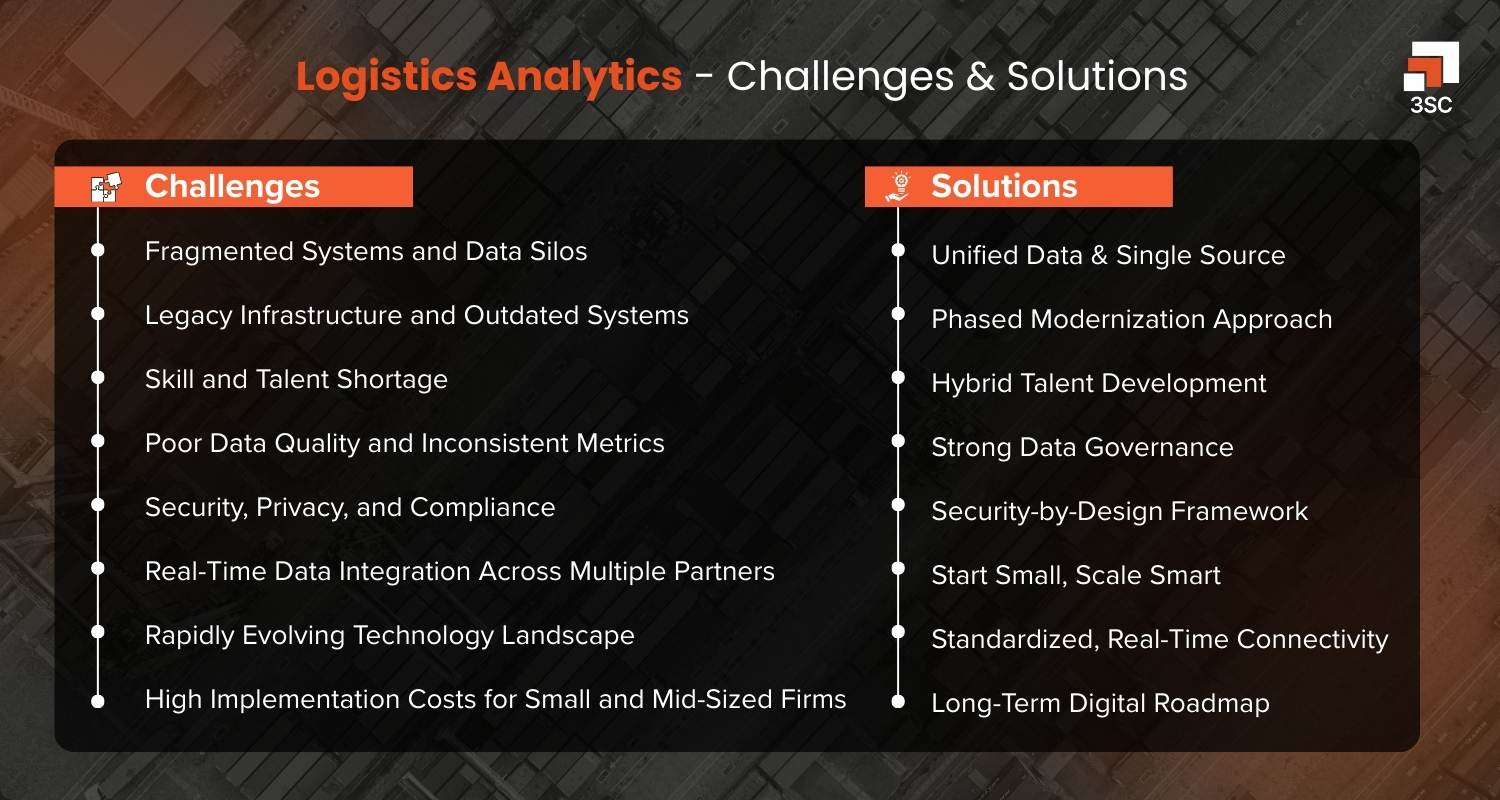
Even the most forward-thinking logistics leaders encounter roadblocks when rolling out analytics. The transformation isn’t just technical; it’s cultural and operational. Here are the most common challenges and the practical, proven solutions companies rely on to overcome them:
1. Fragmented Systems and Data Silos
Many logistics operations still rely on separate ERP, TMS, WMS, and CRM systems that don’t communicate efficiently. This fragmentation causes duplicated records, inconsistent KPIs, and slow decision-making. According to Gartner, nearly 70% of supply chain leaders cite data integration as a critical barrier to digital transformation.
The Solution:
Centralize data + create unified KPIs (dwell time, cost per shipment, delivery accuracy).
Unify all logistics data within a centralized warehouse or cloud repository. Standardize data exchange through secure APIs and microservices so that all platforms share the same definitions.
Define one “source of truth” for logistics KPIs such as cost per shipment, dwell time, and delivery accuracy. When data is connected, analytics insights become faster, cleaner, and more reliable.
2. Legacy Infrastructure and Outdated Systems
Many logistics firms still run on old, siloed systems that can’t handle real-time data or connect with modern tools like IoT and AI analytics. These legacy platforms slow decision-making, limit visibility, and increase maintenance costs. They also struggle with data integration and often lack strong security and compliance features.
The Solution:
Introduce integration layers → shift to cloud → adopt modular analytics.
To stay Competitive, companies should modernize in phases. Start by introducing integration layers that connect legacy environments with new analytics systems. Gradually move data workloads to flexible, cloud-based infrastructures.
Adopt modular analytics components that function independently from outdated cores. This “progressive renewal” minimizes downtime while enabling modernization at sustainable costs
3. Skill and Talent Shortage
The logistics sector lacks professionals skilled in both operations and data analytics, slowing adoption and innovation.
The Solution:
Cross-functional training + embedded data teams + self-service analytics tools.
Create cross-functional learning programs that develop hybrid talent, logisticians who understand data and analysts who understand operations. Embed data scientists within supply chain teams, establish internal training academies, and recruit graduates through partnerships with universities.
Empower non-technical staff with intuitive dashboards and self-service analytics to decentralize insights.
4. Poor Data Quality and Inconsistent Metrics
Inconsistent or incomplete data undermines predictive accuracy and trust. A recent study found that 81% of manufacturers and logistics operators report data quality issues that delay analytics initiatives.
The Solution:
Strong data governance + automated validation + master data management.
Implement strong data governance, define ownership, establish cleaning rules, and set quality KPIs. Use automated data pipelines for validation and anomaly detection.
Apply master data management principles to unify naming conventions, units, and formats across departments and partners. Reliable data builds confidence and leads to sharper analytics outcomes.
5. Security, Privacy, and Compliance
Supply chain analytics relies on sensitive operational data from driver telematics to shipment details. With evolving global data protection regulations, maintaining strong privacy and security practices is essential.
The Solution:
Zero-trust architecture + encryption + role-based access + automated audits.
Adopt a security-by-design approach: encrypt all data in transit and at rest, enforce strict role-based access, and monitor data flows continuously. Automate compliance checks to ensure privacy policies, data retention, and residency rules are upheld. Regular audits and zero-trust architecture keep sensitive logistics data protected and regulatory-ready.
6. High Implementation Costs for Small and Mid-Sized Firms
Smaller logistics firms often view analytics as too costly or complex, but delaying adoption increases inefficiency and risk.
The Solution:
Start small implement analytics for specific, high-ROI areas such as delivery performance or route efficiency. Use scalable, pay-as-you-grow analytics platforms to minimize upfront costs.
Once benefits become clear, expand scope to include inventory, procurement, and customer experience analytics.
7. Real-Time Data Integration Across Multiple Partners
Modern supply chains involve numerous partners using different systems and data standards, making seamless, real-time visibility challenging.
The Solution:
Standardized APIs + event-driven architecture + real-time data exchange.
Adopt standardized integration frameworks and event-driven architectures that synchronize updates instantly across all stakeholders.
Use unified data standards to ensure compatibility and accuracy throughout the network.
These measures create a cohesive “control tower” perspective that provides end-to-end visibility and rapid responsiveness.
8. Rapidly Evolving Technology Landscape
Technology in logistics evolves faster than most organizations can keep up with, leading to confusion and slow adoption.
The Solution:
Long-term digital roadmap + supply chain CoE + interoperable systems.
Develop a long-term digital roadmap grounded in clear business outcomes visibility, forecasting, automation rather than chasing every new technology trend. Create an internal Centre of Excellence to oversee analytics governance, evaluate tools, and manage adoption pace.
Prioritize open, interoperable technologies that can evolve with minimal disruption.
The main barriers to logistics analytics are organizational, not technical. When companies fix data quality, integration, and skills gaps, analytics evolves from a reporting tool into a true engine of resilience and competitive advantage.
Future Trends: What Logistics Analytics Will Look Like by 2030
1. Autonomous Logistics Planning Ecosystems
Agentic AI will independently plan routes, allocate fleets, and adjust inventory in real time.
2. Zero-Touch Warehousing
“Self-healing” warehouses powered by predictive robotics and AI.
3. Digital Twin-as-a-Standard
Every supply chain will have a fully simulated twin for testing scenarios.
4. AI-Driven Emission Pricing
Dynamic carbon pricing will impact routing and carrier selection.
5. Predictive Customer Experience Models
Analytics will predict customer need before they place orders.
Conclusion: Logistics Analytics Is the New Compass of Global Supply Chains
Logistics analytics has become the compass guiding modern logistics. It turns uncertainty into foresight, chaos into coordination, and operations into opportunities. Companies that embrace it aren’t just improving efficiency; they’re reshaping how global supply chains think and move.
The real power lies in acting before the problem exists, in predicting rather than reacting. Logistics leaders who master analytics will drive faster deliveries, lower emissions, and smarter decisions, building systems that learn, adapt, and evolve.
The organizations leading in 2026 will be the ones that:
- Predict disruptions
- Automate decisions
- Accelerate deliveries
- Lower emissions
- Delight customers
- Build resilient, responsive networks
In the end, success in logistics won’t depend on size or speed alone, but on intelligence, the ability to see tomorrow, today.
Transform Your Supply Chain with 3SC’s AI-Driven Intelligence
At 3SC, we help businesses move beyond traditional planning with AI-driven insights, end-to-end visibility, and collaborative supply chain solutions. From reducing risks to improving agility and resilience, our expertise ensures your supply chain isn’t just prepared for today’s challenges but ready to thrive in tomorrow’s uncertainty.
Turn your supply chain into a strategic advantage—not a cost centre.
Discover how 3SC can transform your supply chain into a strategic advantage- 3SC | Leading AI-Driven Supply Chain Solutions & Analytics Provider
Recommended Readings
- Agentic AI Workflows
- Seasonal Logistics Challenges
- What is Demand Planning Software?
- Demand Planning vs Supply Planning
- What is New Product Introduction?
- What is Supply Chain Planning?
- Objectives of Production Planning & Control
- What is Demand Planning in the Supply Chain?
- Contract Management in Supply Chain
- Demand Forecasting for New Products