Key Takeaways
- Seasonal success starts with early planning, accurate forecasting, and quick decisions.
- Balancing inventory, suppliers, and workforce ensures agility during demand peaks.
- Real-time visibility and collaboration keep operations steady under pressure.
- Tracking metrics like turnover and stockouts measures true seasonal performance.
- When planning, people, and technology align, peak seasons become an advantage.
Every retail business can relate to the feeling in that moment when the calendar turns and demand suddenly explodes. Where the warm months bring outdoor essentials and the year-end brings gifting frenzies. Orders rise, timelines shrink, and every process in your supply chain is tested at once.
If your planning isn’t sharp enough, it’s easy to slip from efficiency into chaos. But when your supply chain runs like a well-tuned engine, these same peaks can become your biggest growth opportunity. Managing seasonal logistics isn’t just about keeping up with volume it’s about staying in control, keeping customers happy, and using data and foresight to turn uncertainty into advantage.
Let’s look at the biggest challenges businesses face during seasonal peaks, and the strategies that help you stay one step ahead.
Key Challenges and Strategies in Managing Seasonal Logistics
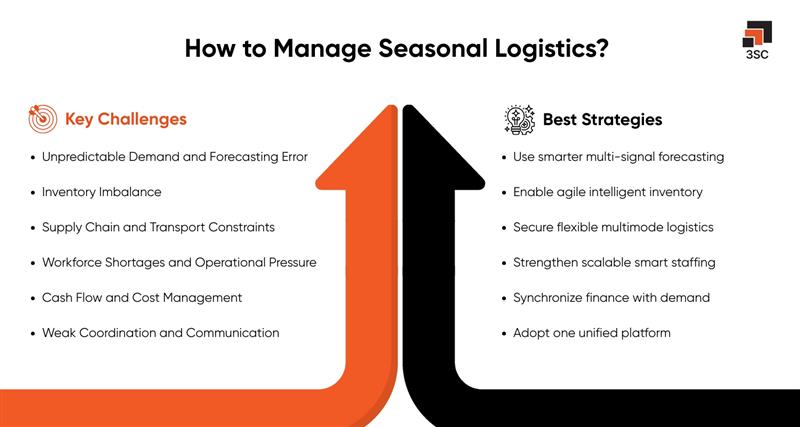
1. Unpredictable Demand and Forecasting Errors
If you’ve ever watched a product go viral overnight or seen weather ruin a forecast, you know how unpredictable seasonal demand can be. One miscalculation can leave your shelves empty or your warehouses overflowing.
Your strategy:
Build forecasting models that blend history with real-world signals, social trends, weather data, holidays, and even marketing plans. A well thought and comprehensive Seasonal demand forecasting can reduce inventory costs by up to 35% and cut logistics expenses by nearly 15%. Get sales, marketing, and finance working on a single forecast instead of three different versions. And don’t just predict one outcome: plan for multiple. That way, when demand shifts, you can adapt rather than panic.
|| Related Read - How to Predict Customer Demand and Streamline Inventory
2. Inventory Imbalance
Balancing inventory during peaks is a tightrope act. Too much stock means markdowns and storage costs; too little means missed revenue and disappointed customers.
Your strategy:
Use intelligent inventory systems that update stock data in real time. Keep replenishment cycles agile, just-in-time for predictable products, and just-in-case buffers for items prone to sudden spikes. As the season shifts, move inventory across regions instead of letting it sit. Smart redistribution keeps your products where demand actually exists.
3. Supply Chain and Transport Constraints
You might have planned the perfect forecast but when capacity tightens and ports get crowded, everything can slow down. Seasonal pressure on logistics networks is real, and it can quickly ripple through your operations.
Your strategy:
Create flexibility before the pressure begins. Partner with multiple carriers and secure capacity early for your peak months. Keep alternate routes and modes ready sea for bulk, air for urgency, road for last-mile agility. Invest in real-time tracking systems that alert you when something’s off so you can reroute shipments before delays snowball.
4. Workforce Shortages and Operational Pressure
During peak months, your warehouses, fulfilment centers, and transport hubs feel the strain. More orders mean more hands but finding and training seasonal staff fast isn’t easy.
Your strategy:
Start recruiting earlier and use technology to scale faster. Short, focused onboarding sessions and digital training tools save time. Mix permanent and temporary staff to balance experience with flexibility. Reward accuracy and speed, not just volume, to keep morale high and errors low. A motivated team keeps your operations running smoothly even when volumes surge.
5. Cash Flow and Cost Management
The biggest mistake many retailers make is focusing only on sales while ignoring the financial timing behind them. Inventory and logistics investments start months before revenue does, and one delay or discount-heavy season can create a cash crunch.
Your strategy:
Forecast your finances with the same attention as your demand. Budget for early stock build-up and emergency logistics. Negotiate payment terms that give you breathing room and use data to prioritize top-margin products for promotion and replenishment. When cash flow and demand are in sync, the season becomes profitable, not painful.
6. Weak Coordination and Communication
During a peak, every team; procurement, logistics, finance, and operations need to move in lockstep. When information sits in silos, problems go unnoticed until they’re already expensive.
Your strategy:
Break down the walls. Use integrated digital platforms that give everyone like suppliers, carriers, and internal teams, a single view of Demand, inventory, and shipment status. Align on clear contingency plans so when a delay happens, every partner already knows what to do. Transparency builds speed and resilience.
How to Know if You’re Successfully Managing Seasonality
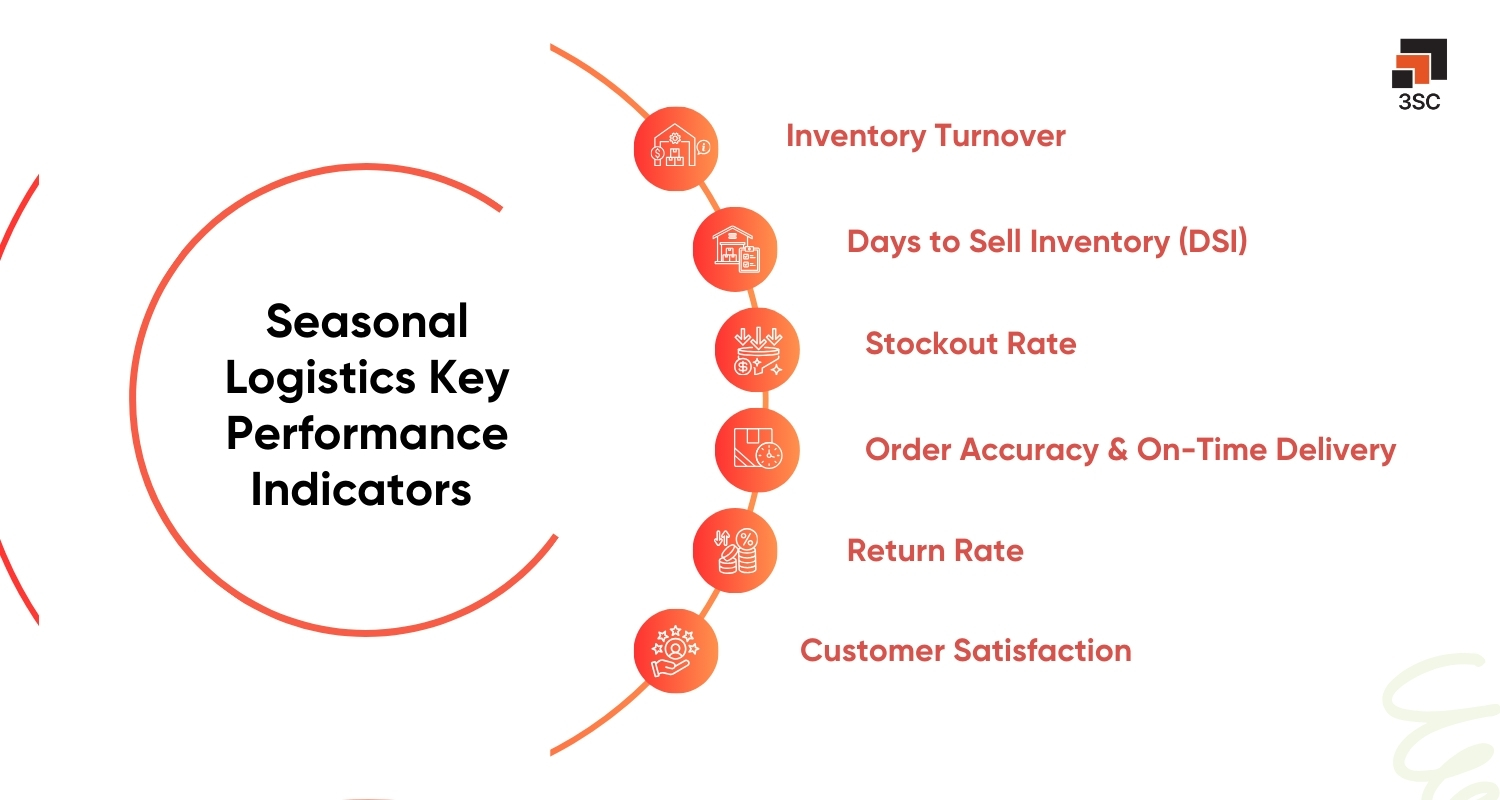
You can tell your seasonal logistics strategy is working when these key performance indicators move in the right direction:
1. Inventory Turnover
A strong turnover rate means products are selling and replenishing at a healthy pace, keeping your inventory lean and efficient. It shows that forecasting, purchasing, and sales are working in sync, and your capital isn’t locked in slow-moving stock.
2. Days to Sell Inventory (DSI)
A lower DSI indicates that products are flowing through your supply chain quickly, reducing storage and holding costs. It reflects how well your replenishment cycles match customer demand and how effectively you’re managing shelf life.
3. Stockout Rate
When stockouts remain low, it proves your planning and replenishment systems are responding accurately to real-time demand. This not only prevents lost sales but also keeps customer’s confidence high, even during heavy order periods.
4. Order Accuracy & On-Time Delivery
High order accuracy and reliable delivery performance show that your fulfilment operations are steady under pressure. It also signals strong visibility across your logistics network from warehouse to last mile.
5. Return Rate
Stable or improving return rates mean customers are receiving exactly what they expect in the right condition and timeframe. It reflects product quality, fulfilment precision, and alignment between your promise and delivery.
6. Customer Satisfaction
Positive post-season feedback and repeat purchases confirm that your logistics execution supports a seamless buying experience. When customers trust you to deliver consistently, your brand strengthens even in the busiest seasons.
When these indicators stay healthy, it’s a clear sign your supply chain isn’t just coping with the season; it’s performing at its best and building long-term resilience.
Conclusion
Seasonal logistics is a test of preparation, coordination, and adaptability. The retailers that perform best are those who plan early, use data to forecast demand, maintain flexible supply chains, and collaborate closely with their partners.
When planning, inventory, transportation, and people move in sync, the chaos of peak season turns into a competitive advantage. With the right strategy, every season no matter how intense, becomes an opportunity to deliver better, faster, and smarter.
Predict, Plan, and Perform Better with 3SC Demand AI
Seasonal peaks don’t have to be unpredictable. 3SC’s Demand AI uses advanced analytics, machine learning, and real-time data to forecast demand accurately, optimize inventory, and improve decision-making across your supply chain. Turn uncertainty into confidence, plan smarter, act faster, and deliver every season with precision.

Recommended For You