Key Takeaways
- AI is shifting from prompts to autonomous, self-learning workflows.
- Agentic systems remove delays through real-time, data-driven actions.
- Autonomy, adaptability, and learning power continuous optimization.
- The Profit Loop links speed, scale, and learning to drive margin.
- Real-world use cases show faster, smarter, more resilient operations.
- The future belongs to supply chains that think and act intelligently.
Today’s supply chain leaders stand at the threshold of a profound transformation: the leap from simple AI-driven prompts to fully autonomous, agentic workflows. For years, AI promised greater speed and insight but required human intervention to put its recommendations into motion, limiting the true potential of digital decision-making. Now, with agentic AI, autonomous systems sense data, plan responses, and act in real time, learning from each outcome and continuously improving efficiency and resilience.
This change matters because supply chains face relentless complexity and disruption. Traditional AI might flag a late shipment or a sudden demand spike, yet the final decisions (rerouting, reordering, or negotiation) still rested on human desks, introducing delays and increasing risk. Agentic AI flips the paradigm: proactive digital agents dynamically optimize everything from procurement and inventory to logistics and fulfilment, shrinking decision latency and amplifying business agility.
For supply chain leaders, embracing these agentic workflows isn’t just about automation, it’s about fundamentally redefining how value is created and protected in the face of uncertainty.
What Makes a Workflow “Agentic”?
An agentic workflow is an interconnected sequence of tasks executed predominantly by autonomous AI agents, which perceive data, make decisions, and act independently within predefined parameters. Unlike traditional workflows that follow fixed, rule-based processes and require continuous human oversight, agentic workflows operate with far greater autonomy.
They dynamically adapt to real-time data, learn from outcomes, and optimize operations continuously, enabling a more resilient and agile supply chain.
Agentic AI works through a few key capabilities that make supply chain tasks more automated and adaptive.
- Autonomy: AI agents operate without constant human supervision, executing tasks such as inventory monitoring, procurement, and logistics coordination.
- Adaptability: These systems respond to changing conditions like demand fluctuations or disruptions by adjusting actions in real-time.
- Planning and Reasoning: They break down complex processes into manageable steps, e.g., rerouting shipments or adjusting inventory thresholds, and choose the best strategies using AI models.
- Learning and Reflection: Through feedback loops, agents improve prediction accuracy and process efficiency over time, fostering continuous operation improvements.
Together, these capabilities turn supply chains into dynamic, self-optimizing systems. Every action feeds new insights back into the network, linking intelligence with execution and setting the stage for the Profit Loop, where speed, scale, and learning drive continuous value.
The Profit Loop: Speed → Scale → Learning
Every enterprise transformation ultimately converges on a simple yet powerful equation:
Profit = Intelligence × Execution.
Agentic workflows take this equation further by creating what can be called a Profit Loop, a self-reinforcing cycle where speed, scale, and continuous learning amplify one another. By combining intelligent decision-making with autonomous execution, organizations unlock a dynamic system that continuously adapts, optimizes, and accelerates value creation.
1. Speed
Supply chains often lose valuable time to manual interventions, when disruptions occur, teams must analyse, decide, and coordinate responses across multiple stakeholders. This human latency turns minor delays into costly slowdowns.
With autonomous systems, that lag disappears. Intelligent agents can instantly reroute shipments, reassign carriers, or adjust delivery slots the moment disruptions occur. These self-healing networks can reduce delay resolution times by up to 90%, enabling faster recovery and real-time responsiveness.
2. Scale
As global operations expand, decision complexity multiplies. Managing thousands of daily variables, orders, routes, suppliers, inventories, quickly exceeds human capacity, forcing teams to choose between accuracy and speed.
AI-driven automation changes that dynamic. Once deployed, digital agents work continuously across geographies, making micro-decisions in parallel. They coordinate logistics, monitor performance, and optimize resources around the clock, achieving scalability without expanding headcount or cost.
3. Learning
Conventional systems execute tasks but rarely improve over time. The result is a supply chain that reacts to problems instead of anticipating them.
Intelligent agents learn from every action they take. Each decision generates data that’s analysed to refine future choices, improving forecast accuracy, reducing disruptions, and creating adaptive, continuously improving planning cycles.
Measuring Impact
Organizations can quantify the value of agentic AI by tracking improvements across critical supply chain performance metrics. These metrics reveal how autonomy, speed, and intelligent decision-making translate into operational and financial gains:
1. Time-to-decision
How quickly the system can analyse data, recommend an action, and execute it. Agentic AI dramatically reduces this window, shifting from hours or days to minutes or seconds.
2. Exception resolution time
Measures the speed at which disruptions (delays, shortages, failures) are addressed. With autonomous agents resolving issues proactively, resolution times can drop by up to 90%.
3. Cost per order
Tracks the total cost of fulfilling an order across warehousing, transport, labour, and coordination. Agentic workflows lower this by automating tasks, optimizing routes, and reducing manual overhead.
4. Inventory carrying cost
Reflects the capital tied up in stock, storage, and obsolescence. With better forecasts and autonomous replenishment, companies maintain healthier inventory levels and reduce holding costs.
5. Fill rate and on-time delivery
Indicates service performance, the percentage of orders delivered in full and on schedule. By predicting risks early and acting instantly, agentic AI improves fulfilment reliability and customer satisfaction.
Use Cases
Since supply chains lie at the heart of enterprise operations, the impact of agentic workflows here is profound. Let’s explore five transformative use cases.
1. Predictive Logistics & Real-Time Routing
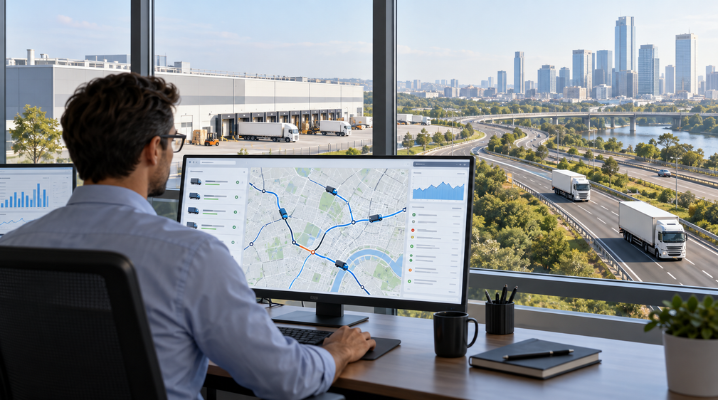
Agents constantly monitor weather, port congestion, and carrier performance.
When a delay occurs, they instantly reroute shipments or switch modes to meet SLAs.
Companies adopting AI-driven logistics see up to 30% reduction in transportation costs through autonomous routing.
2. Demand Forecasting & Inventory Optimization
Unlike static models, agentic systems ingest real-time data from POS, social trends, and macroeconomic indicators to continuously refine demand signals. This leads to adaptive replenishment, reducing both stockouts and excess inventory.
3. Procurement & Supplier Automation
Agents can autonomously evaluate suppliers, negotiate based on rules, and execute purchases while tracking performance metrics. Procurement agents can cut sourcing cycle times by over 50%, improving both compliance and agility.
4. Warehouse & Fulfilment Orchestration
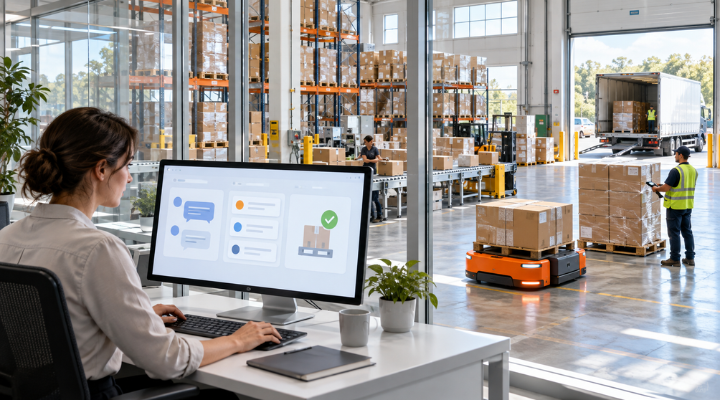
Agents coordinate robotic systems, manage pick-pack schedules, and align outbound logistics with demand priorities. Agentic warehouse operations improve throughput and reduce idle time through autonomous decision loops.
5. Self-Healing Networks & Resilience
When disruptions cascade, say, a raw material delay or transport strike, agents simulate alternate pathways and execute recovery automatically.
Each of these examples replaces slow, manual coordination with continuous, adaptive orchestration the foundation of true resilience.
Emerging Trends in Agentic AI Workflows
- Generative AI is now optimizing network design, continuously refining operational plans without human intervention, and generating synthetic data for risk scenarios, enabling planners to prepare proactively for rare disruptions and market shifts.
- AI-powered digital twins have transformed from static replicas to dynamic, real-time systems that simulate and optimize entire physical supply chains; these twins now autonomously implement optimizations and adjust production, inventory, and transportation strategies instantly as conditions change.
- Back-office automation driven by agentic AI is reducing manual error in invoice processing and purchase order management, allowing supply chain professionals to focus on strategic activities.
- Predictive maintenance harnesses IoT sensors and machine learning to anticipate equipment failures, automating repair schedules and parts procurement and minimizing process downtime.
Conclusion
The next era of supply chains won’t be defined by how much intelligence companies possess, but by how seamlessly that intelligence turns into action. Agentic workflows mark the inflection point between insight and impact, where decisions no longer wait for approval but flow continuously through adaptive, self-learning systems. This is where supply chains evolve from reactive networks into living ecosystems that anticipate change and respond with precision.
As digital agents begin to orchestrate logistics, procurement, and planning autonomously, enterprises move closer to true end-to-end agility. The organizations that lead this transformation will redefine competitiveness, not by cutting costs alone, but by building supply chains that think, adapt, and grow stronger with every disruption. The journey from prompts to profits is no longer a vision of the future; it’s the blueprint for resilient, intelligent enterprises ready to lead it.