
Key Takeaways
- Strategy fails without a real-time link to execution.
- The biggest gap lies between planning and execution.
- IOP connects plans to real-time decisions with visibility.
- Its four pillars keep execution aligned during disruptions.
- IOP turns execution into a strategic advantage.
Every organization has experienced that moment when everything looks aligned. The strategy is clear, the plans are in place, and the confidence across leadership is high. It feels like success is just a matter of execution. Everyone knows their role, the roadmap seems achievable, and there’s a shared belief that the hardest part is already behind them.
But then the reality steps in.
A supplier delay, a sudden demand spike, or an unexpected disruption that quickly compound and begin to challenge even the most well-structured plans. Teams start reacting, priorities shift, and execution drifts away from what was originally intended.
The issue is rarely the strategy itself. It’s the absence of a mechanism that keeps execution aligned when conditions change.
The Gap Between Planning and Execution
Most companies have invested heavily in modern planning capabilities. With time, they’ve moved from siloed decision-making to integrated frameworks like S&OP and IBP, bringing supply, demand, operations, and financial goals into a unified view. This has significantly improved alignment during the planning phase and created a shared direction across functions.
However, alignment at the planning stage does not automatically translate into alignment during execution. Once plans move beyond the boardroom and into daily operations, they encounter a continuous stream of decisions that need to be made in real time.
Execution is not a one-time rollout of a plan; it is an ongoing process of prioritization, trade-offs, and coordination across teams. These decisions often happen at different levels of the organization, under time pressure, and with incomplete information.
This is where the gap begins to emerge. While planning defines the direction, there is often no structured mechanism to guide how decisions should evolve once execution is underway.
A Gartner survey reveals that 71% of supply chain organizations have yet to build the capabilities needed to deliver on future performance, highlighting a persistent gap between planning intent and execution readiness.
Without a connecting layer, execution becomes fragmented. Teams act based on local priorities, decisions are made in isolation, and the broader strategic intent starts to dilute. Over time, this leads to misalignment, inefficiencies, and outcomes that diverge from what was originally planned.
While Integrated Business Planning (IBP) aligns organizations at a strategic and tactical level, and Sales & Operations Execution (S&OE) manages short-term execution, these operate on different horizons and cadences. What is often missing is a continuous layer that connects the two in real time, ensuring that strategic intent is maintained as execution evolves. This is precisely where Integrated Operations Planning (IOP) becomes critical.
Integrated Operations Planning: The Missing Link
Integrated Operations Planning (IOP), in supply chain management, acts as a real-time risk management layer. It is not just another planning process; it is the mechanism that ensures execution stays on track when the unexpected occurs.
IOP operates in the present, where disruptions are inevitable and often unplanned. Its core purpose is to ensure that when a sudden deviation arises, it is managed proactively rather than reactively. Instead of allowing execution to drift or become chaotic, IOP enables organizations to quickly assess the situation, evaluate possible responses, and take coordinated action.
Rather than forcing teams to follow a static plan, IOP provides the structure needed to absorb shocks and adapt in real time. It ensures that decisions are not made in isolation but are aligned across the organization, even under pressure.
By embedding risk management into day-to-day operations, IOP maintains stability during disruptions and ensures that execution continues smoothly while staying aligned with overall business objectives.
This is achieved through four critical capabilities that together enable organizations to manage uncertainty, mitigate risks, and execute with confidence.
[Related read - Why Brand-Level Planning Fails at the Store Level and How Integrated Planning Prevents It ]
The Pillars of Integrated Operations Planning
At the heart of Integrated Operations Planning are four core capabilities that enable organizations to respond dynamically while staying aligned with strategic and financial objectives.
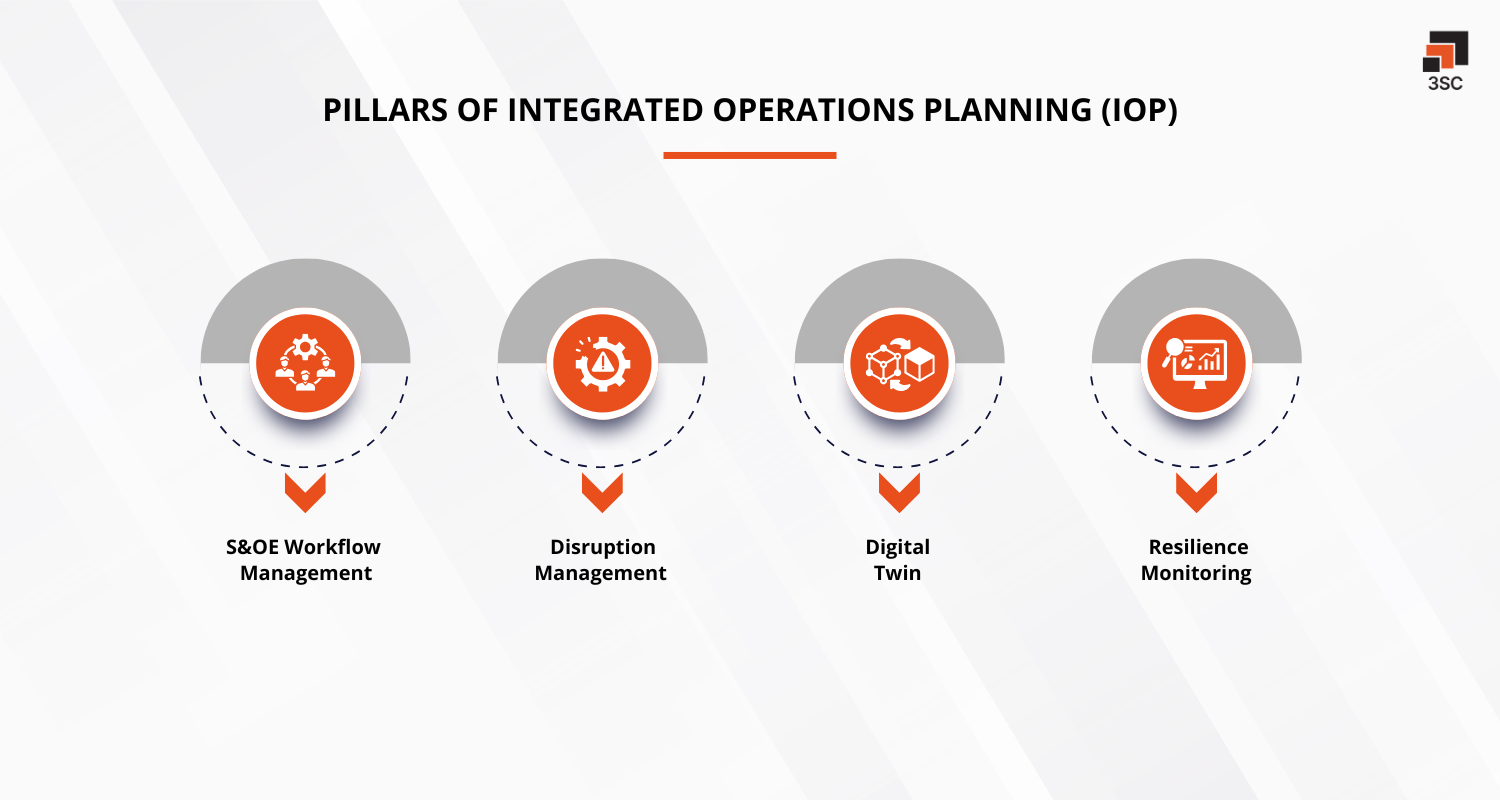
1. S&OE Workflow Management
One of the biggest challenges in execution is the lack of structure in how decisions are made and managed on a day-to-day basis. Issues arise constantly, but they are often handled through informal channels like emails, calls, or ad hoc meetings. This creates limited visibility into what decisions are being made, who owns them, and how they impact the broader supply chain.
Sales and Operations Execution (S&OE) workflow management brings discipline and structure to this environment.
Operating within a short-term, highly granular horizon, S&OE focuses on managing execution through a defined, repeatable process. It establishes clear workflows where disruptions, exceptions, and decision points are formally captured and tracked. Issues are prioritized based on business impact, ownership is clearly assigned, and resolution follows a coordinated path aligned with operational and financial goals.
This structured approach enables organizations to respond quickly to unplanned changes while maintaining control at a detailed level. More importantly, it ensures that decisions are not made in isolation but are evaluated in the context of the broader supply chain.
With time, this shifts execution from reactive firefighting to a more controlled, transparent, and orchestrated process.
2. Digital Twin
Effective execution depends on the ability to make fast, informed decisions in an environment filled with uncertainty. A key enabler of this capability within IOP is the digital twin, a dynamic, virtual representation of the organization’s end-to-end supply chain.
In traditional execution environments, decisions are often made under pressure with limited visibility into downstream consequences. Teams rely heavily on experience and fragmented data, which can result in inconsistent or suboptimal outcomes.
A digital twin addresses this challenge by integrating real-time and historical data across demand, supply, inventory, production, and logistics into a single, connected model. This model reflects current operating conditions and continuously updates as new information becomes available.
Using this foundation, organizations can simulate multiple scenarios before committing to a decision. For example, teams can evaluate the impact of reallocating inventory across regions, adjusting production schedules, expediting shipments, or prioritizing key customers during shortages. Each scenario can be assessed not just operationally, but also in terms of financial outcomes, service levels, and capacity utilization.
Beyond improving decision quality, the digital twin also strengthens cross-functional alignment. By providing a shared, transparent view of scenarios and outcomes, it enables stakeholders to evaluate trade-offs collectively and converge on decisions that are balanced and aligned with business priorities.
[Related read - Digital Twins vs. Static Supply Chain Models]
3. Resilience Monitoring
While disruption management focuses on responding effectively, resilience monitoring ensures that organizations are prepared before disruptions occur. It addresses a critical gap that is the lack of forward-looking risk visibility in day-to-day operations.
Most organizations are rich in historical data but lack structured mechanisms to interpret early warning signals. Leading indicators are not consistently tracked, gradual performance drift goes unnoticed, and risk assessments are often periodic rather than continuous. As a result, preventable disruptions repeat, early signals are missed, and teams remain stuck in reactive firefighting.
Resilience Monitoring shifts this approach from reaction to prevention. It continuously tracks leading indicators across the supply chain, using statistical and machine learning models to detect anomalies and emerging patterns. Instead of treating every signal equally, it applies intelligent filtering to distinguish meaningful risks from noise, reducing false alarms and improving focus.
As patterns emerge, risks are assessed through probability scoring and business impact estimation. This allows organizations to prioritize actions based on likelihood and severity, rather than reacting to issues only after they materialize. When risks cross defined thresholds, they are automatically escalated into disruption management workflows for coordinated response.
By learning from outcomes, the system enhances predictive accuracy and decision quality. This embeds prevention into execution, allowing organizations to anticipate risks, act early, and reduce disruptions.
4. Disruption Management
Disruptions are no longer occasional events; they are a constant reality in modern supply chains. The real challenge lies not in their occurrence, but in how effectively they are managed. In many organizations, disruptions are identified too late, evaluated in silos, and resolved through fragmented decisions, leading to misalignment and avoidable impact.
Integrated Operations Planning redefines this approach by turning disruption management into a structured, enterprise-wide capability. Rather than reacting to issues after they occur, organizations can detect, evaluate, and respond to disruptions in a coordinated and business-driven manner.
It is achieved through a clear, step-by-step process:
- Real-Time Risk Detection - Signals from across the supply chain are captured through a digital twin to identify risks and anomalies as they emerge.
- Business Impact Assessment - Disruptions are evaluated across revenue, cost, working capital, and service levels to ensure decisions are aligned with business priorities.
- Cross-Functional Scenario Evaluation - Multiple resolution paths such as inventory reallocation or production adjustments are assessed holistically to understand enterprise-wide impact.
- AI-Guided Decision Support - Explainable AI provides clear, data-driven recommendations to guide optimal decision-making and stakeholder alignment.
- Seamless Execution & Continuous Learning - Decisions are executed directly into systems, while outcomes are tracked to enable governance and drive root cause resolution.
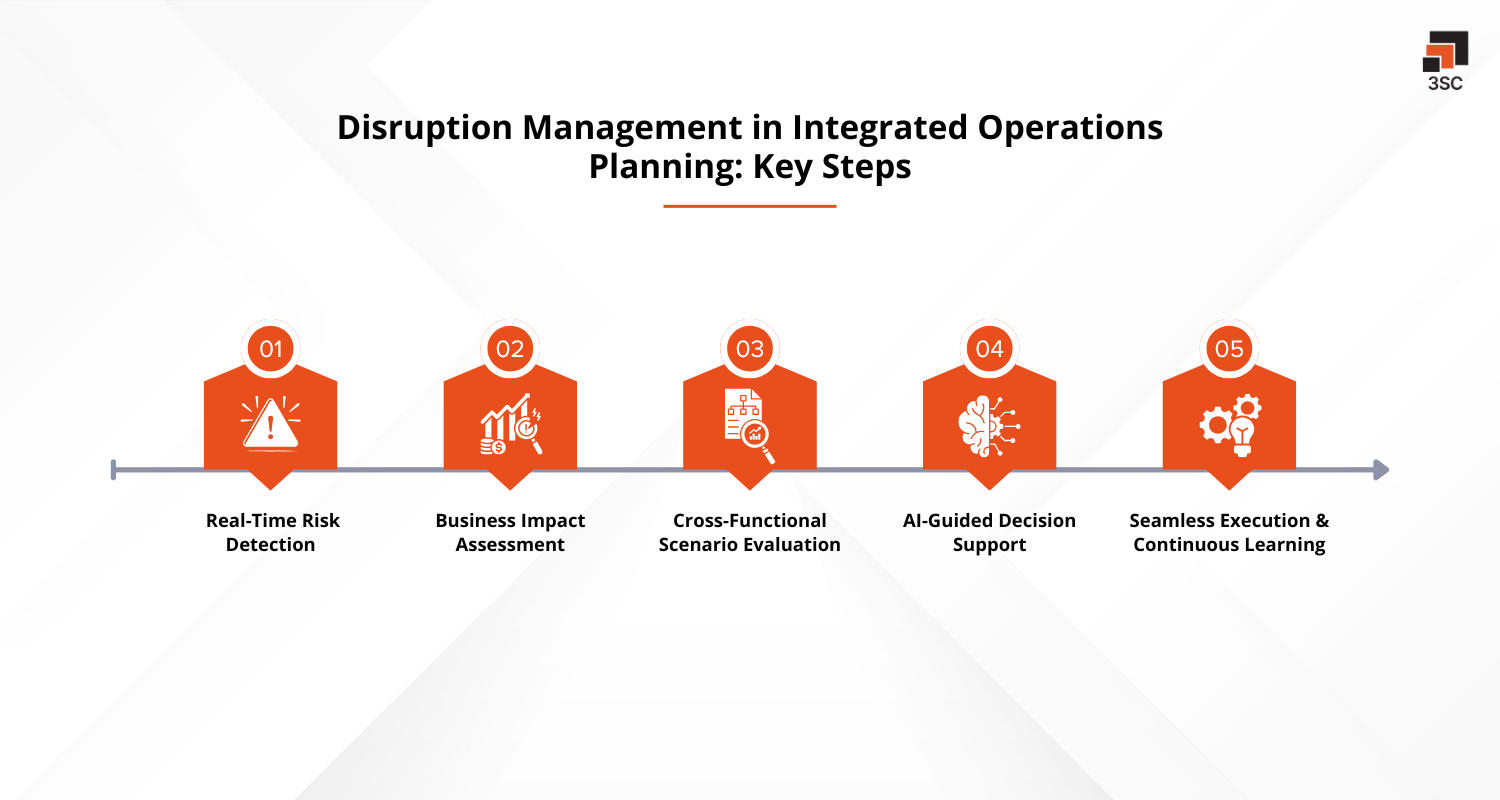
This approach ensures disruptions are managed through coordinated, enterprise-level decisions rather than fragmented, reactive responses.
Conclusion
When Integrated Operations Planning is fully implemented, execution begins to look very different. Decisions are faster, but also more informed. Teams are more agile, but also more aligned. Disruptions still occur, but they are handled with clarity, coordination, and purpose.
Most importantly, the gap between planning and execution begins to close.
Execution is no longer a phase that simply follows planning; it becomes a continuous, connected process that keeps the organization aligned with its strategy, even as conditions change. Plans are not something you try to protect; they become something you actively evolve.
This is where real value is created.
Because in today’s environment, success is not defined by how well you plan for a perfect scenario; it is defined by how effectively you respond when reality doesn’t follow the plan. Integrated Operations Planning makes that possible. It ensures that strategy is not lost in execution but continuously reinforced through it.
And ultimately, it transforms execution from a point of risk into a true source of competitive advantage.
Trending Read
- S&OP vs SIOP
- Scenario Planning vs Scenario Modelling
- Demand Planning vs Supply Planning
- Control Tower vs. Digital Twin
- Manual vs. Autonomous Supply Chain Orchestration