Key Takeaways
- AI is driving smarter, faster automotive supply chains.
- Collaboration is replacing silos across the value network.
- Sustainability has become a core competitive advantage.
- Electrification is reshaping the battery-first supply chain.
- Smart, autonomous logistics are defining the road to 2030.
Europe’s automotive supply chain has long struggled with fragmented systems, limited visibility, reactive rerouting, and rising operational costs. Minimal collaboration across Original Equipment Manufacturers (OEM), suppliers, and logistics partners made disruptions harder to manage, while manual, siloed tools slowed decision-making in an increasingly volatile environment.
As electrification accelerated and sustainability regulations tightened, these challenges intensified. The old operating model, efficient but inflexible, could no longer meet the demands of a rapidly changing industry. This pressure sparked a decisive shift.
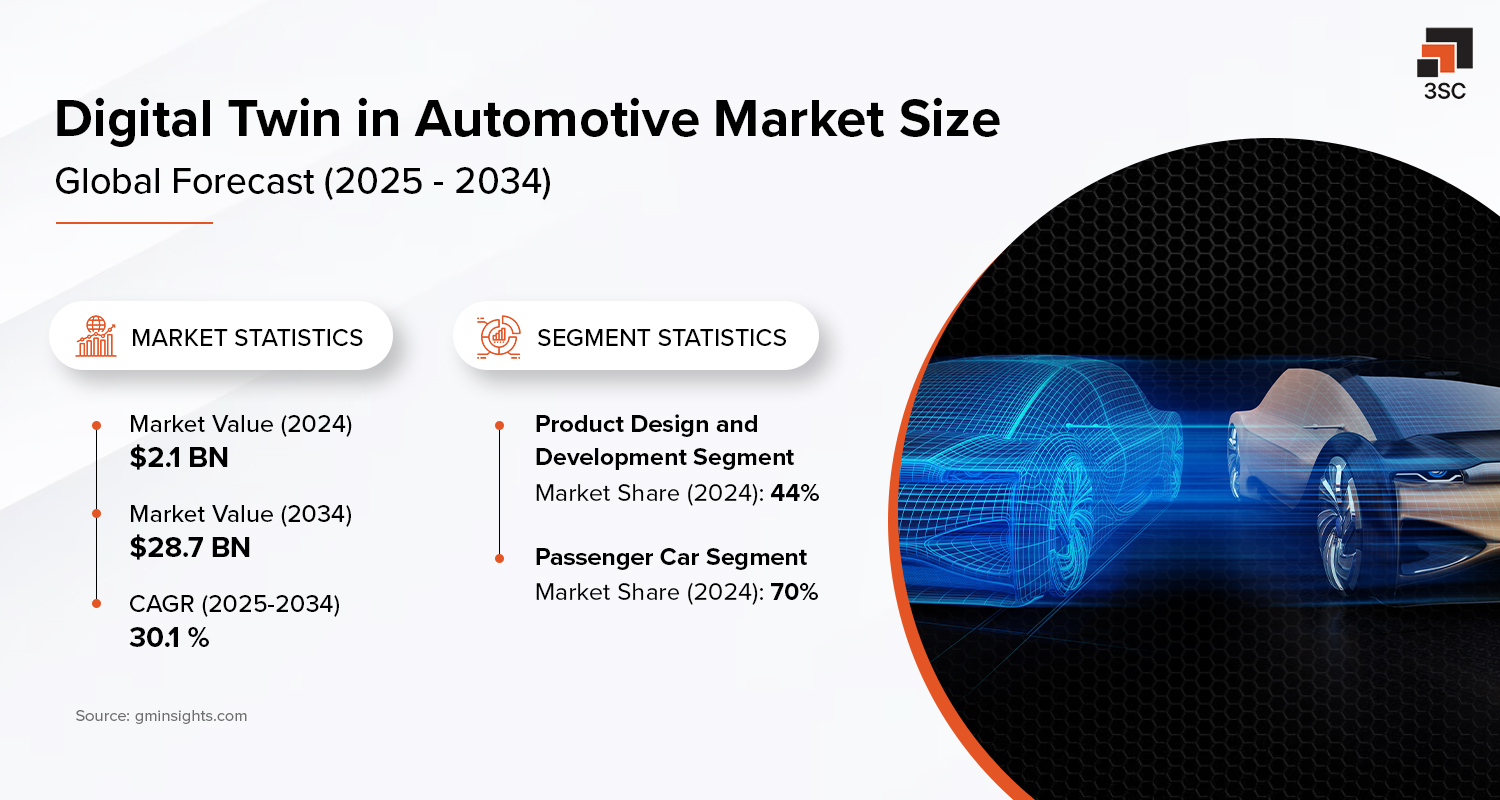
AI-driven planning, digital twins, multi-tier supplier visibility, connected logistics, and circular manufacturing have begun transforming Europe’s supply chain into a unified, data-driven, sustainability-focused ecosystem. The region has moved from reacting to disruptions to anticipating them.
Today, Europe’s automotive competitiveness is defined less by production scale and more by the intelligence, collaboration, and sustainability embedded across its supply networks, marking the start of a new era of resilient, connected supply-chain performance.
Collaboration: The New Backbone of Europe’s Auto Supply Chain
As these technologies elevate intelligence across the value chain, their full impact depends on something deeper: how well the ecosystem works together. Europe’s next leap in supply-chain performance will come not just from smarter systems, but from stronger collaboration.
1. Integrated Planning Platforms
Integrated planning platforms now bring demand, supply, production, and logistics together into a single, real-time decision layer. By replacing siloed tools with shared forecasts, synchronized capacities, and unified data, they eliminate fragmentation across OEMs and suppliers.
The result is faster, more accurate, and more coordinated decision-making, driving smoother operations and stronger alignment across the entire value chain.
2. Supplier Transparency & Multi-Tier Visibility
It allows manufacturers to map material flows, lead times, and risks across Tier 1 to Tier 3 suppliers. With clearer insight into upstream dependencies, OEMs can identify constraints earlier, secure alternatives before disruptions escalate and avoid last-minute crises.
This end-to-end supplier intelligence reduces firefighting and enables more stable, predictable production planning.
3. Orchestrated Logistics via Shared Data Networks
They connect carriers, warehouses, and partners through a unified, real-time information layer. With complete visibility across the movement of goods, logistics teams can dynamically reroute shipments, manage exceptions proactively, and mitigate delays before they impact operations.
This coordinated flow not only improves reliability but also reduces inefficiencies, shortens lead times, and lowers emissions across the entire logistics network.
Once the value chain operates on shared intelligence, the logical next step is to modernize the movement within it. This is driving a new wave of innovation in logistics, one powered by connectivity, automation, and real-time decisioning.
The Rise of Smart Logistics & Autonomous Transport
As Europe’s automotive supply chains become more digital and distributed, logistics is undergoing its own transformation powered by connected systems, automation, and real-time intelligence. The shift is no longer about moving goods faster; it’s about moving them smarter.
1. Connected Fleets, IoT-Enabled Yards & Autonomous Vehicles
Logistics fleets are evolving into connected networks where trucks, trailers, and yard assets constantly transmit location, condition, and performance data. IoT-enabled yards now provide real-time visibility of dock availability, trailer status, and loading progress, reducing dwell time and improving flow.
Meanwhile, autonomous and semi-autonomous transport is gaining ground, especially in controlled environments like yards, plant-to-plant corridors, and hub routes. This reduces manual dependency, enhances safety, and stabilizes logistics performance even during labour shortages.
2. Smart Warehousing & Robotics Adoption
Inside warehouses, robotics is moving from optional to essential. Automated guided vehicles (AGVs), robotic picking systems, and AI-driven slotting engines help reduce handling errors, speed up fulfilment, and optimize space utilization. These capabilities are particularly critical for EV and battery supply chains, where materials are sensitive, high-value, and must follow strict safety flows.
3. Dynamic Routing & Emission-Optimized Transport Planning
With rising pressure to reduce CO₂ emissions, logistics teams are adopting AI-based routing engines that factor in traffic conditions, energy usage, weather patterns, and carrier capacity. This enables dynamic routing that cuts fuel costs, improves on-time delivery, and supports emission-optimized transport planning, an increasingly important requirement under EU sustainability regulations.
Smarter logistics may improve flow and reliability, but Europe’s automotive transformation cannot be complete without embedding sustainability at the core of every operation.
Building Sustainability into the Core of Automotive Operations
As supply chains grow more connected and intelligent, sustainability is shifting from a compliance obligation to a strategic foundation. Regulatory pressure, consumer expectations, and investor priorities are pushing manufacturers to rethink how materials are sourced, how factories operate, and how products are managed across their entire lifecycle.
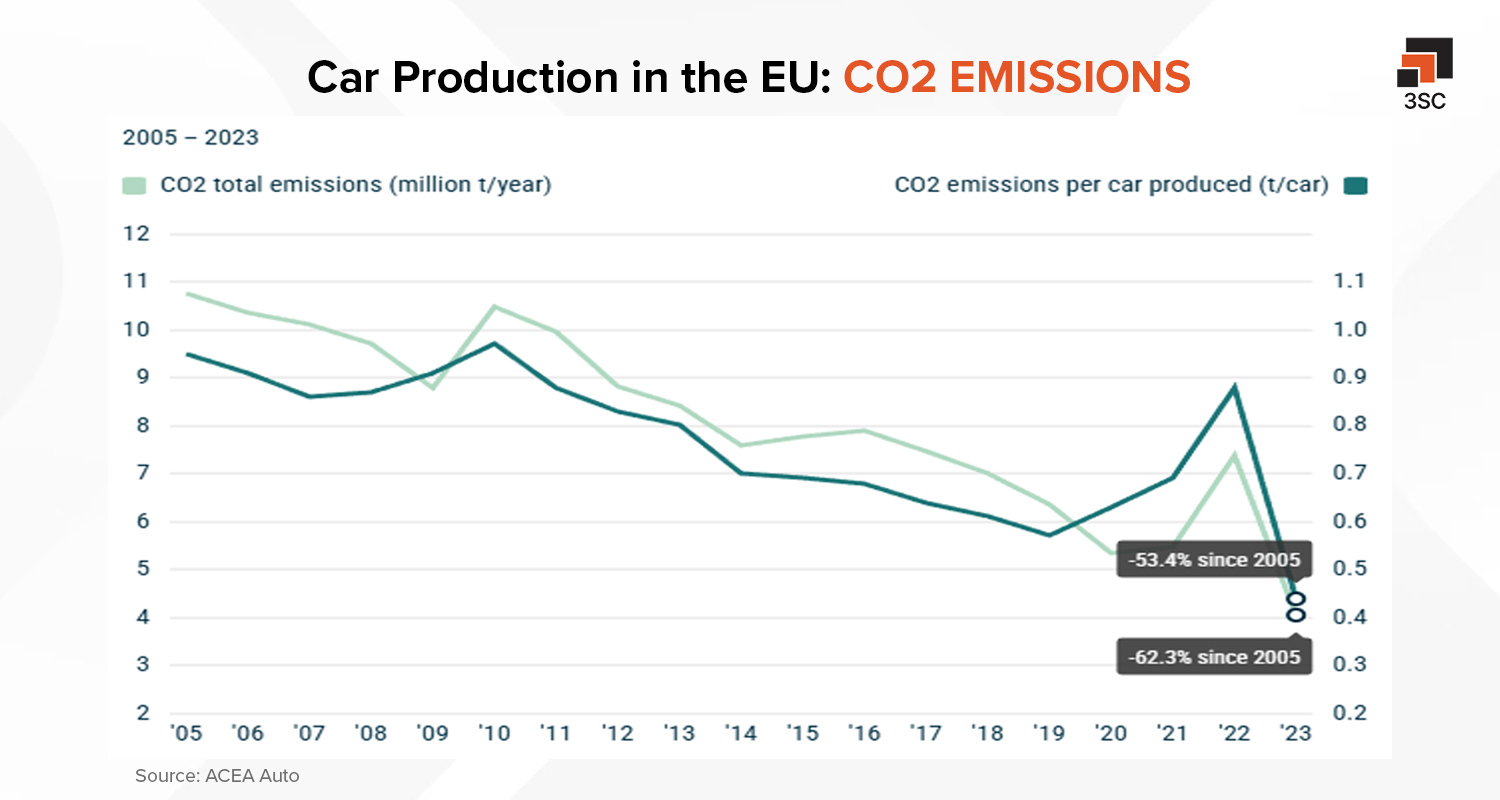
Since 2015, CO₂ emissions per vehicle produced in the European automotive industry have dropped by over 53 %, a clear sign of how quickly sustainability can become a competitive advantage.
1. Rising EU Regulatory Pressure
Europe’s climate agenda is reshaping how automakers design and operate their supply chains. The Fit for 55 package requires a 55% reduction in GHG emissions by 2030 on the path to net-zero by 2050. Paired with CSRD and the new EU Battery Regulation, manufacturers now face stricter reporting, traceability, and carbon-reduction obligations than ever before.
2. Carbon Tracking Across the Value Chain
The EU’s Battery Passport mandates full transparency of a battery’s carbon footprint across raw materials, production, logistics, use, and end-of-life. This visibility helps automakers identify high-emission hotspots, make cleaner sourcing decisions, and ensure compliance without last-minute surprises.
3. Circular Manufacturing & Responsible Sourcing
Circularity is no longer a long-term vision; it is fast becoming a regulatory requirement. Europe’s shift to EVs is accelerating investment in:
- Battery recycling and material recovery.
- Closed-loop production models
- Ethical and traceable sourcing of critical minerals.
New regulations explicitly promote recycling to reduce dependency on imported materials and strengthen regional supply resilience.
Together, these sustainability shifts form the foundation for the next phase of Europe’s automotive evolution, one driven by intelligence, integration, and long-term resilience.
Conclusion
As Europe accelerates toward a new era of electrification, sustainability, and intelligent logistics, its automotive supply chains are undergoing a fundamental redesign. What once relied on stable demand patterns and linear production models is now shifting to an ecosystem powered by AI-driven forecasting, digital twins for end-to-end simulation, real-time visibility platforms, and predictive maintenance and quality systems.
Manufacturers, suppliers, and logistics partners who embrace these technologies will move from reacting to disruptions to anticipating them, shaping markets with greater agility, transparency, and resilience.
The journey to 2030 will reward organizations that invest early, collaborate deeply, and build technology-enabled, self-optimizing supply networks capable of adapting at scale. In this new landscape, supply chains won’t just support the industry, they will define its competitive edge.
Recommended Readings
- Agentic AI Workflows
- Seasonal Logistics Challenges
- What is Demand Planning Software?
- Demand Planning vs Supply Planning
- What is New Product Introduction?
- What is Supply Chain Planning?
- Objectives of Production Planning & Control
- What is Demand Planning in the Supply Chain?
- Contract Management in Supply Chain
- Demand Forecasting for New Products