Gulf industrial companies can reduce import-related risk by connecting sourcing, inventory, production, logistics, and customer commitments. The shift from import-led logistics to supply chain orchestration enables better localization decisions, smarter inventory policies, faster disruption response, and closer alignment between planning and execution across complex regional operations.
Key Takeaways
- Import dependence becomes risky when critical materials rely on a limited number of suppliers, countries, or trade routes.
- Localization should focus on high-risk materials rather than attempting to replace every imported category.
- Inventory buffers should reflect lead times, supply risk, production criticality, and the cost of disruption.
- End-to-end visibility must help teams assess impact, compare options, and coordinate faster decisions.
- Supply chain orchestration connects sourcing, inventory, production, logistics, and customer commitments within one decision-making system.
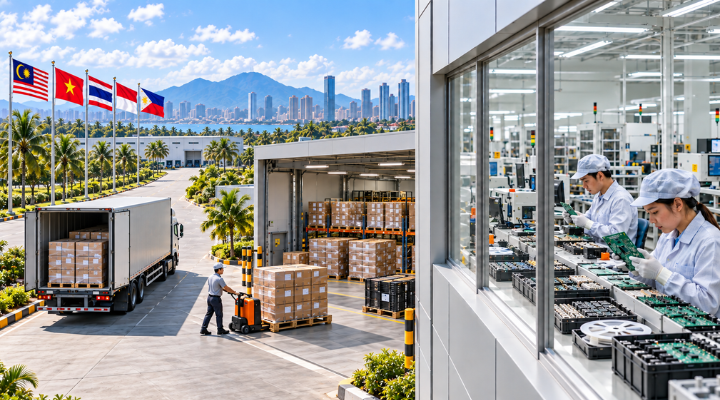
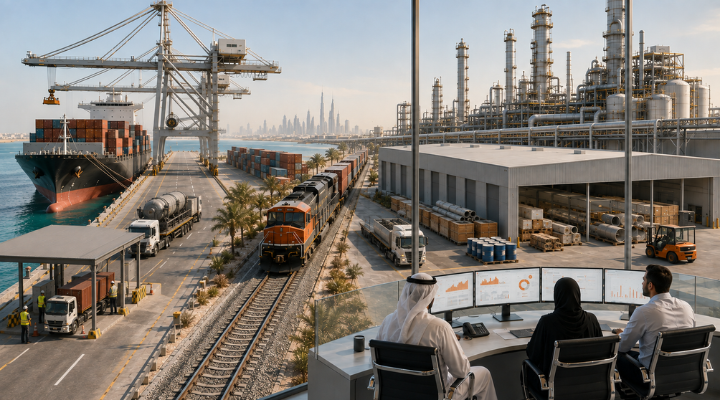
For decades, the development of the Gulf has been based on an efficient import model: machinery delivered to major ports, raw materials delivered to industrial plants, and distributors who provided the necessary goods to manufacturers. At the same time, the development of world-class infrastructure and access to global markets has allowed the Gulf to grow as quickly as it has.
Meanwhile, the economic and geopolitical realities in which Gulf companies operate have also changed. The same component previously delivered on time, allows the factory to function. Now a delay anywhere in the supply chain can throw off the entire production schedule.
In addition, a disruption in transit, a delay in transportation, and a temporary shortage of transformers, valves, minerals, or any other equipment can paralyze energy, water, construction, chemical, and industrial enterprises at the same time.
Thus, the next level in the development of the Gulf industry is not the optimization of the logistics chain. The priority for local companies should be the creation of supply chain orchestration, within which all players form a single ecosystem by considering key factors.
Why Import Led Logistics is no longer enough
Imagine an industrial company in Saudi Arabia, the United Arab Emirates, and Oman. A vessel sails overseas on schedule, but due to congestion, the ship has to take an alternate longer route. While the logistics gets the news; production still plans on the original date.
A week later, the factory learns that a critical component is going to be late. Procurement starts looking for substitutes; production updates the schedule; logistics investigates expedited shipping; but finance can only adjust the budget after the fact.
Each party does their job, but the company is losing in terms of time and costs.
This is the major disadvantage of import-led logistics which is manifested in the inability to react adequately to emerging disruptions due to the lack of a shared view of inventory, capacity, costs, orders, and service.
Orchestration can solve this issue by tying together the decision at the point of sale and prior to the disruption’s escalation into the factory.
Where Import Dependence Creates Risk
Industrial growth in the Gulf is creating an increased demand for imported production resources. Global sourcing opportunities offer the advantage of accessing to a wide range of specialized suppliers, but at the same time, the concentration of imports from a limited number of countries exposes businesses to supply interruptions.
Most of the importers from the Gulf face with high import concentration as their top three countries account for 60% (Saudi Arabia) and 65% (UAE) of total electrical machinery and equipment imports. Thus, a disruption of supply from one of them impacts the production process or the ability to perform works for several local companies, which in turn causes economic losses for many gulf businesses.
To minimize the risks associated with high import concentration, companies should analyse not only the number of suppliers but also their own concentration levels. A company’s supplier base might be significantly more concentrated if specific parts or materials come exclusively from one manufacturer or country or if distribution is done through the same port or transportation hub.
Therefore, the companies should develop a list of materials and parts, which requires a special focus, for instance, materials or parts, which are:
- Intermittent,
- Have a highly specialized function,
- Take a long time to qualify,
- Come from the same supplier or supply chain,
- Have a long lead time,
- Contribute to significant economic loss if the supply is disrupted.
By analysing this information, businesses will be able to find ways to mitigate import concentration risks by finding alternative suppliers, adjusting safety stock, optimizing the supply chain, or prioritizing the production schedule.
How to Prioritize Localization
The natural response to any import exposure should be localization. Across the Gulf, national industrial strategies are encouraging companies to develop domestic suppliers, attract manufacturers, and build production capacity closer to demand.
Still, localization cannot mean producing everything locally. Some items require scale, technical expertise, intellectual property, or raw materials that may be more competitive elsewhere. Trying to localize every category can raise costs while doing little to protect operations.
A stronger approach may start with supplier segmentation. Companies can compare each material based on business criticality, supply concentration, lead time, substitution difficulty, and cost. This helps determine the right action for each category.
For example:
- High criticality items may require local production, dual sourcing, or strategic stock.
- Medium risk items may be sourced through regional suppliers.
- Standard items may remain globally sourced where cost and availability are favourable.
- Specialized parts may require long term partnerships with international manufacturers.
This makes localization strategy a business decision grounded in operational risk. It also gives local supplier development programs a clearer purpose, because companies know which capabilities matter most. The goal is to create a sourcing network that combines domestic strength, regional flexibility global access and continued operations.
How Inventory Can Protect Production
As companies recognize their exposure, many respond by carrying more stock. Strategic inventory can protect production when lead times are long or supply is concentrated. Yet additional inventory also ties up working capital, consumes warehouse space, and can create obsolescence.
The answer lies in inventory optimization rather than a uniform increase across every material.
A critical imported component with a six-month lead time needs a different policy from a locally available packaging item. The same is true for materials used in stable production compared with those linked to volatile project demand.
This allows planners to place buffers where they protect the business most. It also connects inventory decisions with sourcing and production instead of treating stock as a separate warehouse measure. When inventory has a clear role, it becomes part of the company’s resilience design.
Why Visibility must support Orchestrated Action
Gulf companies have invested heavily in ports, industrial zones, warehouses, customs systems, and transport networks. So, the next source of advantage should come from connecting these assets through shared information.
This is where a supply chain control tower comes in to give this information, by tying all these processes together into a cohesive picture. But visibility is only part of the equation. Having a dashboard showing all this information is great, but it only goes so far in terms of improvements.
The value appears when the business can answer four questions quickly:
- What has changed?
- Which operation or customer will be affected?
- What options are available?
- Which response protects service, cost, and capacity?
Suppose a shipment of industrial chemicals is delayed. A connected platform will provide the impacted production batches, inventory at other locations, alternative sources, scheduling options, transportation means, and the cost of each, to turn end-to-end visibility into coordinated action and ensure everyone is on the same page.
Moving from Logistics to Supply Chain Orchestration
The Gulf’s industrial future will undoubtedly involve global suppliers, international transportation, and technology imports. However, the danger of reliance on external organizations arises only when companies cannot observe the concentration, react appropriately to disruptions, and organize their response.
Therefore, supply chain orchestration is about such positioning of the company in the system where it can make the right decisions about localizing processes, diversifying supplies, maintaining stocks, managing criticalities, and coordinating actions in sourcing, production, and distribution.
Thus, the companies that manage to position themselves in this way will not only survive but also significantly benefit from the next supply chain disruption, including realizing new opportunities for expansion into new markets, serving local customers, and capitalizing on financial capabilities to make more accurate competitive choices.
Build a More Orchestrated Supply Chain with 3SC
Connect sourcing, inventory, production, logistics, and risk on one intelligent platform to improve visibility, strengthen resilience, and make faster decisions across complex Gulf operations. With 3SC, industrial companies can anticipate disruption earlier, align teams around shared priorities, optimize inventory and capacity, and respond with greater speed, confidence, and control.
Related Read & Guides
- How Gulf Chemical Producers Can Build Resilience Beyond Feedstock Advantage?
- Why Consumer Durable Supply Chains in MEA Need AI-Powered IBP?
- How FMCG Leaders in MEA Can Move from Forecast-Driven Planning to Faster, Exception-Led Decision-Making?
- How Pharmaceutical Supply Chains in MEA Can Use Scenario Planning to Respond Better Under Constraint?
- How Middle East and Africa F&B Leaders Can Protect Margin Under Volatility?