Key Takeaways
- MEA pharmaceutical supply chains operate under constant uncertainty across demand, supply, regulation, and capacity.
- Traditional planning provides structure, but it often breaks down when assumptions shift quickly.
- IBP creates the aligned business view and decision rhythm needed for coordinated planning.
- Scenario planning helps teams prepare practical response options for plausible disruptions before pressure peaks.
- Strong scenario planning depends on clear uncertainties, defined triggers, decision rights, and regular refreshes.
A pharmaceutical supply chain leader in the Middle East and Africa rarely gets the luxury of planning in a straight line.
One month, the priority may be securing inventory for a fast-moving chronic therapy. The next, it may be managing an import delay, a regulatory update, a stock reallocation, or cold-chain pressure during a seasonal demand spike. In many MEA markets, these pressures do not arrive one at a time. They overlap, interact, and force decisions before every fact is clear.
Pharmaceutical supply chains are not simply moving products from manufacturing sites to patients. They are balancing access, compliance, cost, service levels, expiry risk, and public health responsibility. When one part of the system tightens, the impact travels quickly across the network.
For leaders operating here, the question is no longer, "Can we create the perfect plan?" The better question is, "Can we prepare for several possible realities and know how we will respond before pressure peaks?"
When uncertainty becomes the normal operating condition
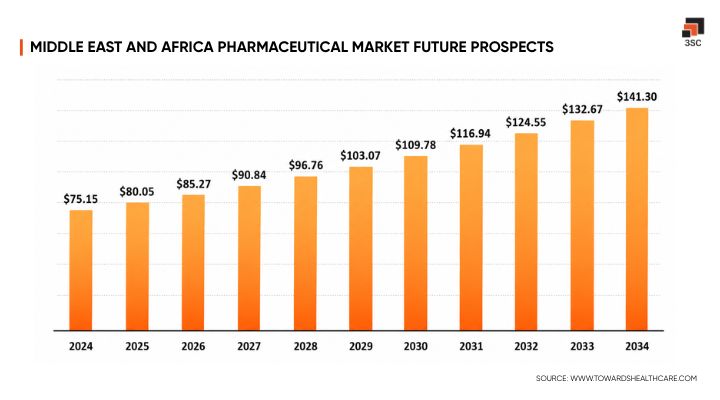
For pharmaceutical supply chains in MEA, uncertainty is not an occasional disruption. It is often the environment leaders plan within every day. With the MEA pharma market valued at $60.6 billion in 2024 and growing at a 5.1% CAGR through 2030, the stakes of getting supply chain decisions right have never been higher.
Demand can shift quickly. A forecast may look stable at the start of the month, then change because of a tender win, a competitor stockout, a treatment guideline update, or faster-than-expected patient enrolment. What looked like a balanced plan can suddenly require difficult allocation decisions.
Supply risk adds pressure from the other side. Many MEA markets depend on imported finished goods, active ingredients, or specialized cold-chain infrastructure. That makes supply chains sensitive to manufacturing delays, port congestion, customs issues, geopolitical disruption, and currency volatility. A delay in one part of the network can affect availability across several countries.
Regulation further limits flexibility. Each market may have specific registration requirements, serialization rules, labelling standards, and temperature-control obligations. Stock available in one country cannot always be moved to another, even when another market is facing shortage risk, especially when packaging, approvals, or release requirements differ.
Capacity is another constraint. Warehousing space validated cold-chain lanes, quality release bandwidth, distributor visibility, and working capital are finite. During seasonal demand spikes, limited cold-chain capacity or delayed distributor updates can create allocation decisions before teams have a complete view of stock positions. Building more buffer stock may feel safe, but expiry risk, cash limits, currency pressure, and shelf-life considerations make that decision more complex.
Leaders are therefore not dealing with one planning problem. They are managing a system of connected constraints. When demand uncertainty, supply delays, regulatory requirements, and capacity limits meet, static plans begin to lose relevance quickly.
Why traditional planning fails when the ground keeps moving
In a volatile MEA environment, traditional planning is no longer enough on its own. Annual budgets, rolling forecasts, and inventory targets still create structure, accountability, and visibility but they often assume a level of stability the market cannot guarantee.
The weakness is not a lack of detail. The weakness is dependence on a narrow set of assumptions: expected demand, expected lead time, expected regulatory timelines, expected supply continuity, and expected capacity availability. When those assumptions shift, the plan can quickly lose relevance.
And once reality moves away from the plan, teams often fall into reactive mode. Commercial pushes for higher availability. Supply chain warns about limited stock. Finance challenges emergency shipment costs. Regulatory explains what cannot be moved. Leadership asks for options. The conversation becomes urgent but not always aligned.
If the organization has planned around only one version of the future, every major deviation becomes a fresh debate. Teams have to rebuild assumptions, calculate trade-offs, and escalate decisions while the business is already under pressure.
The result is more than operational stress. It can mean delayed patient access, higher write-offs, emergency freight costs, missed revenue, strained distributor relationships, and increased compliance risk. In an environment where conditions keep shifting, a fixed plan may provide structure, but it cannot provide enough readiness.
Integrated business planning: Creating one aligned view before scenarios are tested
In pharmaceutical supply chains, decisions are rarely made by one function alone. Demand changes may begin with commercial teams, but they quickly affect supply planning, inventory, finance, regulatory priorities, quality release, distribution, and customer commitments. Without a structured planning rhythm, each function can end up optimizing its own part of the business while the overall response remains fragmented.
Integrated business planning helps prevent that fragmentation. It brings commercial, supply chain, finance, regulatory, quality, and leadership teams into one connected process where demand, supply, risk, capacity, and financial implications are reviewed together. This creates a shared view of what is changing, what is constrained, and which trade-offs need leadership attention.
In an MEA context, this alignment is especially important. A tender shift in one market, a distributor constraint in another, or a regulatory delay elsewhere can quickly affect regional supply priorities. IBP gives teams the forum to connect these signals early, compare choices, and make decisions based on a common understanding rather than separate functional assumptions.
It also helps turn planning from a reporting exercise into a decision-making discipline. Teams can discuss where demand is most uncertain, where supply is most exposed, which products require protection because of patient criticality, and where financial or capacity limits may affect the plan.
Once this common business view is in place, scenario planning becomes far more practical and effective. IBP creates the alignment, cadence, and decision forum needed to test alternative futures and agree on prepared responses before pressure peaks.
Scenario planning: Turning uncertainty into prepared choices
Scenario planning is not about predicting the future perfectly. It is about preparing for plausible futures early enough to act with discipline.
For pharmaceutical supply chains in MEA, this means identifying the uncertainties that matter most and building response options around them. Instead of relying on one forecast, leaders develop scenarios that reflect different operating conditions and pressure points.
For example, a company may plan three demand scenarios for a critical medicine: base demand, accelerated demand after a tender win, and constrained demand due to reimbursement delays. Each scenario would have different implications for inventory levels, production allocation, market prioritization, distribution timing, and financial exposure. A tender-win scenario may require earlier supply reservation, higher safety stock, or faster distributor readiness. A reimbursement-delay scenario may require slower replenishment, tighter expiry monitoring, and closer alignment with finance.
Similarly, supply teams may model normal lead times against delayed shipments, partial manufacturing allocations, or limited cold-chain capacity. If a shipment is delayed by two weeks, the response may be local stock reallocation. If the delay extends to six weeks, the response may shift to air freight, customer prioritization, or shortage communication.
The power of this approach is not in the spreadsheet. It is in the leadership conversation it creates.
Scenario planning forces teams to discuss trade-offs before a constraint becomes critical. Should the company reserve stock for public-sector tenders or private-channel demand if allocation tightens? Which markets should receive limited supply first? Which critical therapies justify higher buffer stock because of patient impact? When does air freight become acceptable despite the cost, especially under currency pressure? How should the business balance expiry risk against stockout risk? Who approves reallocations, expediting, customer prioritization, and shortage communication?
These questions are difficult. That is exactly why they should not be answered for the first time during a disruption.
When done well, scenario planning gives leaders a decision map - clarifying trigger points, ownership, escalation paths, and response options. If a shipment is delayed beyond an agreed threshold, teams already know whether to expedite, reallocate, or communicate a shortage risk. If capacity tightens, leaders know which products and markets take priority. The result is faster response to demand spikes and shipment delays, better inventory allocation across markets, lower emergency freight exposure, reduced expiry-related write-offs, and improved service levels for critical SKUs. Scenario planning does not remove uncertainty. It reduces hesitation.
From planning exercise to leadership rhythm
For scenario planning to work, it must become part of how the organization runs, not a document created once and forgotten.
This matters especially in MEA, where conditions vary sharply across countries. A regional plan sets broad direction, but local realities often determine what is possible. A distributor constraint in one market, a regulatory delay in another, or a tender shift in a third can change the regional picture quickly.
Scenario planning should connect to the monthly or weekly business rhythm feeding into IBP, sales and operations planning, supply reviews, launch readiness discussions, and executive risk meetings. The goal is not more meetings. It is to make existing meetings sharper.
A strong scenario-planning rhythm has four practical elements:
1. Agree on the most important uncertainties
Teams should identify the factors that could materially affect patient supply, revenue, cost, compliance, or capacity. These may include demand spikes, tender outcomes, shipment delays, regulatory approval timelines, currency pressure, or cold-chain constraints.
2. Define clear triggers
Scenarios need practical trigger points, such as a forecast variance, shipment delay, stock level, tender decision, expiry-risk threshold, or capacity constraint. Without triggers, scenarios remain abstract and teams may wait too long to act.
3. Assign decision rights
Ownership of key decisions should be clearly visible. Teams need to know who can approve reallocations, expedited freight, inventory builds, customer prioritization, shortage communication, or changes to supply allocation.
4. Review and refresh scenarios regularly
Scenarios should be revisited as market conditions change. A scenario built six months ago may no longer reflect current demand, lead times, regulatory realities, inventory positions, or financial constraints.
This is where scenario planning becomes more than planning. It becomes a leadership habit, encouraging cross-functional alignment, improving risk visibility, and helping teams move from debate to action with greater confidence.
Better decisions before the pressure arrives
Pharmaceutical supply chains in MEA will continue to operate under constraint. Demand will remain uneven. Supply risk will not disappear. Regulatory complexity will shape what is possible. Capacity will always require careful choices.
The organizations that respond best will not be the ones that assume certainty. They will be the ones that prepare for uncertainty with discipline.
Scenario planning helps leaders see risks earlier, evaluate trade-offs before they become urgent, align cross-functional teams around shared choices, and act faster when conditions change. In a region where supply chain decisions can directly affect access to treatment, this matters; not just for operational efficiency, but for resilience, responsibility, and trust.
The next disruption may not announce itself early. The next constraint may appear where the organization least expects it. But pharma supply chain leaders in MEA do not need perfect visibility to improve resilience. They need prepared options, clear triggers, defined decision rights, and a regular planning rhythm that connects commercial, supply chain, finance, regulatory, quality, and leadership teams.
That is what scenario planning offers: not certainty, but readiness. And in a constrained environment, readiness can make all the difference.