Key Takeaways
- Supply chains are now the core of CPG competitiveness.
- Agility has replaced efficiency as the new mandate.
- Data and AI are redefining supply chain intelligence.
- Technology is turning operations into innovation engines.
- Growth belongs to CPGs that treat supply chain as strategy.
For years, supply chains quietly powered the world’s biggest consumer brands efficient, cost-focused, and largely invisible. Then the pandemic hit, and everything changed. Suddenly, the world was talking about port delays, material shortages, and factory shutdowns. What was once a back-office function became the heartbeat of business continuity.
Since then, the shocks haven’t stopped. Inflation, geopolitical tensions, and climate events have made volatility a permanent feature of global trade. Meanwhile, digital acceleration and the rise of AI have raised the bar for how fast decisions must be made and how quickly brands must respond.
In this new reality, the supply chain is no longer about cost or control; it’s about competitiveness. The CPG companies outperforming their peers today are the ones treating supply chain as a strategic growth engine using data, intelligence, and agility to sense demand, respond faster, and turn disruption into opportunity.
The Great Recalibration of CPG
After years of inflation-driven price changes and unpredictable demand, CPG leaders are realizing that growth can’t just come from price hikes or endless product extensions. The next wave will come from how well they anticipate, adapt, and act before the market moves. The best-performing companies are tearing down the walls between strategy and supply chain. They’re using their networks to accelerate innovation, capture demand in real time, and unlock entirely new revenue models.
A decade ago, speed-to-market meant faster logistics. Today, it means something far more sophisticated connecting consumer sentiment, supplier capacity, and operational data into one intelligent, synchronized ecosystem.
Modern supply chain partners turn data and tech into real advantage. And with CPG growth dropping to near zero, great operations aren’t enough anymore. The brands that build agile, data-driven supply chains will define what’s next.
From Cost Centre to Growth Driver
Traditionally, supply chains were designed for efficiency, the leaner, the better. But efficiency alone can’t create growth when markets are fragmented, and consumer preferences shift overnight.
The new mandate is agility. Agility to sense, simulate, and respond before disruptions occur. Agility to launch products faster, personalize experiences, and scale responsibly.
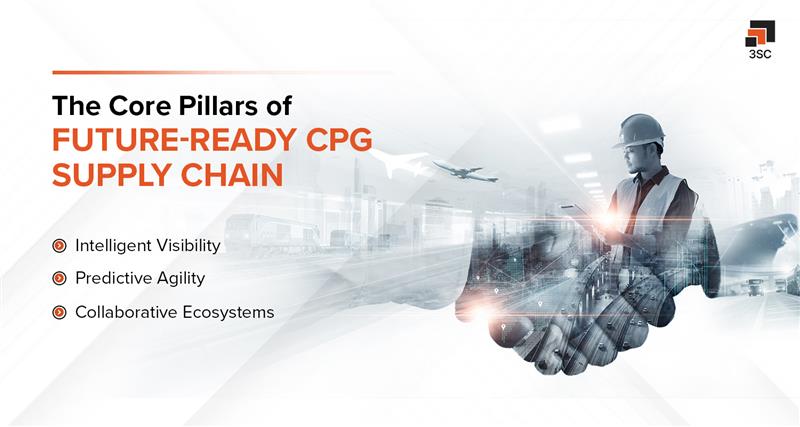
This shift is powered by three big changes shaping every CPG supply network today.
1. Intelligent Visibility
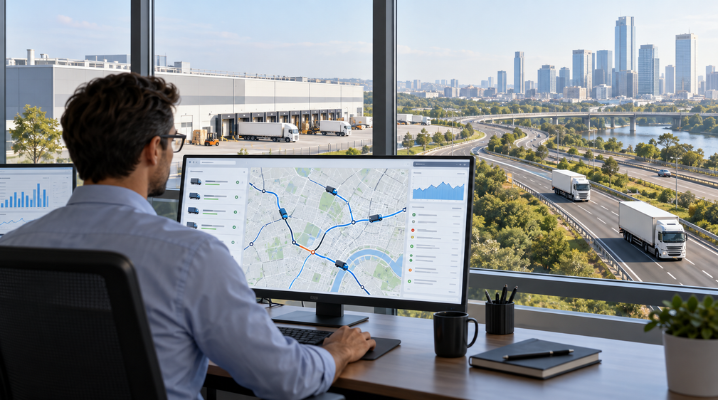
Real-time visibility has evolved from dashboards into decision engines. AI-driven forecasting, agentic automation, and digital twins allow CPG companies to see their end-to-end networks like never before from supplier reliability to production constraints to consumer demand signals.
When that intelligence is shared across functions, it doesn’t just prevent disruption; it fuels faster growth decisions. A promotion, a new flavour, or a sustainability initiative can move from concept to execution in weeks because supply chain data guides the “how” behind every “what.”
2. Predictive Agility
Leading CPGs now use planning models that learn in real time. These predictive tools don’t only flag risks, they also reveal new sourcing paths, improve working capital, and optimize product mix before issues appear.
This agility transforms supply chain from a reactive cost manager into a proactive growth advisor. It helps executives decide not only how to produce, but where and when to play.
3. Collaborative Ecosystems
Supply chains used to end at the factory gate. Now they extend through retailers, logistics partners, and even consumers themselves.
Leaders are building connected value ecosystems that link everyone involved in delivering a product from ingredient supplier to influencer through shared data and purpose-driven transparency. Technologies like blockchain and IoT are turning sustainability claims into verifiable actions and partnerships into shared growth models.
Technology as the Growth Multiplier
Generative and Agentic AI are no longer side experiments in the CPG world. They’re rewriting how decisions get made. Research estimates that Generative AI alone could unlock between USD 160 billion and USD 270 billion in additional profit annually for the CPG sector.
Generative AI helps teams design, simulate, and test products virtually, cutting time-to-launch by up to 60 percent. Agentic AI autonomously manages inventory, recommends replenishment, and flags anomalies before they affect customers. Digital twins replicate entire supply networks, letting leaders rehearse “what-if” scenarios before making high-stakes moves.
|| Recommended Read - Agentic AI Workflows
For CPG companies under pressure to grow profitably, these aren’t shiny add-ons; they’re core capabilities that determine whether your next innovation hits the shelf first or gets lost in the noise.
Rethinking the Metrics That Matter
Growth-driven supply chains can’t be measured by traditional efficiency metrics alone. Cost per unit or on-time delivery still matter, but they’re not the full story.
Progressive CPG leaders are asking new questions.
- How many new products did our supply chain help bring to market this quarter?
- How much incremental revenue did we unlock through faster demand sensing?
- How has real-time visibility improved our cash flow and reduced waste?
These are not operational metrics; they’re business metrics. And they’re proving that supply chain performance is synonymous with enterprise performance.
From Resilience to Reinvention
The pandemic made resilience a buzzword. But resilience is no longer enough. CPG companies now need reinvention, the ability to pivot entire models, not just survive disruptions.
That means designing supply chains that are:
- Data-centric, so every decision is grounded in real-time truth.
- Digitally fluent, so people and systems can act in sync.
- Consumer-connected, so operational agility always serves market opportunity.
Every CPG brand that embraces this mindset finds the same result: the line between growth strategy and supply chain strategy disappears.
Conclusion
The CPG industry’s future won’t be written in marketing slogans or pricing strategies; it will be written in supply chains. Because today, growth isn’t about what you sell.
It’s about how fast, how smart, and how sustainably you can deliver it.
For CPG leaders, the path forward lies in partnering with experts who turn complexity into clarity; integrating AI, analytics, and agile planning into a single system that drives resilience and revenue.
The brands that do this are already outperforming their peers, not because they spend less, but because they see more, decide faster, and act together. That’s how a supply chain stops being a cost and starts becoming your most powerful growth engine.
Partner with 3SC for Intelligent, Resilient Supply Chains
At 3SC, we help businesses move beyond traditional planning with AI-driven insights, end-to-end visibility, and collaborative supply chain solutions. From reducing risks to improving agility and resilience, our expertise ensures your supply chain isn’t just prepared for today’s challenges but ready to thrive in tomorrow’s uncertainty.
Discover how 3SC can transform your supply chain into a strategic advantage - 3SC | Leading AI-Driven Supply Chain Solutions & Analytics Provider