Key Takeaways
- Traditional supply chains are not suited for today’s fast-paced, disruption-prone environment.
- 4PL goes beyond 3PL by managing the entire supply chain with strategic oversight.
- It integrates advanced tech like AI, IoT, and blockchain for smarter, proactive operations.
- 4PLs offer flexibility, end-to-end visibility, and are well-suited for complex industries.
- The biggest advantages of 4PL are cost savings, resilience, and sustainability.
Disruptions have become the new normal in global supply chains, driven by a constant stream of geopolitical tensions, climate-related events, and operational uncertainties; putting unprecedented pressure on businesses to adapt, respond, and build resilience.
A few years ago, supply chains were built around predictability. Weekly reports and scheduled calls were considered adequate visibility. Forecasts were largely reliable, suppliers delivered on time, and logistics moved in a steady, almost clockwork rhythm. But that world doesn’t exist anymore. What we’re navigating now is a supply chain environment shaped by continuous, compounding disruption; climate events, geopolitical instability, supplier failures, regulatory shifts, and operational shocks that emerge without warning.
And it’s not just one-off events. Since the initial jolt of the pandemic, we’ve seen everything from the Suez Canal blockage to the Red Sea crisis, rolling port strikes, semiconductor shortages, trade policy reversals, and full-blown wars that disrupt global trade corridors overnight. These aren’t occasional setbacks; they’re structural pressures that expose just how fragile and outdated many supply chain models have become.
These pressures are stretching traditional models to their breaking point. Built for efficiency, not resilience, they simply weren’t designed to handle the pace or complexity of today’s operating environment. And the consequences are very real. A single disruption can knock 6–10% off annual revenue. Third-party failures now account for over 40% of operational breakdowns. You feel that in customer churn, in margin squeeze, in missed growth targets.
Some companies have tried to respond with tactical changes; shifting from “just-in-time” to “just-in-case,” building more buffer stock, or broadening their supplier base. But those measures only go so far without the systems to match. Real adaptability requires something more foundational; the ability to make decisions at the speed of disruption, not after it. That means end-to-end visibility, real-time data, and coordination across every moving part of the supply chain. And frankly, most organisations still don’t have that. Fragmented tools, siloed teams, and lagging processes are still the norm.
It’s not a matter of poor execution. The problem is structural. Outdated architecture, manual handoffs, disconnected systems, limited insight is what slows everything down. We’ve outgrown the era where spreadsheets and email chains could carry a global operation. To thrive in this environment, visibility isn’t enough. We need orchestration: the ability to align every partner, process, and decision around a common, dynamic operating picture.
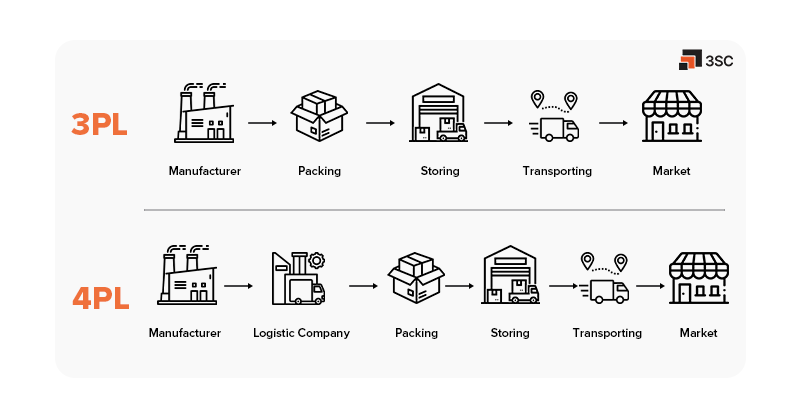
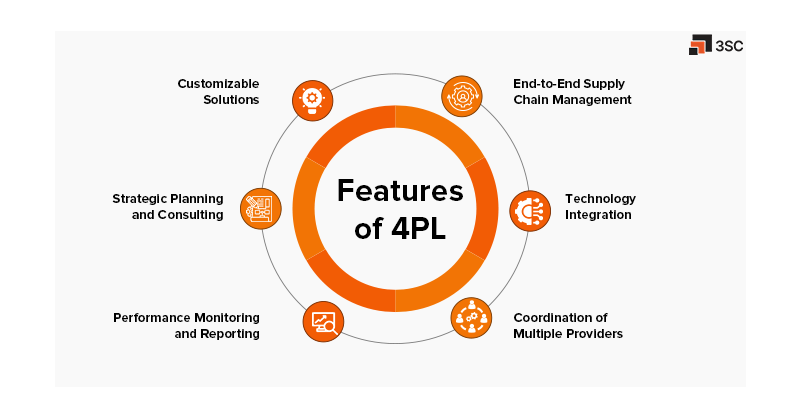
That’s where Fourth-Party Logistics (4PL) comes into play. For those of us who’ve spent years navigating complex supply networks, the value of a 4PL isn’t theoretical, it’s strategic. When you’re managing dozens of partners across continents, each operating on different systems, timelines, and metrics, the need for centralised control isn’t a nice-to-have, it becomes essential. A 4PL steps in as that single point of orchestration. Not to take over execution, but to ensure that every part of the chain from planning to last-mile delivery, is working in sync.
Unlike a 3PL, which is focused on moving goods and running warehouses, a 4PL provides the connective tissue. It integrates the execution layer with planning, systems, and strategy. In practice, that means real-time visibility across vendors, tighter control over service levels, and faster, more informed decision-making. When you're dealing with volatility at scale, you can’t afford fragmented responses. What you need is a unified, coordinated approach, and that’s exactly what a 4PL enables.
Related read - 3PL vs 4PL Logistics
Over the last few years, we’ve leaned heavily on this model to bring structure to complexity. Forecasts are now dynamic, adjusting with real-time inputs across demand, supply, and logistics. Our teams don’t waste hours chasing shipment statuses, because IoT sensors and integrated platforms tell us exactly where things are, what condition they're in, and whether we need to act. Predictive analytics flag risks before they escalate, giving us lead time to course correct. And technologies like blockchain, especially in highly regulated industries, have helped us build the trust and traceability today’s supply chains demand.
This isn’t about swapping out one partner for another, it’s about building a smarter ecosystem. A 4PL doesn’t replace the core logistics functions you already rely on. It layers in the intelligence and coordination to make them more effective. That’s the shift we’ve made, and it’s one I believe more organisations will need to make as complexity becomes the standard, not the exception.
This model has been especially effective in industries with stringent compliance standards and minimal tolerance for mistakes, particularly in pharmaceuticals, aerospace, and automotive. In these spaces, fragmentation isn’t just inefficient, it’s a liability. If you can’t see and act across your supply chain with confidence, you’re exposed. And when lead times are tight and quality standards are non-negotiable, that exposure becomes costly.
I find that one of the more underappreciated strengths of the 4PL model is its role in sustainability. ESG has shifted from a “nice to have” to a board-level priority, with significant implications for investor confidence and regulatory compliance. 4PLs, because they’re non-asset-based, aren’t locked into fixed infrastructure. They can flex to partner with the most efficient, lowest-emission carriers on any given leg. That flexibility means they can optimise for carbon as well as cost through better route planning, smarter consolidation, and greener last-mile solutions. And when sustainability is embedded into orchestration, we’re no longer just ticking compliance boxes, we’re driving real operational efficiency. We have both the data and the dollars to show for it.
This shift toward 4PL isn’t hypothetical. Adoption has grown steadily, with industry data pointing to nearly 10% growth in the last two years and 44% of shippers now planning to outsource logistics under this model. The message is clear: managing supply chains is now about more than just handling transactions. It’s about enabling outcomes. And the differentiators now are intelligence, coordination, and adaptability.
In a world where the next disruption might come from a rail strike, a policy reversal, or even a drought, the old playbooks fall short, and resilience is a daily operational necessity. For many organisations, this has prompted a deeper rethinking of not just tools, but the operating model itself.
How should logistics be structured when volatility is the reality? At what point does coordination become orchestration? For businesses with global operations, high product variability, or stringent service levels, the cracks in traditional models are widening. A well-run 3PL setup can still serve companies with stable, regional operations. But as complexity grows, so does the need for more centralised control and dynamic decision-making.
Supply chain leadership today sits at the intersection of risk management, financial stewardship, and corporate responsibility. Boards aren’t just asking how we execute transactions, they’re asking how we guarantee outcomes. After twelve years navigating volatility, I’ve learned that foresight and optionality are the ultimate differentiators. Foresight helps you anticipate disruption before it hits; optionality ensures you have multiple viable ways to respond. Whether a company adopts a 3PL-plus model, a control tower, or full 4PL orchestration depends on its complexity curve, but the mandate remains the same: unify data, decisions, and delivery across the ecosystem to transform disruption into advantage. The future of supply chain leadership won’t be about managing parts in isolation; it will be about conducting the system as a whole. And in today’s world, the ability to adapt with speed and clarity isn’t just a strategic edge, it’s operational survival.