Key Takeaways
- Each phase of contract management demands a clear focus.
- Staying compliant avoids penalties and protects reputation.
- Risk clauses and monitoring systems safeguard continuity.
- Streamlined lifecycles prevent errors and delays.
- Best practices create efficiency, resilience, and stronger partnerships.
Supply chains run on contracts. They create clarity, enforce obligations, and safeguard continuity in the face of shifting regulations, supplier volatility, and disruptions. The challenge, however, is ensuring contracts deliver their full value. In practice, missed deadlines, vague accountability, and siloed processes gradually eat into the benefits that were originally agreed, such as discounts, service levels, or delivery terms.
On average, businesses end up losing about 8.6 percent of the value they expect from contracts. The best performers keep the loss small at just over 3 percent, while the weakest see it rise to more than 20 percent. This silent loss of value, often called erosion, highlights why strong contract management is essential. In this blog, we will explore the phases of contract management, the challenges that drive value loss, and solutions to capture the returns contracts are meant to deliver.
What are the Key Phases of Contract Management
Each phase of contract management calls for a distinct set of actions and focus areas to ensure efficiency and compliance, as explained below:
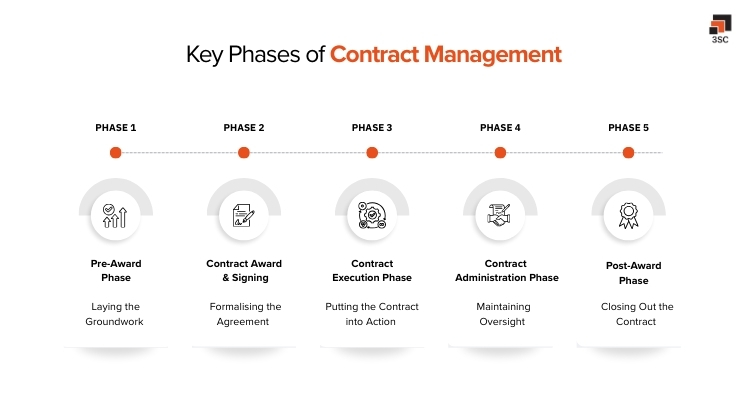
1. Pre-Award Phase: Laying the Groundwork
Every contract begins before it is even signed. This phase is about identifying the right suppliers or contractors, defining the scope of work, and preparing bidding documents. Proposals are invited and carefully evaluated so that the most suitable partner is selected. Getting this stage right sets the foundation for everything that follows.
2. Contract Award & Signing: Formalising the Agreement
Once the right partner is chosen, the next step is to finalise terms and sign the agreement. This phase ensures that expectations, responsibilities, and performance standards are clearly documented and mutually accepted. With both parties aligned and the contract formally in place, the groundwork is set for execution.
3. Contract Execution Phase: Putting the Contract into Action
With the agreement signed, the contract moves into action. Here, both parties start delivering on the commitments they agreed upon. Performance is monitored closely, any changes or disputes are addressed quickly, and communication is kept open and consistent. This is the phase where plans turn into results.
4. Contract Administration Phase: Maintaining Oversight
As the contract progresses, it requires constant oversight. Records need to be kept, compliance tracked, and performance monitored against agreed objectives. If situations change, timely adjustments ensure that both parties remain aligned. Effective administration keeps the contract alive and functioning as intended.
5. Post-Award Phase: Closing Out the Contract
When the contract reaches its end, the focus shifts to closure. All terms and obligations are verified, records are archived for future reference, and lessons are captured to improve the next cycle. Decisions are then made on whether to extend the contract, renew it, or bring it to a close.
Together, these phases form a continuous cycle. By staying organised, proactive, and transparent at every stage, businesses can ensure that their contracts not only deliver on immediate goals but also create long-term value and stronger supply chain relationships.
Recommended for You - Benefits & Key Types of Contract Management in Supply Chain
Challenges in Supply Chain Contract Management and their Solutions
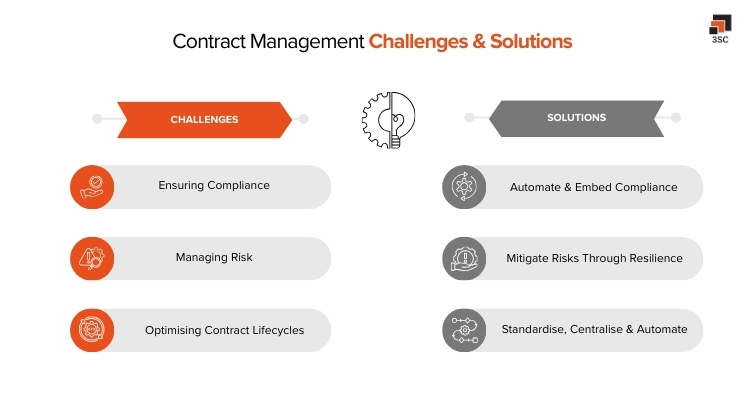
While contracts are crucial to supply chain efficiency, managing them is no easy feat. Poor contract management drains up to 9% of business revenue, translating into nearly $2 trillion in global losses each year. Contract managers must navigate various challenges to ensure compliance, manage risks, and optimise contract lifecycles.
1. Ensuring Compliance
Global supply chains must constantly adapt to new rules and regulations. Governments update laws, and industry bodies revise guidelines, which means contracts can quickly become outdated. To stay compliant, businesses need to regularly track these changes and adjust contract terms accordingly. Ignoring compliance doesn’t just bring legal risks, it can also damage reputation and disrupt operations.
How to address it: Keep up with regulatory updates, work closely with legal experts, and use technology to automate compliance checks and alerts. Embedding compliance into everyday processes ensures that obligations are met without slowing down operations. Over time, a proactive compliance culture builds trust with customers, regulators, and partners.
2. Managing Risk
Supply chains face risks from many directions, and often these risks are interconnected. Suppliers may struggle with financial instability, labour shortages, or operational inefficiencies that affect timely delivery. Political instability, trade restrictions, or shifting tariffs can make sourcing from certain regions more costly or even impossible. Unforeseen events such as pandemics, natural disasters, or cyberattacks can also halt production or disrupt transportation networks overnight.
Without proper safeguards in contracts, these risks can quickly lead to costly disruptions. Even a small vendor failing to deliver or a shipping delay at a major port can ripple through the entire chain. The result is higher costs, lost sales, and strained customer relationships that may cause lasting reputational damage.
How to address it: Conduct thorough supplier assessments, add clear risk-sharing clauses, and include force majeure provisions. Setting up performance metrics, monitoring systems, and contingency plans further strengthens resilience and keeps the supply chain running smoothly. By preparing for the unexpected, businesses gain flexibility to respond quickly and recover faster when challenges arise.
3. Optimising Contract Lifecycles
Contracts go through several stages of creation, execution, and renewal. If these processes are slow or disorganised, performance suffers and errors creep in. These errors can take many forms in terms of missing key clauses, overlooking compliance requirements, misaligned terms between parties, or losing track of critical dates like renewals and expirations. In some cases, duplicate or outdated versions of contracts may circulate, leading to confusion and disputes.
How to address it: Standardise contract templates, centralise documents in one place, and automate routine tasks like approvals, signatures, and renewals. Regular reviews and data analysis can highlight performance trends and show where improvements are needed. With a structured approach, businesses can cut down on delays, avoid missed renewals, and ensure contracts always support strategic goals.
Addressing these challenges head-on is essential for building resilient, efficient, and future-ready supply chains.
Best Practices for Supply Chain Contract Management
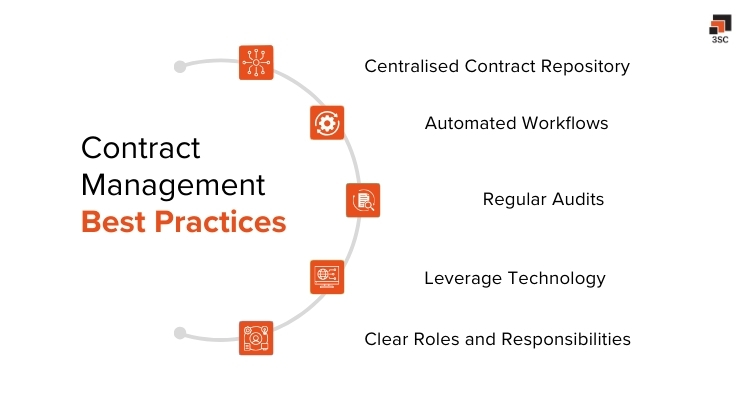
While specific challenges require tailored solutions, organisations that adopt these best practices can manage their contracts more effectively, ensuring long-term efficiency, compliance, and resilience.
1. Centralised Contract Repository
One of the most effective ways to manage supply chain contracts is to maintain a centralised repository. Housing all contracts in a single organised system ensures that documents are easy to access, search, and share across departments. This prevents the risk of misplaced or lost files, improves transparency, and allows stakeholders to collaborate more effectively. With all information stored in one place, teams can quickly retrieve critical details when making decisions or resolving disputes.
2. Automated Workflows
Manual contract approvals often slow down processes and leave room for errors. Automating workflows such as drafting, reviewing, approvals, signatures and renewals can significantly reduce these inefficiencies. Automation not only minimises human error but also speeds up turnaround times, allowing businesses to finalise agreements faster. In addition, automated reminders help ensure that no renewal deadlines or critical milestones are missed.
3. Regular Audits
Contracts should not be treated as “set and forget” documents. Regular audits are essential to confirm compliance, evaluate performance and identify opportunities for renegotiation. By reviewing contracts periodically, organisations can catch inefficiencies before they escalate and adapt terms to reflect changes in the business environment. Audits also provide valuable insights into supplier performance, helping businesses strengthen partnerships and reduce risks.
4. Leverage Technology
Modern Contract Lifecycle Management software is a powerful tool for simplifying contract management. CLM platforms streamline the entire process from creation and execution to monitoring and renewal. They provide real-time visibility into contract status, track key milestones and flag potential compliance issues before they become problems. With built-in analytics, CLM systems also generate data-driven insights that help organisations optimise contracts and drive better outcomes.
5. Clear Roles and Responsibilities
Clarity in roles and responsibilities is fundamental to effective contract management. Each task, whether it is drafting, reviewing, approving or monitoring, should be clearly assigned to the right individual or department. When everyone knows their responsibilities, accountability improves, and workflows become smoother. Clear ownership also reduces bottlenecks, as teams understand exactly who is responsible for moving the process forward at every stage.
By combining challenge-specific solutions with proven best practices, organisations can transform contract management into a strategic advantage that drives stronger partnerships, reduces risks, and supports sustainable business growth.
Conclusion
Effective contract management underpins the reliability and performance of supply chains. By addressing compliance, risk, and lifecycle challenges with precision and integrating well-established best practices, organisations can ensure their contracts support both current needs and future ambitions. Structures like central repositories, automated workflows, regular audits, clear ownership, and smart technology turn contract frameworks into strategic assets. These mechanisms equip businesses to respond swiftly to disruptions, unlock deeper supplier collaboration, and maintain operational continuity. In doing so, contracts become much more than formal documents, they become engines for resilience, trust, and sustainable growth in an unpredictable world.
Take Control of Your Contracts Today
Contracts and rates are at the heart of supply chain efficiency. With the right systems in place, organisations can move beyond reactive management and build proactive, data-driven strategies. 3SC’s Contract and Rate Management solution brings together centralised visibility, automation, and analytics to help you optimise every stage of the contract lifecycle. From compliance to cost control, it empowers you to strengthen supplier relationships, reduce risks, and unlock measurable value.