Key Takeaways
- Real-time risk monitoring identifies risks early, giving businesses time to act before disruptions.
- By using live data and analytics, companies go beyond visibility to anticipate and address threats.
- Quick, informed responses help reduce the impact of global and local disruptions.
- Proactive measures enable businesses to control costs and avoid costly emergency actions.
- Consistent, reliable performance strengthens customer trust even in volatile markets.
In today’s volatile market, supply chains face constant disruption. Real-time risk monitoring enables businesses to detect threats instantly, respond quickly, and stay resilient.
In 2025, global supply chains are operating in a constant state of uncertainty. Shifting trade policies, geopolitical tensions, and new regulatory controls are redrawing trade routes and rewriting cost structures. From the latest US–China tariffs to export restrictions on lithium battery , each development adds complexity and risk.
In such an environment, real-time risk monitoring is an operational necessity, empowering companies to anticipate disruptions, respond with speed and precision, and safeguard the continuity of their supply chains. It delivers the constant oversight and agility needed to navigate uncertainty, protect customer commitments, and preserve a competitive edge in the face of rapid and often unpredictable change.
Related read - How Risk Intelligence Builds a Resilient & Differentiated Supply Chain?
What is Real-Time Risk Monitoring in Supply Chain?
Real-time risk monitoring is the continuous process of tracking, assessing, and addressing potential threats to the supply chain as they happen. Unlike traditional risk management, which relies on periodic reviews and historical data, real-time monitoring uses live data feeds from diverse sources. These include IoT sensors, GPS tracking, supplier databases, weather systems, and global news to spot issues instantly. AI and predictive analytics assess their impact, trigger alerts, and recommend actions so businesses can respond before disruptions escalate. Understanding real-time risk monitoring is key, but it’s just as important to distinguish it from real-time visibility, as they serve different purposes.
Real-Time Risk Monitoring vs. Real-Time Visibility
While the two concepts are related, they serve distinct purposes:
- Real-Time Visibility focuses on knowing the location and status of shipments, inventory, and orders at any given time.
- Real-Time Risk Monitoring goes further by identifying possible threats, predicting their likelihood, and suggesting actions to prevent delays or losses.
Example: Visibility shows that your shipment is in-route to a port in Southeast Asia. Risk monitoring alerts you that heavy monsoon flooding is forecast for that port area within 48 hours and recommends diverting the shipment to an unaffected port.
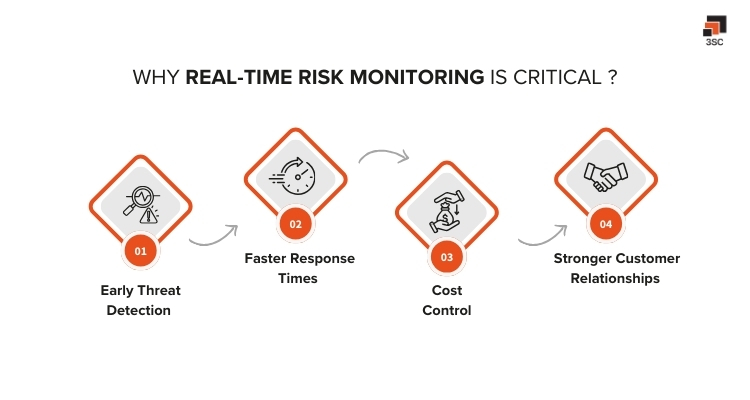
Why Real-Time Risk Monitoring Matters?
1. Early Threat Detection
In supply chain management, time is one of the most valuable resources. The earlier a threat is detected, the wider the range of solutions available. Real-time risk monitoring continuously scans for changes in geopolitical conditions, market dynamics, supplier performance, and environmental factors. This means companies can identify risks at their earliest stage often before competitors are even aware of them.
2. Faster Response Times
When disruptions occur, every minute counts. Delays in decision-making can magnify the impact, turning minor setbacks into major operational breakdowns. Real-time alerts, supported by actionable insights, allow supply chain teams to respond within minutes rather than days. This speed can be the deciding factor between keeping a shipment on schedule and facing costly delays.
3. Cost Control
Disruptions that are identified too late often lead to expensive emergency measures from air freighting goods to paying premium rates for spot market purchases. Real-time risk monitoring helps avoid these scenarios by catching problems early, enabling less costly interventions. Whether it is adjusting delivery schedules, sourcing materials from alternative suppliers, or changing transportation routes, timely action reduces the financial strain that last-minute crisis management inevitably brings.
4. Stronger Customer Relationships
In today’s competitive environment, reliability is as important as price. Customers expect consistent performance, even when external conditions are unpredictable. Real-time risk monitoring equips companies to keep customers informed about potential delays and, more importantly, demonstrate that measures are already in place to minimise the impact. This proactive communication builds trust and positions the business as a dependable partner.
Related read - What is End-to-End Supply Chain Visibility?
These benefits become even clearer when we consider the specific types of risks that real-time monitoring can detect and mitigate before they disrupt operations.
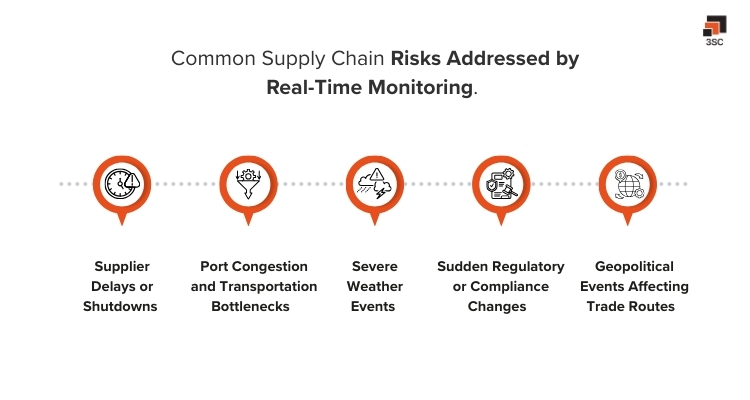
Common Risks Addressed by Real-Time Monitoring
Real-time risk monitoring helps businesses stay ahead of a wide range of potential disruptions, including:
1. Supplier Delays or Shutdowns
Caused by issues such as factory fires, equipment failures, labour strikes, or financial instability.
2. Port Congestion and Transportation Bottlenecks
Delays at major ports, border crossings, or along trucking and rail routes.
3. Severe Weather Events
Hurricanes, floods, snowstorms, and other conditions that can halt transportation and production.
4. Sudden Regulatory or Compliance Changes
New trade restrictions, tariffs, or compliance requirements introduced with little warning.
5. Geopolitical Events Affecting Trade Routes
Conflicts, territorial disputes, or security threats that disrupt shipping lanes and logistics corridors.
Understanding the risks is one thing but knowing how real-time monitoring tackles them in practice shows the real value of the approach.
How Real-Time Risk Monitoring Works in Practice
Real-time risk monitoring combines technology, data, and actionable insights to keep supply chains running smoothly.
1. Technology Backbone
- IoT and GPS Tracking – Monitors the location and condition of shipments in real time.
- AI and Machine Learning – Identifies patterns, predicts disruptions, and assesses potential impacts.
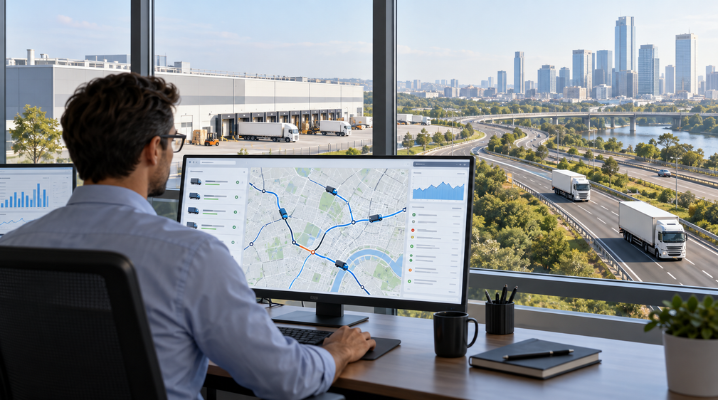
- Centralised Dashboards – Consolidates alerts and insights into one easy-to-use platform for faster decision-making.
2. Data Sources
- Supplier Performance and Compliance Data – Tracks reliability, delivery times, and adherence to standards.
- Customs and Trade Regulation Databases – Monitors changes in trade laws, tariffs, and import/export requirements.
- Global Weather Monitoring – Provides live updates on weather conditions along shipping routes.
- Real-Time News and Geopolitical Updates – Detects events that may impact transportation, sourcing, or market stability.
When technology, data, and proactive decision-making come together, the result is a supply chain that can stand strong against disruption and that’s where the true power of real-time risk monitoring lies.
Related read - Major Supply Chain Risks
Unlock Resilience with 3SC Risk AI
Supply chains today face constant disruption from geopolitical tensions, shifting trade policies, extreme weather, and sudden regulations. Managing these challenges requires more than visibility. It demands the ability to sense, assess, and act in real time across every function.
Real-time risk monitoring enables this by drawing on live data, analytics, and instant alerts to detect threats early and guide timely action. Combined with a robust Integrated Business Planning (IBP) framework, these insights do not just trigger responses. They feed directly into demand, supply, production, and financial plans. This ensures that decisions are aligned across teams, scenarios are evaluated quickly, and the most resilient path forward is chosen without delay.
The result is an agile, coordinated, and future-ready supply chain that can anticipate change, adapt seamlessly, protect margins, and sustain customer trust. By bringing risk monitoring and IBP together, companies turn disruption into an opportunity to learn, evolve, and strengthen their competitive edge in an unpredictable world.
Take control of your supply chain disruptions before they strike. With 3SC’s Risk AI, you get AI/ML-powered risk assessment that continuously monitors every node in your supply network by identifying, detecting, and diagnosing threats in real time. Be proactive, not reactive. Connect with our experts today at 3SC.