Key Takeaways
- Scaling consumer durable supply chains is increasing operational complexity.
- Traditional, siloed planning models struggle to manage modern supply chain dynamics.
- Expanding product portfolios and channels require stronger planning coordination.
- Integrated planning improves alignment across demand, supply, and operations.
- Advanced analytics and AI enhance forecasting and scenario-based decision-making.
- Strong planning capabilities are becoming a key competitive advantage.
Consumer durable supply chains have evolved significantly over the last decade. What were once relatively stable networks built around predictable demand and limited product portfolios have become far more complex and dynamic systems. Companies now manage larger product ranges, global sourcing networks, and multiple distribution channels while trying to meet increasingly demanding customer expectations.
This transformation is largely driven by industry growth and changing consumption patterns. The consumer electronics sector alone continues to expand steadily, with the global market valued at around $1.3 trillion in 2025 and expected to exceed $2 trillion by 2033.
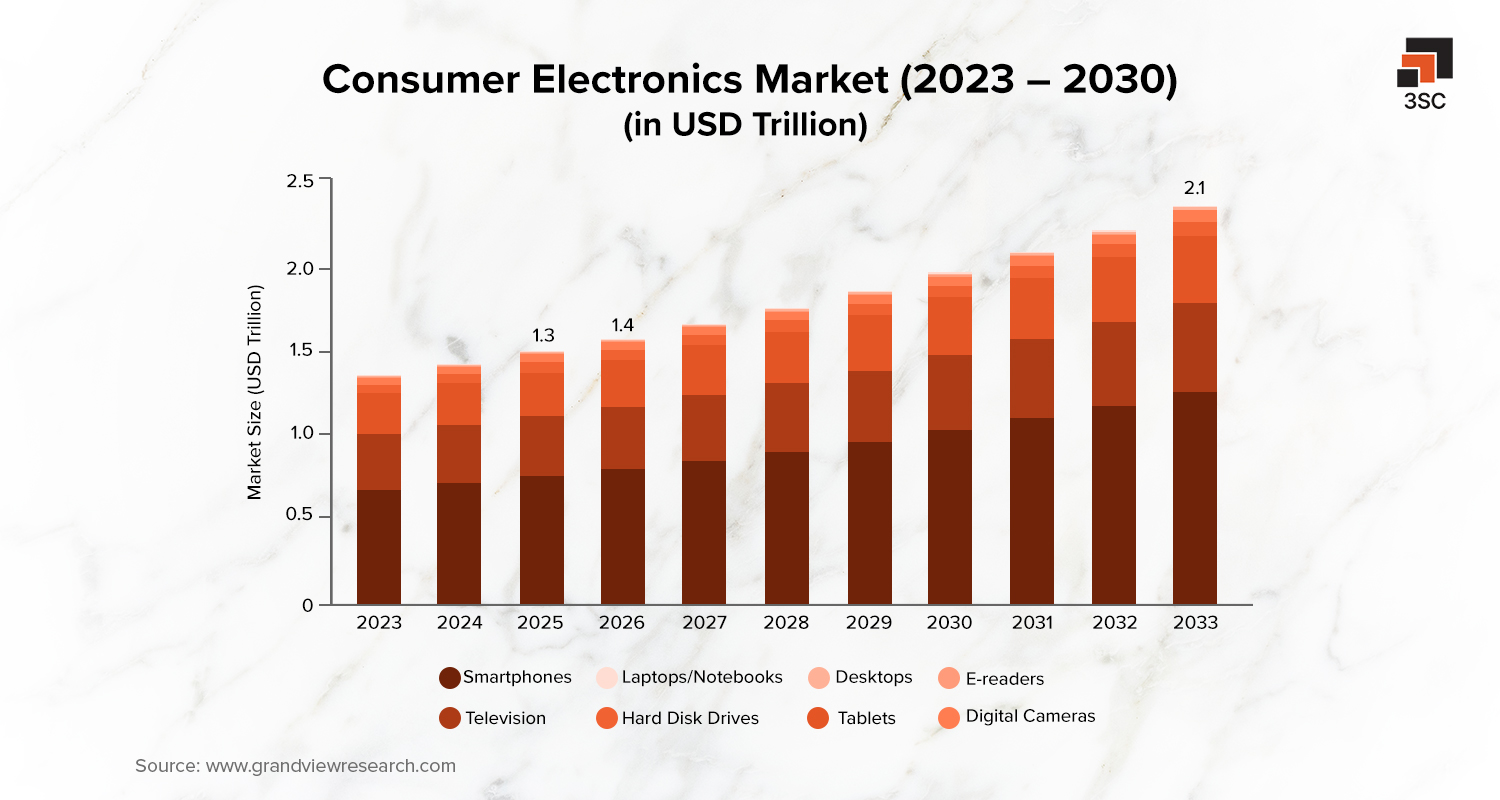
Growth on this scale brings new opportunities, but it also introduces significant operational challenges. Supply chains must now coordinate a much larger number of suppliers, manufacturing partners, logistics providers, and distribution channels.
As a result, companies are recognizing that the traditional approaches used to plan and manage supply chains are no longer sufficient. The focus is gradually shifting toward strengthening planning capabilities so that organizations can operate efficiently even as their supply chains continue to expand.
Why Traditional Planning Models Are Under Pressure
The shift from periodic, function-led planning to more continuous and integrated decision-making is exposing the limitations of traditional planning models.
Historically, planning in consumer durable companies was built around stable market conditions. Demand forecasts were created periodically, supply plans were adjusted accordingly, and execution teams managed changes as they occurred. This model worked well when variability was limited but is less effective in today’s dynamic environment. Here are a few challenges that supply chains face by using traditional planning approach:
1. Increasing Supply Chain Complexity
Modern consumer durable supply chains involve multiple layers of decision-making. Procurement manages supplier capacity and component availability, manufacturing coordinates production across facilities, and logistics ensures timely delivery to markets. These interconnected functions make planning inherently more complex.
2. Functional Silos and Fragmentation
When these functions operate independently, planning decisions become fragmented. Each team focuses on optimizing its own processes, but the overall supply chain may not be aligned. This often leads to inefficiencies and suboptimal outcomes.
3. Operational Challenges
The lack of coordination across functions results in common issues such as inventory imbalances, delayed product launches, and missed demand opportunities, directly impacting both service levels and profitability.
With increasing scale, supply chain complexity grows, as additional suppliers, components, and product variants create more interdependencies that require structured coordination. This makes integrated planning essential to improve visibility, align decisions, and enhance responsiveness across the network, ultimately positioning planning as a strategic capability that connects the supply chain and drives overall performance.
The Impact of Expanding Product and Channel Networks
As the consumer durables industry is facing growing supply chain complexity driven by expanding product portfolios, multi-channel distribution, and global sourcing dependencies, reliance on specialized components from global suppliers increases the risk of disruptions, making production and inventory planning more difficult. Together, these factors often lead to imbalances such as excess inventory in some regions and shortages in others.
To manage this complexity, organizations need more than just planning. They require better visibility across the supply chain, closer alignment between demand, supply, and inventory decisions, and the ability to evaluate multiple scenarios before execution. Such an approach enables companies to respond more effectively to variability, reduce inefficiencies, and improve overall supply chain performance.
The Shift Toward Integrated Planning
Many organizations are adopting integrated planning approaches that connect demand, supply, inventory, and logistics decisions within a single framework. Integrated planning allows different functions to work with the same data and understand how their decisions influence the broader supply chain.
This shift requires both process and technology changes.
From a process perspective, planning teams must collaborate more closely and share information across functions. Demand planners need visibility into supply constraints, while supply planners must understand demand priorities and market requirements.
From a technology perspective, companies are increasingly investing in digital planning platforms that consolidate data from different systems and provide real-time insights into supply chain performance. These platforms allow planners to analyse demand signals, monitor supplier capacity, and evaluate production constraints in a unified environment.
The result is a more coordinated planning process that reduces decision latency and improves overall supply chain responsiveness.
Building Planning Capabilities for Scaling Supply Chains
Strengthening supply chain planning requires a more structured and integrated approach that goes beyond traditional processes, helping Consumer Durable companies build the resilience and agility needed to navigate expanding supply chain networks. Few of the planning capabilities are:
1. Building Strong Planning Foundations
Strengthening planning capabilities requires a combination of organizational alignment, technology investment, and talent development. Planning processes must enable collaboration across functions and provide clear visibility into supply chain performance.
2. Establishing a Unified Data Foundation
A key priority is ensuring access to reliable and timely data across the supply chain. This includes demand signals, supplier performance metrics, inventory levels, and transportation status, all of which are critical for effective decision-making.
3. Adopting Scenario Planning
As complexity increases, organizations need to move beyond single forecasts. Scenario planning enables evaluation of multiple potential outcomes, helping businesses prepare for demand variability, supply disruptions, and market shifts while maintaining flexibility.
By strengthening these capabilities, organizations can build more resilient, agile, and data-driven supply chains that are better equipped to navigate uncertainty and support sustainable growth.
Conclusion
The consumer durables industry will continue to grow and evolve in the coming years, driven by technological innovation and changing consumer expectations. Supply chains will become even more interconnected, and companies will need to manage larger networks of suppliers, manufacturing partners, and distribution channels.
In this environment, planning will play a critical role in ensuring that supply chains operate efficiently and remain resilient to disruptions. Organizations that invest in integrated planning processes, advanced analytics, and skilled planning teams will be better equipped to navigate future challenges.
Ultimately, strengthening planning capabilities allows companies to scale their supply chains with confidence. Instead of reacting to complexity, they can manage it effectively and turn it into a competitive advantage.