Highlights
- Supply chain intelligence moves organizations from visibility to foresight.
- Integrated data enables earlier risk detection and faster decisions.
- AI and automation turn insight into real-time action.
- SCI delivers measurable gains in efficiency and inventory performance.
- It is essential for balancing cost, service, and sustainability.
What Is Supply Chain Intelligence?
In today’s volatile global markets, supply chains are under constant pressure. Geopolitical tensions, extreme weather events, regulatory shifts, and unpredictable demand patterns have made disruption the norm rather than the exception. For supply chain leaders, the challenge is no longer whether disruption will occur, but how quickly and effectively their organizations' can respond.
This is where Supply Chain Intelligence (SCI) comes in.
Supply chain intelligence transforms vast amounts of fragmented data into actionable insights that help organizations' anticipate risks, make faster decisions, and act proactively rather than reactively. Unlike traditional visibility tools that simply tell you what has already happened, SCI focuses on foresight helping you understand what is likely to happen next and what to do about it.
For leaders in CPG and manufacturing industries, SCI is rapidly becoming a critical capability for turning uncertainty into a competitive advantage. This blog breaks down what supply chain intelligence really means, its core components, and the tangible business benefits it delivers in the uncertain landscape of 2026.
What Supply Chain Intelligence Really Means
Supply chain intelligence is the strategic practice of gathering, integrating, and analyzing data across the entire supply chain from sourcing and production to logistics and final delivery to inform better decisions and mitigate risk.
At its core, SCI goes beyond end-to-end visibility. While visibility answers “Where is my inventory or shipment right now?”, intelligence answers more powerful questions:
- What risks are emerging across my supply network?
- How will demand shift if market conditions change?
- Which decisions should we make now to protect service, cost, and margin later?
By combining internal operational data with external signals such as weather patterns, port congestion, geopolitical events, or commodity price movements, SCI creates a unified intelligence layer across the supply chain. The result is a shift from urgency-driven responses to scenario-informed decision-making.
The Key Components of Supply Chain Intelligence
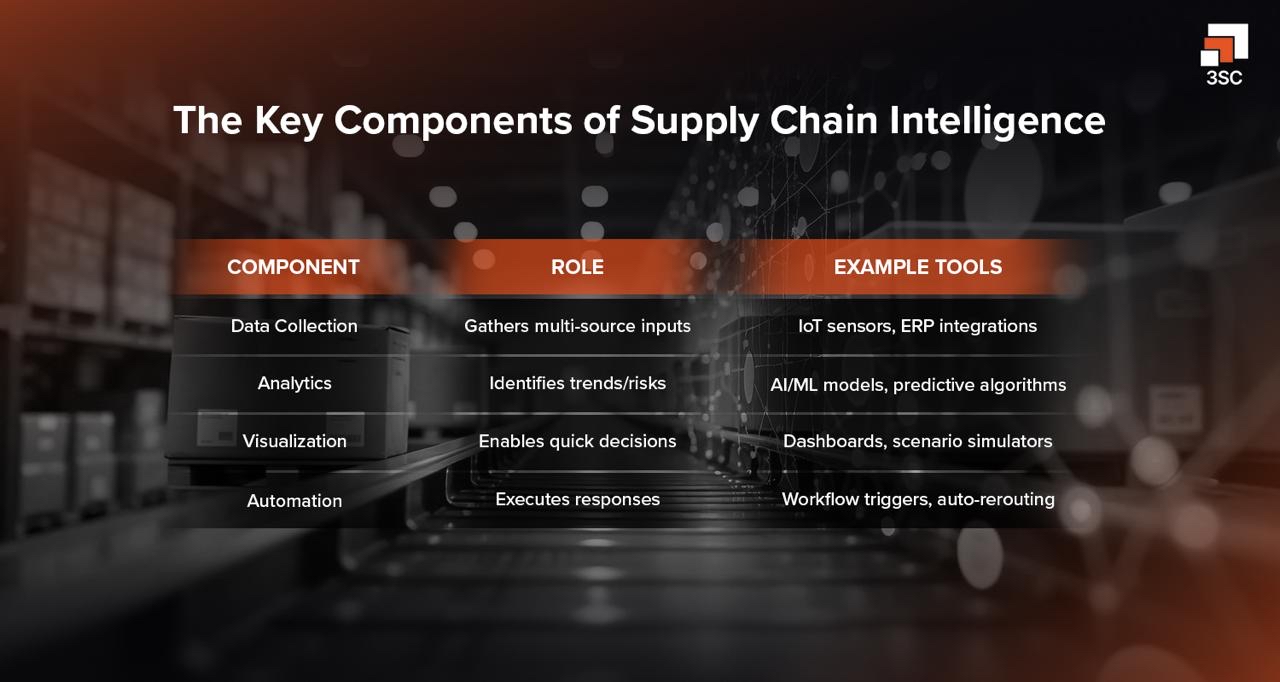
Effective supply chain intelligence is built on four interconnected components that work together to convert data into action.
1. Data Collection
SCI begins with comprehensive, real-time data collection across multiple sources. This includes internal systems such as ERP, TMS, and WMS, as well as IoT sensors that track location, temperature, or asset condition. External data sources like supplier performance metrics, port congestion updates, weather forecasts, and market indicators, add critical context that internal systems alone cannot provide.
The value here lies not in more data, but in relevant, connected data across the entire value chain.
2. Advanced Analytics
Once data is integrated, advanced analytics powered by AI and machine learning identify patterns that humans would struggle to detect at scale. These models forecast demand, predict delays, assess supplier risk, and simulate the impact of different decisions before they are made.
For example, predictive analytics can flag a high likelihood of supplier disruption weeks in advance, allowing procurement teams to secure alternatives before service levels are impacted.
3. Visualization and Automation
Insights only matter if they are accessible and actionable. SCI platforms translate complex analytics into intuitive dashboards, alerts, and scenario simulations. Decision-makers can quickly understand trade-offs, cost versus service, speed versus sustainability and respond in near real time.
Automation takes this one step further by triggering workflows automatically. A weather-related risk, for instance, can prompt shipment rerouting or inventory rebalancing without waiting for manual intervention.
4. Decision Intelligence
The final layer is decision intelligence where insights are directly tied to business outcomes. Predictive models help optimize inventory levels, procurement strategies, and logistics networks while factoring in service targets, working capital constraints, and ESG goals.
This is where SCI becomes a true strategic capability, enabling leaders to pre-define decisions and trigger points rather than improvising under pressure.
The Business Benefits of Supply Chain Intelligence
When implemented effectively, supply chain intelligence delivers measurable improvements across cost, resilience, and performance.
1. Risk Mitigation
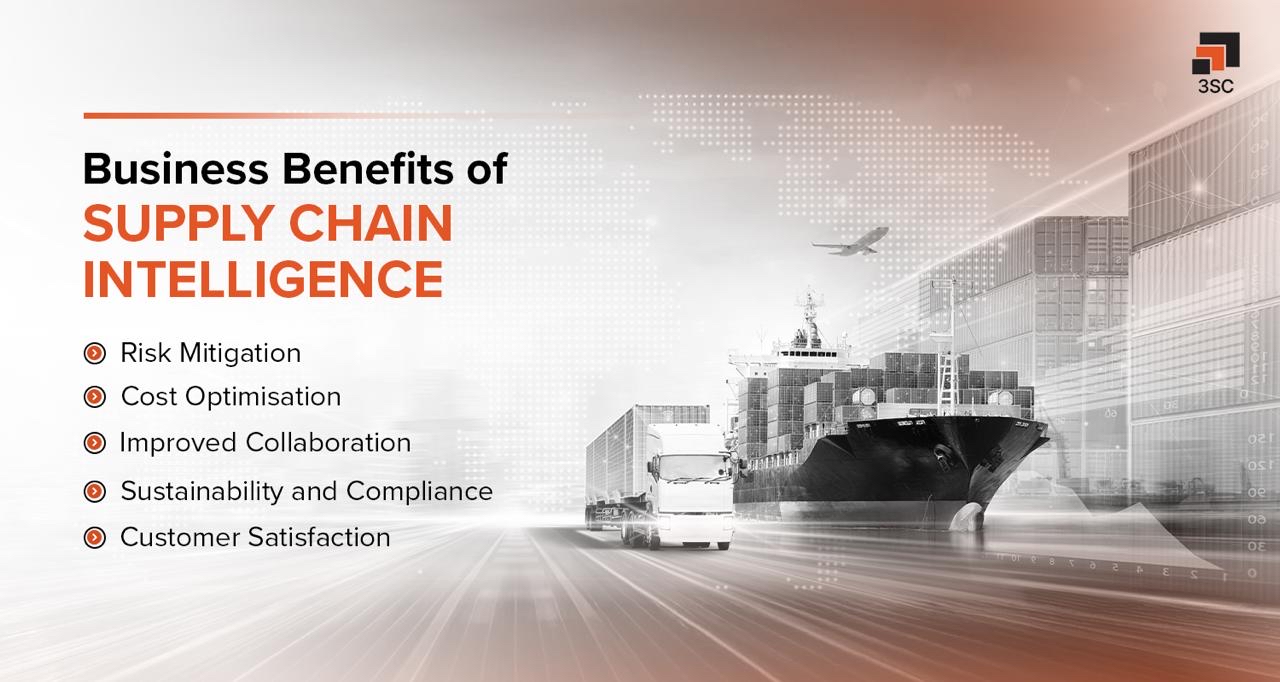
Early detection of disruptions, whether supplier delays, geopolitical instability, or transportation bottlenecks, reduces downtime and revenue loss. Instead of reacting once a problem hits, teams can act while there is still time to influence outcomes.
2. Cost Optimisation
With more accurate demand forecasts and dynamic routing decisions, organizations can significantly reduce excess inventory and expedite costs. Many companies report inventory cost reductions of 20 - 30% by aligning stock levels more closely with real demand signals.
3. Improved Collaboration
SCI creates a shared source of truth across suppliers, manufacturers, and logistics partners. Aligned data and KPIs reduce friction, improve accountability, and enable faster cross-functional decision-making.
4. Sustainability and Compliance
As Scope 3 emissions reporting and ESG regulations tighten in 2026, SCI plays a crucial role in tracking emissions, waste, and supplier sustainability performance. This allows organizations to balance cost, service, and environmental impact rather than treating sustainability as an afterthought.
5. Customer Satisfaction
Ultimately, better intelligence leads to better service. Real-time adjustments and proactive risk management improve on-time delivery, reduce stockouts, and increase customer trust—critical advantages in competitive B2B and consumer markets.
Top-performing organizations using SCI report efficiency gains of 15 25%, alongside stronger resilience and faster response times during periods of volatility.
Conclusion: From Visibility to Foresight
In this dynamic business environment, supply chain intelligence is a critical capability. It equips leaders with the foresight to cut costs, reduce risk, and drive sustainable growth—without relying on reactive fixes.
By integrating data across operations and transforming it into decision-ready intelligence, organizations can move from constant firefighting to strategic agility. The result is a supply chain that not only withstands disruption but uses it as a source of competitive advantage.
If you’re exploring how to strengthen your supply chain, start by assessing your data sources, analytics, maturity, and decision workflows. Intelligence isn’t about seeing more; it’s about deciding better, faster, and with confidence.
Partner with 3SC for Intelligent, Resilient Supply Chains
At 3SC, we help businesses move beyond traditional planning with AI-driven insights, end-to-end visibility, and collaborative supply chain solutions. From reducing risks to improving agility and resilience, our expertise ensures your supply chain isn’t just prepared for today’s challenges but ready to thrive in tomorrow’s uncertainty.
Discover how 3SC can transform your supply chain into a strategic advantage - 3SC | Leading AI-Driven Supply Chain Solutions & Analytics Provider
Suggested Reading
- Demand Forecasting Methods
- Demand Forecasting for New Products
- Features of Demand Forecasting
- Integrated Business Planning (IBP)