Highlights
- As beauty scales, complexity grows faster than decision speed.
- SKU proliferation drains strategic focus through endless micro-decisions.
- Most planning and execution issues stem from slow decisions, not bad data.
- Decision-centric planning turns analysis into faster, clearer choices.
- Winning at scale in beauty depends on making better decisions, faster.
The global beauty and personal care industry is entering a new era of scale. By 2030, the market is expected to exceed $900 billion, driven by relentless innovation, brand extensions, and increasingly rapid product launches. Skincare brands are becoming wellness platforms. Haircare lines fragment into texture, concern, and ingredient-specific subcategories. Makeup cycles now follow social algorithms, not seasons.
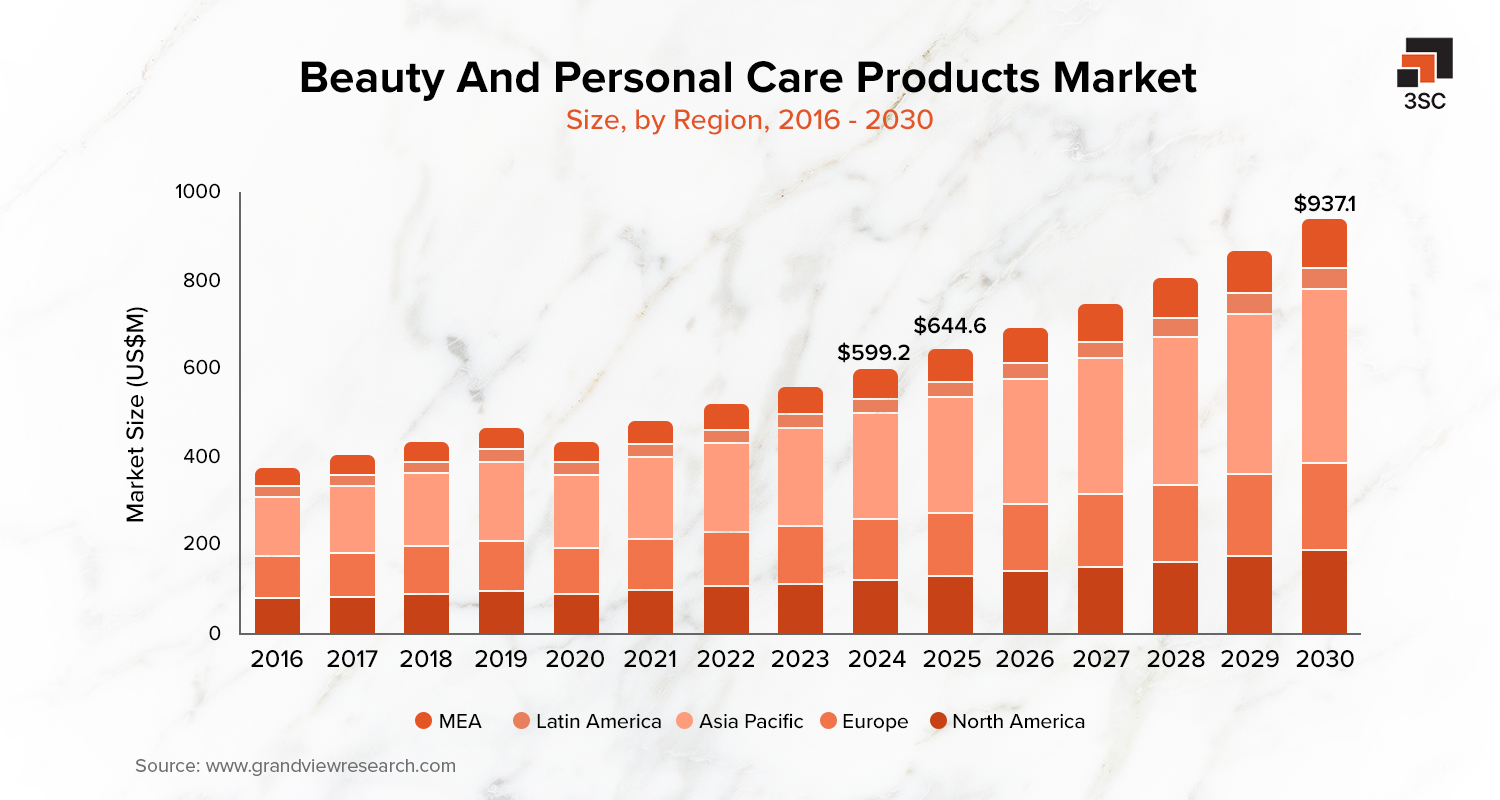
Growth, in other words, is no longer optional and neither is complexity. SKU counts expand as brands chase relevance across demographics, channels, and geographies. On paper, organizations scale to meet the challenge: more planning systems, more data sources, and more rounds of review, override, and translation of forecasts across teams.
Yet something fundamental lags behind. While operational infrastructure grows, decision velocity often slows. Teams spend weeks reconciling plans, debating scenarios, and aligning stakeholders, only to act when the market has already shifted. The organization becomes more capable, yet less decisive.
In an industry where trends emerge overnight and shelf life is shrinking, this gap between planning scale and decision speed is becoming the defining constraint on growth in the personal care industry.
Core Tension: When More Choice Dilutes Focus
Every additional SKU promises incremental upside, but it also multiplies decisions. A single launch creates downstream questions: volume assumptions, pack-size splits, channel prioritization, inventory buffers, promotional support. Multiply that by dozens of launches across regions, and complexity accelerates non-linearly.
The challenge isn’t forecasting alone. It’s cognitive bandwidth. Leaders and teams are pulled into a constant stream of micro-decisions that feel tactical but collectively consume strategic attention. Instead of debating where the brand should place its biggest bets, meetings devolve into reconciling assumptions and adjusting numbers.
Over time, this erosion of focus has consequences. Strategy becomes reactive. Planning becomes defensive. And speed, once a competitive advantage turns into hesitation disguised as rigor.
Pain Points Across the Personal and Beauty Value Chain
1. Planning & Forecasting
Beauty and personal care demand is shaped by cultural moments, creator influence, ingredient narratives, and platform algorithms. These forces move faster than traditional planning cadences. Monthly or quarterly forecasts struggle to absorb viral spikes, sudden ingredient bans, or rapid channel shifts. As a result, forecast accuracy degrades, not because teams lack sophistication, but because the cycle itself is misaligned with reality.
2. Inventory & Service Levels
When decisions are delayed, inventory takes the hit. Established hero SKUs build excess stock while fast-growing products sell out. Safety stock shifts from a strategic choice to a hedge against uncertainty. The result is a familiar paradox: too much inventory in the wrong places and not enough where demand is strongest, locking up cash and frustrating consumers.
3. Channel Allocation
D2C, marketplaces, specialty retail, mass, and international distributors each demand different economics and service expectations. Allocation decisions made too late often default to historical splits rather than current opportunity. The risk isn’t just inefficiency; it’s missed momentum in the very channels driving category growth.
4. The Underlying Pattern
These issues are frequently attributed to poor data, weak forecasting, or insufficient tools. But the pattern is consistent across organizations with very different tech stacks. The true root cause is delayed decision-making. When critical choices aren’t surfaced, framed, and resolved quickly, execution breaks down, no matter how advanced the analytics.
Pivot to Decision-Centric Planning
Traditional planning is designed to optimize outputs, forecasts, supply plans, and inventory targets. It operates on the assumption that if the numbers are right, decisions will naturally follow. In today’s beauty landscape, that assumption is increasingly strained. The real bottleneck isn’t just calculation; it’s choice.
Decision-centric planning flips the model. Instead of starting with data and working toward action, it begins by identifying the decisions that matter most and then designs planning processes to support fast, confident judgment. These decisions might include:
- How aggressively to scale a breakout SKU
- Which launches deserve constrained capacity
- Where to absorb risk - inventory, service, or margin
- When to exit or rationalize underperforming lines
What makes this approach powerful is that it makes trade-offs explicit. Rather than burying uncertainty inside models, it surfaces it early allowing leaders to weigh options, align priorities, and commit before execution windows close.
What Changes When Planning Becomes Decision-Centric
As organizations shift toward decision-centric planning, several changes emerge. With greater maturity, planning cycles begin to shorten as analysis becomes more focused and purposeful. Meetings centre on choices rather than reports, and teams spend less time reconciling numbers and more time debating implications.
Accountability sharpens as decisions are clearly defined and ownership becomes explicit. Leaders understand where judgment was applied and why, building confidence alongside speed.
In practice, decision-centric planning is enabled by AI and intelligent analytics that connect information across the organization. These planning systems provide a unified view of constraints, trade-offs, and potential outcomes, allowing teams to evaluate scenarios quickly and understand the impact of each decision before committing.
Why does this matter now? Because volatility is increasingly structural, not occasional. The brands that win won’t be the ones with perfect forecasts alone, but the ones that can decide quickly, adjust deliberately, and move forward with clarity, even when information is incomplete.
Most importantly, decision-centric organizations regain strategic bandwidth. By resolving critical choices earlier, they free leaders to think about brand direction, innovation bets, and long-term advantage rather than firefighting downstream consequences.
When Scale Amplifies Risk and Reveals What Matters
As beauty and personal care companies reach greater scale, the nature of risk fundamentally changes. Decisions that once affected individual SKUs now ripple across portfolios, regions, and channels. Small delays compound. Minor misalignments cascade into systemic inefficiencies.
At this level of complexity, success isn’t determined by how precise the plan looks on paper. Strong forecasts and robust analytics remain essential but they are only the starting point. What separates winners is the ability to turn insight into action quickly, before market windows close.
In a category shaped by fast-moving consumers and unforgiving timelines, decisiveness becomes a strategic asset. Growth rarely fails because teams lack information; it fails when organizations wait for perfect answers instead of making timely choices.
The next competitive advantage in beauty won’t come from more data, more SKUs, or more sophisticated tools alone. It will come from faster, clearer decisions that are made confidently, at scale.
Turn Planning into Faster Decisions with 3SC
As beauty and personal care organizations scale, delays between insight and action lead to missed trends, inventory imbalance, and margin pressure. Decision-centric planning helps brands reduce decision latency, clarify trade-offs, and move faster in volatile, trend-driven markets.
Connect with us to learn how 3SC enables better decisions at speed, at scale - 3SC | Leading AI-Driven Supply Chain Solutions & Analytics Provider

Suggested Reading
- Why Scaling F&B Supply Chains Need Better Decisions?
- Supply Chain Management Trends 2026
- Why Supply Chain Analytics is Important?
- How to Modernise the Supply Chain?
- New Product Introduction in Supply Chains
- Risk Management in Steel Supply Chain Planning
- India’s Food & Beverage Supply Chain - Challenges & Solutions