Multi-tier supplier visibility helps global supply chains identify the suppliers, sites, materials, and risks hidden beyond Tier 1. By mapping deeper supplier relationships, companies can uncover concentration risks, improve compliance, trace quality issues, strengthen planning, and respond to disruptions earlier. Effective visibility depends on reliable data, supplier collaboration, continuous updates, and connected decision making.
Key Takeaways
- Multi-tier visibility reveals the suppliers behind your direct vendors.
- It uncovers hidden risks, dependencies, and compliance gaps.
- Start with critical products and high-risk suppliers.
- Accurate data and supplier collaboration keep visibility reliable.
- Earlier visibility gives teams more time to respond.
A production planner opens the morning report and sees that a critical component will arrive three weeks late. The direct supplier explains that a specialist material is unavailable. Procurement begins searching for alternatives, logistics checks faster transport options, and customer teams prepare to revise delivery commitments.
Yet the disruption did not begin with the direct supplier. It started months earlier at an upstream company the business did not know existed.
This is the gap that multi-tier supplier visibility is designed to close. It helps companies understand the suppliers, sites, materials, dependencies, and risks hidden behind their immediate vendors. Instead of discovering a problem after it reaches production, teams gain the context needed to respond while practical options are still available.
What is Multi-Tier Supplier Visibility?
Multi-tier supplier visibility is the ability to identify, monitor, and understand suppliers across several levels of an extended supply network. It goes beyond the companies that hold direct contracts with your business.
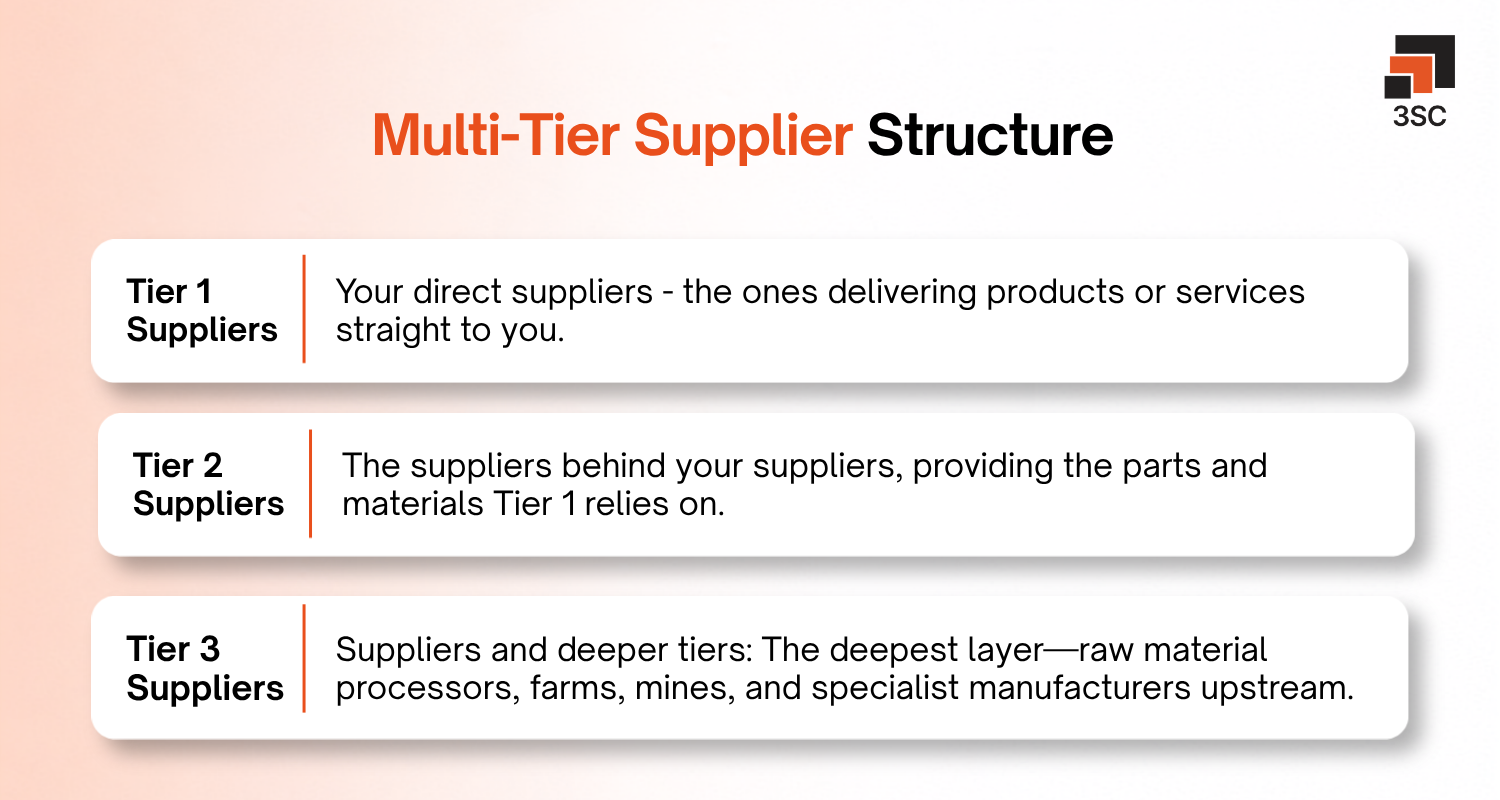
A typical supplier structure includes:
- Tier 1 suppliers: These companies provide products, components, or services directly to your business.
- Tier 2 suppliers: These are the businesses that provide materials, parts, or services to your Tier 1 suppliers.
- Tier 3 suppliers and deeper tiers: These may include raw material processors, farms, mines, chemical producers, specialist manufacturers, or other businesses positioned further upstream.
Knowing the names of these suppliers is only the beginning. Meaningful visibility also connects suppliers to their production sites, materials, lead times, available capacity, quality performance, certifications, geographic exposure, and affected products.
Consider an electronics manufacturer that buys control units from two Tier 1 suppliers. On paper, the company appears to have diversified its supply. A deeper supplier map may reveal that both vendors purchase semiconductors from the same producer. The company has two contracts, but the actual supply network still depends on one source.
That hidden dependency explains why a supplier list is not the same as supply chain visibility.
What are the benefits of Multi-Tier Supplier Visibility?
The further a company moves upstream, the weaker its understanding usually becomes. Direct suppliers may be closely monitored, while the companies supplying critical materials or specialised components remain largely unknown.
This creates a serious problem because disruptions do not follow contractual boundaries. A flood, labour issue, financial failure, quality defect, cyber incident, energy shortage, or trade restriction can originate several tiers away and still stop your production line.
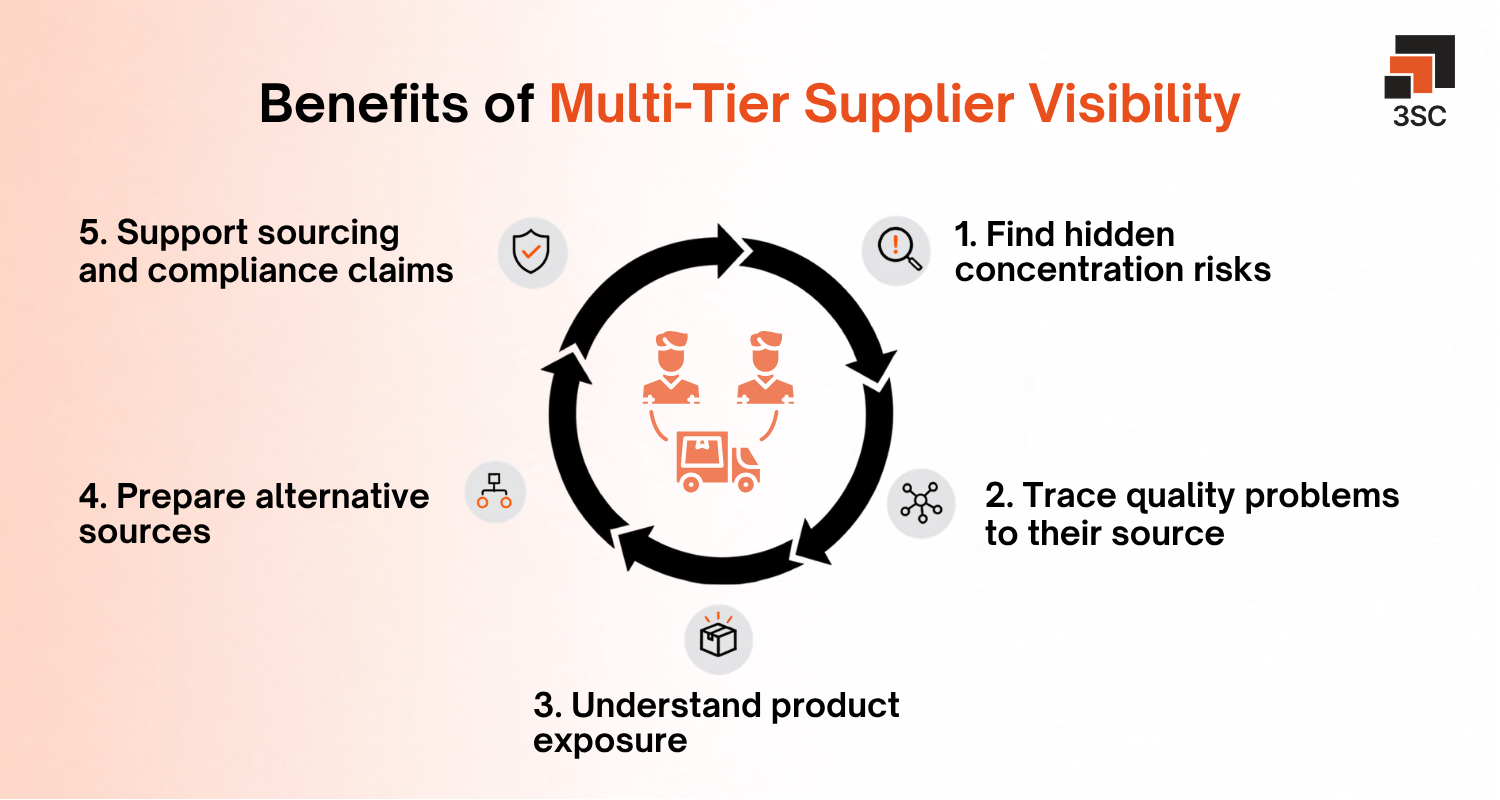
Multi-tier supplier visibility helps companies:
- Find hidden concentration risks: Several direct suppliers may depend on the same upstream manufacturer, raw material source, port, or geographic region.
- Trace quality problems to their source: Defects can be connected to a particular material, batch, process, site, or sub supplier.
- Understand product exposure: Teams can identify which products, facilities, orders, and customers may be affected by an upstream event.
- Prepare alternative sources: Potential replacements can be evaluated before a disruption creates an urgent shortage.
- Support sourcing and compliance claims: Businesses gain stronger evidence about material origins, labour conditions, environmental practices, and supplier certifications.
Once these relationships are visible, an upstream event stops being an isolated supplier alert. It becomes a business impact that procurement, planning, production, logistics, compliance, and finance can evaluate together.
Why Does Multi-Tier Supplier Visibility Matter for Compliance?
Businesses may contract only with Tier 1 suppliers, but their legal and reputational exposure can extend to the farms, mines, factories, and subcontractors further upstream.
Regulations and customer requirements increasingly ask businesses to demonstrate where materials came from, how products were made, and whether environmental and social standards were followed. A statement from a direct supplier may not provide enough evidence when an authority, investor, customer, or auditor asks for verified information.
A credible due diligence process may require companies to retain:
- Supplier and facility identities
- Country and region of origin information
- Certifications and audit records
- Material traceability documents
- Risk assessments
- Corrective action plans
- Evidence that identified issues were resolved
This means multi-tier visibility is not only a resilience initiative. It is becoming an important part of market access, responsible sourcing, product traceability, and corporate accountability.
The question is shifting from whether a company asked its direct supplier to whether it can demonstrate what happened across the relevant supply chain.
What are the challenges in implementing Deeper Supplier Visibility?
Mapping suppliers beyond Tier 1 sounds simple until the process begins. Different systems, reluctant suppliers, incomplete records, and changing sourcing relationships quickly make the network harder to understand.
According to McKinsey’s 2025 supply chain risk survey, 90 percent of surveyed organisations had visibility into Tier 1 suppliers, but only 58 percent had comparable visibility into Tier 2 suppliers and deeper levels of the network. The gap shows how quickly transparency declines once companies move beyond their direct supplier relationships.
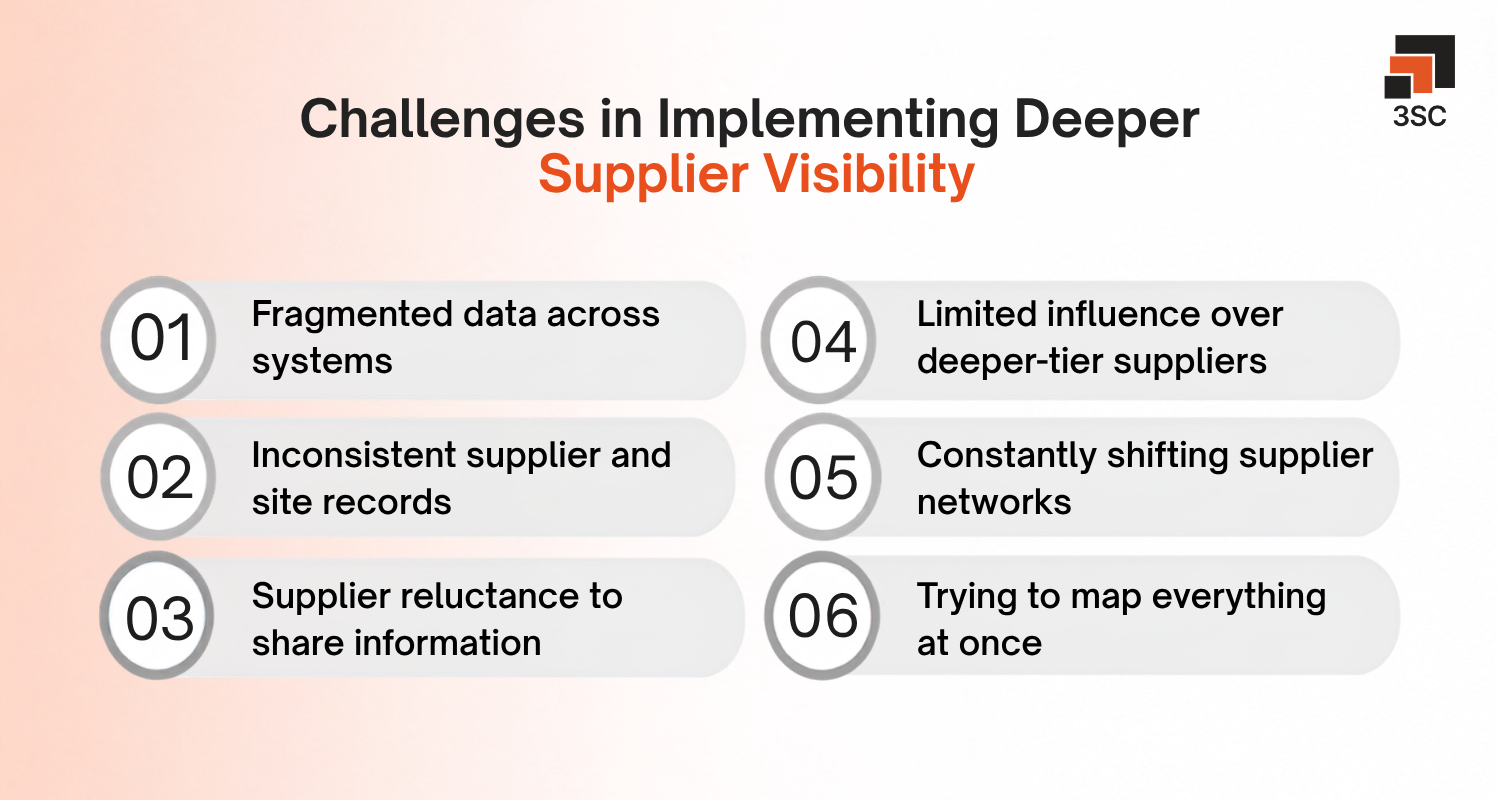
The most common challenges include:
1. Fragmented information across systems
Supplier information is often divided between procurement platforms, spreadsheets, emails, quality applications, logistics systems, and sustainability databases. Without a connected data structure, teams cannot easily determine how one upstream supplier affects a specific material, product, order, or customer.
2. Inconsistent supplier and site data
The same supplier may appear under different names across business systems. Addresses may be incomplete, site codes may not match, and materials may be described differently by buyers, planners, and suppliers. These inconsistencies make it difficult to identify duplicate entities or shared upstream dependencies.
3. Supplier reluctance to share information
Tier 1 suppliers may consider their sourcing relationships commercially sensitive. They may fear that customers will approach sub suppliers directly or use the information during negotiations. Confidentiality agreements, clear data usage policies, and mutual business benefits can help address these concerns.
4. Limited influence over deeper suppliers
Companies usually have contracts with Tier 1 suppliers but little direct authority over Tier 2 or Tier 3 companies. Requests for assessments, documents, or corrective action may need to pass through the direct supplier, making communication slower and less consistent.
5. Supplier networks change constantly
Suppliers frequently change production sites, subcontractors, material sources, and logistics partners. A map that was accurate several months ago may already be incomplete. Visibility must therefore be maintained continuously.
6. Attempts to map everything at once
A global supply network may contain thousands of suppliers and facilities. Trying to map every relationship immediately can overwhelm teams. A focused approach beginning with critical products, regulated materials, and high-risk regions produces faster value.
The objective is not to collect the largest possible amount of supplier data. It is to create accurate, connected information that supports decisions when a disruption or compliance concern appears.
How to Build Multi-Tier Supplier Visibility?
A practical visibility program begins with business criticality rather than the entire supplier base.
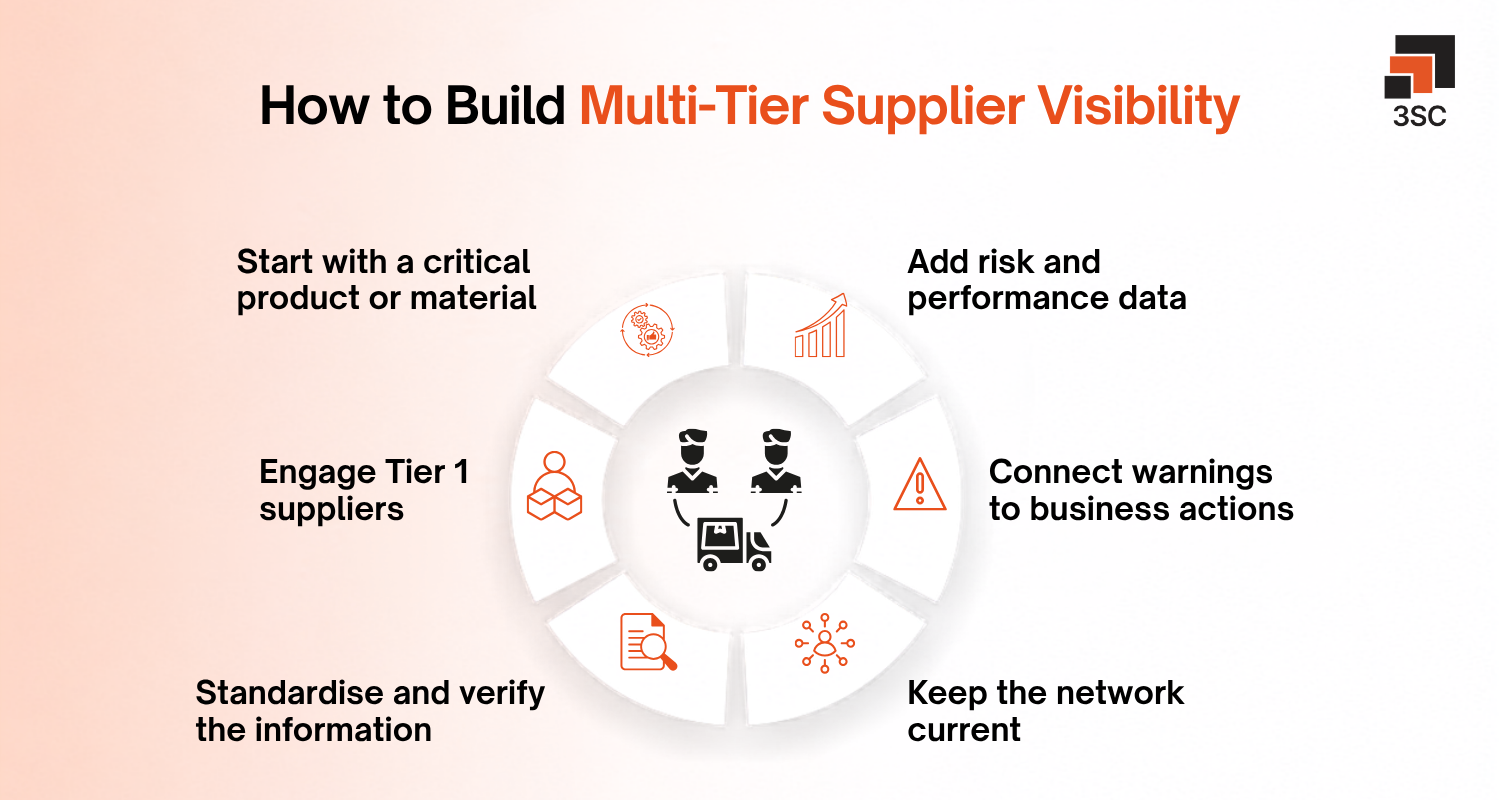
1. Start with a critical product or material
Select a high revenue product, regulated category, long lead time component, or material with limited alternatives. This keeps the first mapping exercise focused and manageable.
2. Engage Tier 1 suppliers
Ask direct suppliers to disclose important manufacturing locations, critical Tier 2 relationships, raw material origins, single source dependencies, and available alternatives. These requirements should be included in onboarding, quotation requests, contracts, and supplier reviews.
3. Standardise and verify the information
Create consistent fields for supplier names, locations, materials, ownership, certifications, and supply relationships. Compare supplier declarations with bills of material, shipping documents, audits, transaction records, and other credible sources.
4. Add risk and performance data
Connect each supplier to relevant indicators such as delivery reliability, quality performance, financial health, geographic exposure, sustainability status, available capacity, and lead time.
5. Connect warnings to business actions
When a critical supplier is affected, the business should know who is responsible for responding. Actions may include qualifying another source, changing inventory targets, adjusting production, reallocating supply, or beginning a supplier audit.
6. Keep the network current
Suppliers should be required to report changes in sourcing locations, subcontractors, materials, and critical dependencies. Periodic reviews are necessary because an outdated map can create false confidence.
The aim is to build a living representation of the supply network rather than a static diagram created for a single project.
What Does Visibility in a Global Supply Chain Look Like?
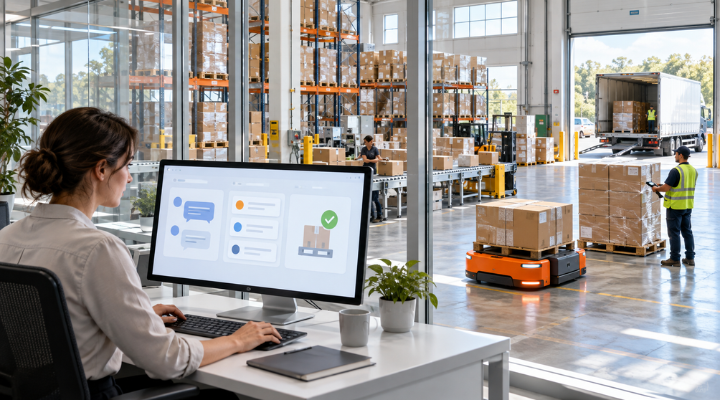
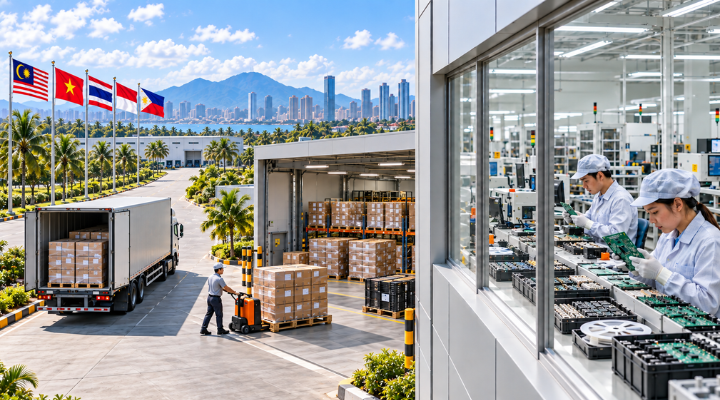
Visibility in a global supply chain means being able to see what is happening across suppliers, materials, shipments, plants, inventory, and orders, not just within your Tier 1 network, but within the entire value chain.
It gives teams a connected view of where critical materials come from, which suppliers and locations support them, where disruptions are developing, and which products or customer orders could be affected.
When an issue emerges upstream, procurement can identify alternative suppliers, planning can adjust inventory and production priorities, operations can prepare for potential delays, and finance can understand the likely cost impact.
In practice, visibility means knowing what is happening, where it is happening, what it could affect, and what actions are available before the disruption reaches the business.
That is what makes visibility in global supply chains valuable. It turns a complex supplier network into a clearer picture of dependencies, risks, and potential actions.
Build Deeper Supplier Visibility with 3SC
Connect supplier data across tiers, uncover hidden dependencies, and understand how upstream risks may affect products, plants, inventory, and customer commitments. 3SC helps supply chain teams move from fragmented supplier information to a connected view that supports faster risk assessment, stronger planning, and more coordinated action across the business.