Key Takeaways
- Deep vulnerabilities in global supply chains are surfacing because of sovereign tensions.
- European industries are rethinking their source, plan, and production models to avoid port congestion.
- SMBs and large businesses are disproportionately affected by disruptions.
- Alternative trade routes are nothing but temporary fixes.
- Supply chains now demand agility, better visibility, scenario planning, and digitalization for long-term competitiveness.
Escalating tensions between Israel and Iran are once again navigating the global supply chains in turbulent waters. Recent developments, especially disruptions in critical maritime corridors, have triggered a cascade of logistical, operational, and economic ripple effects across industries. Moreover, the involvement of major global superpowers has further intensified the complexities and has thrown supply chains into turmoil. What was once a localized concern has evolved into a global resilience test, reinforcing the need for agility, foresight, and digital preparedness.
In today’s interconnected world, supply chains do not operate in silos. A delayed vessel in the Gulf can ripple through European automotive plants, Asian electronics hubs, and North American retailers. As these disruptions increase in frequency and complexity, businesses must shift their mindset from reactive mitigation to strategic readiness.

The Raw Material Challenge: When Inputs Become Constraints
Europe’s competitiveness in sectors such as automotive, packaging, and agriculture is underpinned by a steady flow of Gulf-sourced petrochemicals, polymers, and fertilizers. Much of this comes from countries like Saudi Arabia and the UAE who have long served as primary export hubs for energy-derived materials. Europe’s domestic production remains weak. Ethylene cracker plants across the continent operated at just 60–70% capacity in 2024, compared to 87% utilization in the U.S. Gulf Coast. Adding regional disruptions to this through port delays, production outages, or shipping hesitancy, can cause stock imbalances, inflate prices, and compromise production cycles.
For example, if a fertilizer shipment is delayed due to rerouting, agricultural suppliers may miss planting cycles, with knock-on effects across food value chains. AI-powered demand sensing and replenishment tools can mitigate this risk by continuously monitoring external disruptions, flagging potential shortages, and recommending early reordering.
Leading supply chain platforms today offer granular visibility into raw material dependencies. This enables planners to simulate alternate sourcing routes or prioritize suppliers with multi-origin capabilities.
SMEs, Retailers, and the Strain of Instability
While large enterprises often have buffers and backup plans, small and mid-sized businesses (SMEs) face disproportionate exposure to global shocks. A single raw material delay can derail production for weeks; an unexpected freight hike can erase profit margins. According to A.P. Moller Maersk, 76% of European shippers experienced supply‐chain disruptions in 2024, with one in three unable to secure essential production materials.
According to 2024 data, over 30% of European SMEs reported an inability to fulfil orders due to material unavailability, with 62% citing increasing supply chain risks. For these businesses, building resilience increasingly calls for smart digital planning over traditional reactive approaches.
Cloud-native tools that offer forecasting, automated alerts, and exception management allow SMEs to monitor risks at a fraction of traditional costs. For example, an apparel retailer anticipating delays on imported fabrics can use demand sensing tools to shift promotion schedules, avoid stockouts, and maintain customer satisfaction even without large safety stocks.
Resilience and Scenario Planning: Building Optionality
The ongoing instability around due to the Iran-Israel conflict is one of the many disruptions that have been affecting supply chains. This is leading businesses to reevaluate their traditional routing and sourcing strategies. Scenario planning tools are now essential, enabling real-time simulations of disruptions and their cascading effects on inventory, service levels, and profitability.
Related read - Why Scenario Planning Is Key to Business Success
Boardroom questions demand real-time answers. The answer lies in scenario planning engines. Modern supply chain platforms now incorporate predictive models that simulate multiple “what-if” paths, analysing the impact on inventory, service levels, and profit margins.
With advanced supply chain suites, businesses can evaluate a 10-day lead time extension from the Gulf, compare the risks and costs of rerouting via India or Türkiye, or quantify the ROI of relocating production closer to demand centres. This kind of digital optionality turns reactive firefighting into proactive planning. Thus, equipping organizations to not just absorb shocks, but outmanoeuvre them.
The Strait of Hormuz: A Small Passage with a Massive Impact
At the heart of current disruptions lies the Strait of Hormuz—a narrow maritime gateway that facilitates nearly 20% of the world’s oil and a substantial portion of liquefied natural gas (LNG). Even without physical blockades, rising security concerns have prompted several major carriers to reroute vessels around alternative routes. This detour adds 7–13 days per journey and up to $1 million in additional cost, while reducing available fleet capacity by approximately 15%.
These extended lead times challenge just-in-time logistics models and introduce unpredictability into downstream operations. For organizations still dependent on manual coordination, the risk of missed deliveries, delayed inventory, and dissatisfied customers rises exponentially.
Rethinking Trade Corridors: Viable Alternatives to the Strait
With the Strait of Hormuz facing ongoing instability, businesses and governments are actively reassessing alternative trade routes to safeguard critical flows of energy and goods. Several corridor options are emerging as viable—each with its own logistical considerations, costs, and limitations:
1. Cape of Good Hope (Southern Africa)
Already the most widely adopted detour in 2024, this route has become the default bypass for vessels avoiding the Strait. While reliable, it significantly increases voyage times by 7 to 13 days, and operating costs. Industry coverage from FT, S&P Global, and WSJ confirms its continued use into mid-2025, especially by container lines and energy carriers.
2. Gulf-to-Red Sea Land Bridges
Overland transport networks across Saudi Arabia and Oman are enabling cargo to move from Gulf ports to Red Sea terminals like Jeddah and Duba, where it is then re-exported via the Suez Canal. While the infrastructure is still maturing, this approach bypasses maritime chokepoints and reduces exposure to Strait-linked risks.
3. India–Middle East–Europe Economic Corridor (IMEC)
Announced in 2023, this ambitious multimodal initiative aims to connect Indian ports to Europe through the UAE, Saudi Arabia, Jordan, and Israel using a mix of rail and sea legs. Though still in development, IMEC has gained renewed strategic relevance given the regional dynamics and long-term need for diversified trade corridors.
4. Northern Corridor via Türkiye and Central Asia
This rail-and-road network leveraging the Caspian Sea and regional infrastructure is being selectively used for high-value or time-sensitive cargo. It offers strategic redundancy, though capacity and coordination challenges remain.
While none of these routes match the scale and efficiency of the Strait of Hormuz, they offer critical stopgaps. Leveraging digital scenario planning tools can help businesses evaluate these alternatives in real time factoring transit times, freight costs, customs clearance complexity, and risk exposure ensuring a more informed, adaptive logistics decisions in an increasingly volatile trade environment.
Energy Volatility and the Need for Smarter Planning
Europe’s energy profile has evolved significantly since the Russia–Ukraine conflict, with diversification efforts focusing on U.S. LNG, renewables, and alternative trade routes. In 2024, the EU sourced approximately 45% of its LNG from the U.S. and 17.5% from Russia, with U.S. volumes reaching 114 bcm while Russian LNG imports rose to 24.2 bcm. Europe’s reliance on Gulf oil and LNG remains substantial. Therefore, with the rising risk of disruptions, these fluctuations in availability or price driven by maritime insecurity can spark broad economic consequences.
As energy-intensive industries like chemicals, steel, and manufacturing face mounting input costs, Integrated Business Planning (IBP) becomes essential. By uniting finance, procurement, operations, and demand planning, IBP allows businesses to evaluate energy-driven cost impacts across functions, dynamically adjust production targets, and prioritize higher-margin products during constrained supply periods.
Related read - What is Integrated Business Planning (IBP)?
In real-world terms, IBP helps a European automotive manufacturer quickly recalibrate its production schedule in response to higher electricity costs, reallocate parts inventory, and communicate revised delivery timelines to downstream partners.
Digital Control Towers in Action: Managing the Unknowns
The unpredictability of maritime schedules has put various European ports under pressure. European ports like Rotterdam, Antwerp, and Hamburg are now experiencing unpredictable vessel arrivals. Antwerp-Bruges overtook Rotterdam in Q1 2025 with 3.4 M TEU, up 4.5%, while Rotterdam’s container volume rose only 2.2%. Irregular vessel arrivals, extended berth times, and terminal congestion are challenging operations that depend on synchronized, cross-border flows. Port congestion is causing 48–72 hour waiting times and leading terminals to operate at 85%+ capacity (DHL).
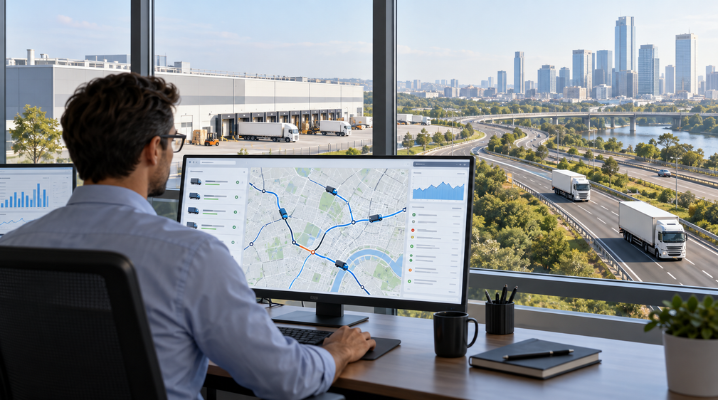
Supply Chain Digital Control Towers play a vital role in navigating these complexities. These digital platforms unify data across warehouses, shipping lines, customs systems, and supplier networks to offer a centralized, real-time view of operations. From tracking a delayed container to automatically notifying affected downstream plants, control towers enable businesses to act swiftly and intelligently.
Related read- What is a Supply Chain Control Tower?
During volatile periods, control towers become more than visibility dashboards, they act as decision-support engines, recommending alternate routes, expediting urgent orders, or identifying customers to prioritize.
The Future of Resilience: Diversification and Digitalization
In recent years, European businesses have faced relentless supply chain shocks—from pandemic-era bottlenecks to geopolitical disruptions in Ukraine and the Middle East. In 2025, 56% of European firms are investing in nearshoring and friend-shoring, with rising interest in India, Vietnam, and North Africa. This shift reflects a growing commitment to building regional flexibility, reducing transit risks, and regaining control over critical inputs.
The Just-In-Time (JIT) supply chain model, once celebrated for minimizing inventory costs and maximizing efficiency, has now become a key vulnerability in the face of global disruptions. Europe’s dependence on tightly synchronized inbound flows—especially for energy and raw materials—has exposed it to cascading risks from shocks like the Iran–Israel conflict.
To counter this fragility, Europe has accelerated its shift toward renewable energy as a cornerstone of long-term resilience. In 2024, renewables generated nearly 50% of the EU’s electricity, up from 34% in 2019 . This transition offers more than environmental benefits, it reduces exposure to volatile fossil fuel markets, particularly oil and LNG flows threatened by Middle East instability.
For energy-intensive sectors such as manufacturing, chemicals, and data infrastructure, this growing clean energy base provides greater autonomy and insulation from external shocks. However, grid integration, storage, and smart transmission infrastructure remain critical gaps that must be addressed.
In parallel, strengthening digital infrastructure will be essential. Investments in modular, AI-enabled, and cloud-based supply chain platforms can offer the agility needed to navigate future disruptions—enabling faster response, better visibility, and smarter decision-making in an increasingly uncertain world.
These platforms enable:
- End-to-end scenario planning to simulate political and environmental shocks
- Multi-tier supplier risk analysis to uncover hidden vulnerabilities
- Real-time exception alerts to act before disruptions spread
- Cross-functional collaboration tools to keep operations, sales, and finance aligned
Conclusion: Turning Disruption into Competitive Advantage
In a world where supply shocks move faster than goods themselves, agility and resilience is no longer optional, it’s essential. For Europe, recent disruptions have exposed structural vulnerabilities—from energy dependencies and port congestion to over-reliance on distant suppliers. The continent’s supply chain leaders are now being tested not on hindsight, but on foresight.
However, this is also a moment of strategic reset and transformation. By adopting integrated business planning, investing in digital control towers, strengthening demand sensing, and deploying scenario modelling, European companies can move from crisis response to competitive advantage. Those who act now can build systems that anticipate disruption, not just react to it. This will enable them not just to react to crisis, but can anticipate, adapt, and lead.
Disruptions will continue. The real question is: Will your supply chain be ready before they arrive?