Key Takeaways
- Approved plans only create value when they translate into reliable execution.
- Batch variability can quickly turn a balanced plan into a delivery risk.
- Capacity in pharma is constrained by compliance, QA, equipment, and release timelines.
- Real-time visibility helps teams detect delays before they affect service levels.
- Scenario-based rescheduling enables faster decisions without compromising compliance.
Indian pharma’s next growth constraint may not be demand. It may be execution reliability.
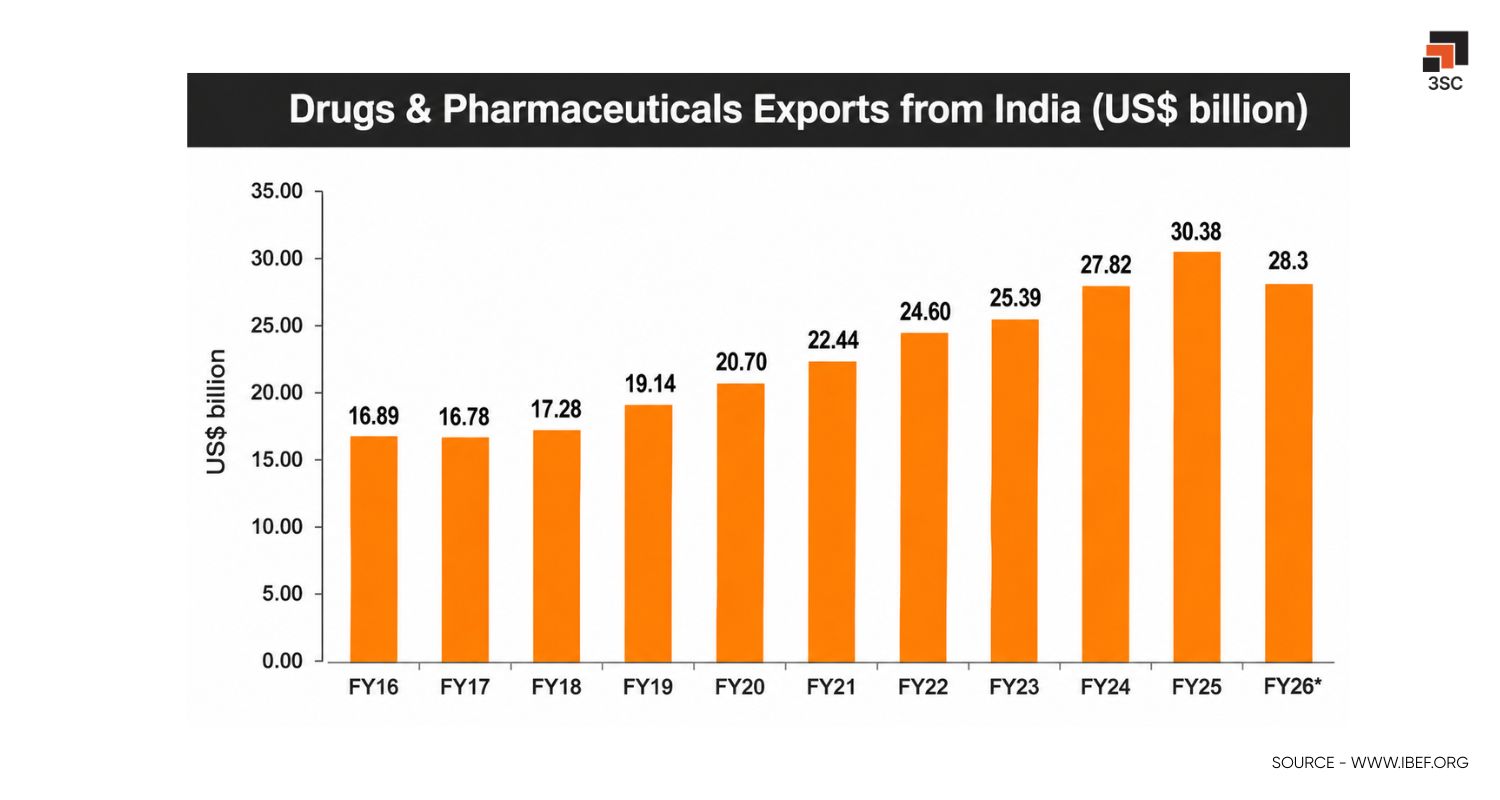
As the industry continues to grow rapidly. Exports have reached USD 30.5 billion in FY2024-25, showing how strongly the sector has expanded over the years. As the industry moves toward the USD 120–130 billion by 2030, the focus is no longer only on growth. The bigger challenge is turning this scale into reliable, compliant, and on-time delivery.
Regulatory approvals are increasing, manufacturing capacity is expanding, and the sector continues to strengthen its global position.
But as volumes rise and global commitments grow, the execution challenge is becoming sharper.
Pharma supply chain leaders are being asked to balance on-time delivery, regulatory compliance, working capital discipline, plant capacity, customer service levels, and cost efficiency at the same time. This is where the gap between planning and execution becomes visible.
A monthly S&OP or IBP cycle may produce an approved plan, but pharma execution rarely follows a static path. Batch rework, QA delays, documentation gaps, line changeovers, compliance checks, capacity constraints, and demand shifts can quickly pull delivery performance away from the original plan.
This is why Indian pharma needs more than planning discipline. It needs AI-powered IBP that can connect approved plans with real-time execution realities and help teams respond before delays impact service levels.
The Reality of the Execution Gap
For a supply chain leader, the monthly Sales and Operations Planning (S&OP) meeting often feels like a success until the middle of the month. Plans are balanced, demand is forecasted, and capacities are allocated. Yet, by week three, the "plan vs. actual" report tells a different story.
The impact is immediate: OTIF failures across institutional, export, or tender orders; higher expedite costs; WIP, quarantine, or finished goods inventory pile-ups; stockout risks for critical SKUs; and weaker planning credibility across supply chain, manufacturing, quality, and commercial teams.
1. Navigating Batch Variability and Operational Bottlenecks
Batch variability is one of the biggest challenges in pharma supply chain execution. In India, where many plants handle hundreds of SKUs across domestic, export, institutional, and regulated markets, this complexity becomes even more difficult to manage.
Yield fluctuations, API potency variations, excipient behaviour, and process deviations can force unplanned top-up batches or rework cycles. Frequent product changeovers require cleaning validation, and if a cleaning swab fails, the line may remain idle. Equipment downtime can further disrupt the schedule, especially when maintenance is reactive rather than predictive.
In a traditional planning model, these disruptions are often identified too late. Teams discover the issue after the plan has already drifted.
With AI-powered IBP, leaders can move from delayed reporting to early risk detection. AI can help identify patterns in batch performance, flag likely delays, assess downstream impact, and recommend alternative production or packaging options based on service, margin, capacity, and compliance priorities.
2. The Weight of Capacity and Compliance Constraints
In pharma, capacity is not just about the number of reactors, packaging lines, or shifts available. Capacity is also shaped by QA bandwidth, batch record review, deviation closure, lab testing, stability checks, validation requirements, release documentation, and compliance readiness. This makes pharma capacity fundamentally different from many other industries.
A batch may be physically complete, but it cannot move forward until documentation, review, testing, and release steps are completed. When these dependencies are not visible inside the planning process, the plan looks feasible on paper but fails during execution.
AI-powered IBP helps supply chain and quality teams treat compliance-linked dependencies as real execution constraints. Instead of planning only around production capacity, pharma leaders can plan around end-to-end capacity, including QA, lab, documentation, release, packaging, inventory, and logistics readiness.
This creates a more realistic view of what can be delivered, not just what can be manufactured.
3. Bridging the Gap: Tighter Operational Visibility
To move from approved plans to reliable delivery, pharma companies need a digital thread that connects shop-floor execution with planning, quality, inventory, and logistics.
The value of AI-powered IBP is not just visibility. Its real value lies in helping leaders make faster and better decisions when execution begins to drift and help:
- Detect when a batch is likely to miss its release timeline
- Understand which customers, orders, markets, or tenders may be affected.
- Prioritize constrained QA, production, packaging, or warehouse capacity
- Evaluate alternate production and dispatch options
- Align manufacturing, supply planning, quality, logistics, and commercial teams on one execution view
For pharma, this is especially important because every response must protect compliance. Speed cannot come at the cost of quality. AI-powered IBP supports faster coordination while ensuring that decisions remain aligned with regulatory and quality requirements.
According to BCG, digital supply chain technologies can improve service levels by 5 - 15% and reduce working capital by 15 - 30%. For pharma companies, this reinforces the value of AI-powered IBP, digital twins, and real-time visibility in improving planning reliability, inventory decisions, and execution responsiveness.
4. Scenario-Based Adjustments
The industry is moving from "Plan A" to "Dynamic Rescheduling."
- What-If Analysis: If a primary granulation machine fails, what is the best alternative? Does shifting to Product B maximize margin, or does it jeopardize a critical tender? Scenario-based tools allow leaders to make these calls in minutes, not days.
- Agile Demand Response: As the Indian market becomes more consumer-centric (with the rise of e-pharmacies), demand volatility will increase. Execution must be agile enough to pivot based on real-time market signals without breaking compliance protocols.
Conclusion
For Indian pharma manufacturers, reliable delivery will not come from creating more detailed monthly plans alone. It will come from building the ability to sense execution risks early, understand their impact, and respond quickly without compromising compliance.
Batch variability, QA release timelines, documentation delays, capacity constraints, changeovers, and demand shifts will continue to shape pharma manufacturing. The difference will lie in how quickly supply chain, manufacturing, quality, inventory, and logistics teams can work from a shared execution view.
AI-powered IBP can help turn approved plans into living, responsive execution guides. It connects planning with real-time operational realities, supports scenario-based rescheduling, and enables pharma leaders to protect service levels while staying compliant.
For Indian pharma, the next step is clear: connect planning, production, quality, inventory, and logistics into one intelligent execution view. That is how approved plans can withstand real-world manufacturing variability and become reliable delivery.
3SC’s AI-powered Integrated Business Planning (IBP) helps pharma organisations connect planning, production, quality, inventory, and logistics into one execution view. With early risk sensing and scenario-based planning, it enables faster, compliant decisions and more reliable delivery under capacity constraints.