Gulf FMCG companies can strengthen food security by connecting import planning, inventory, cold chain visibility, supplier performance, and demand signals. Better coordination helps businesses reduce waste, protect shelf life, respond faster to disruptions, and avoid excessive stock. The goal is to build a more resilient supply chain that protects availability, service, working capital, and consumer trust.
Key Takeaways
- Connect import planning with real time supply signals.
- Avoid using excess inventory as the default buffer.
- Strengthen cold chain visibility across every handoff.
- Link demand, shelf life, and inventory decisions.
- Act on risks before they become shortages.
A product reaching a supermarket shelf in the Gulf represents a journey that begins thousands of kilometres away. From suppliers and ports to warehouses and temperature-controlled transport, every step influences whether products arrive on time and in the right condition.
For FMCG companies across the GCC, the challenge is maintaining availability while managing the uncertainty built into a globally connected food supply chain.
The answer is not simply carrying more inventory. Companies need connected planning that helps them anticipate risks, protect shelf life, and make faster decisions when conditions change.
Plan Imports Around Changing Supply Conditions
The Gulf region continues to invest in domestic food production, and several countries have improved self-sufficiency across selected categories such as dairy, eggs, and dates. However, imports will remain an important part of feeding a growing and highly urbanised population.
FAO estimates that more than 75% of food consumed across the GCC has historically been imported. This creates a unique planning challenge. Demand exists locally, but supply conditions can be influenced by events far beyond regional borders.
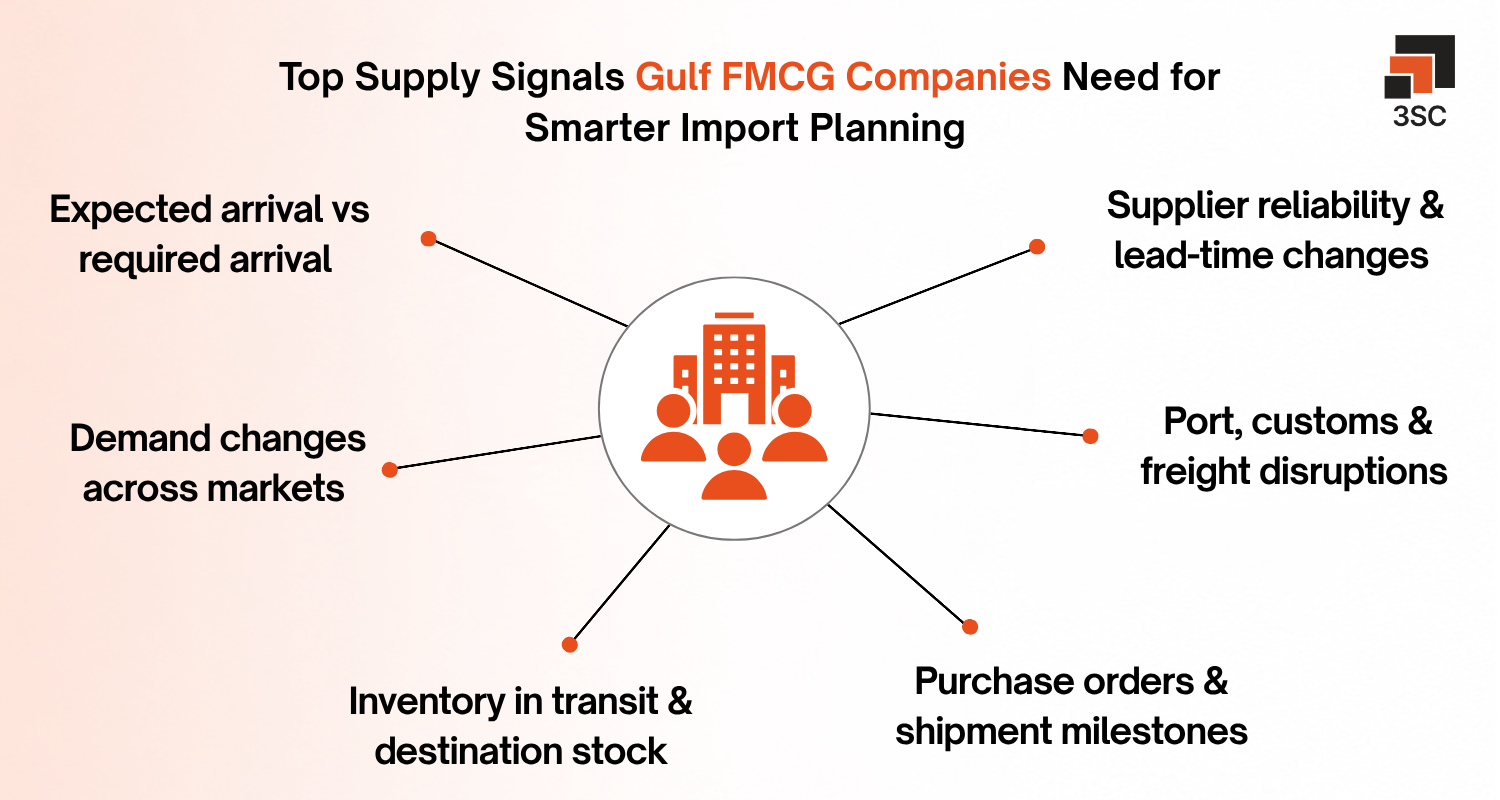
To reduce exposure, companies need to move towards more adaptive import planning by:
- Use dynamic lead times calculated from recent supplier performance and shipment milestones, not past averages.
- Review reorder points as soon as a shipping route tightens or capacity becomes constrained.
- Track inventory in transit alongside destination stock so planners see true coverage, not just what is in the warehouse.
- Qualify alternative or regional suppliers for high-risk SKUs before a disruption forces the decision.
Hold the Right Inventory in the Right Place
When supply uncertainty increases, the immediate response is often to increase inventory. While additional stock can provide short-term protection, excessive inventory creates new challenges.
Food products have limited shelf life. Extra stock can increase expiry risk, consume valuable cold storage capacity, and create situations where inventory exists in one location while demand rises elsewhere. A more effective approach is to segment inventory decisions based on product characteristics, supply risk, and customer demand.
For example:
- Short shelf-life chilled products may require leaner buffers positioned closer to demand centres.
- Products dependent on fewer suppliers may justify additional protection stock.
- Items with multiple sourcing options may require less inventory coverage.
Inventory policies should not be defined only at an overall business level. They need to consider individual products, locations, demand variability, supplier reliability, and remaining shelf life. The objective is not to carry more inventory, but to place it where it creates the most resilience.
Protect Shelf Life Beyond Refrigeration
For temperature-sensitive products, having inventory available is only one part of the challenge. The condition of that inventory throughout its journey matters just as much.
In Gulf conditions, products can experience significant temperature exposure. Even short delays at critical handoff points can reduce remaining shelf life before products reach consumers.
Cold chain performance is therefore not only about refrigerated infrastructure. It depends on visibility across the entire movement of goods. Companies should connect temperature monitoring, batch traceability, transportation milestones, and inventory planning so teams can understand product condition in real time.
When a shipment is delayed and remaining shelf life is declining, decisions need to happen quickly:
- Prioritise unloading for high-risk shipments.
- Redirect inventory to locations with stronger demand.
- Adjust replenishment plans based on actual product condition.
- Prevent future shortages by updating supply assumptions.
Cold chain data becomes valuable when it changes decisions rather than simply reporting what has already happened.
Detect Risks Before They Become Shortages
Even with better planning, disruptions cannot be completely eliminated. The difference comes from how early companies identify risks and how quickly they can respond.
Consider a company importing chilled products into Saudi Arabia ahead of a seasonal demand peak. If an inbound shipment is delayed, a connected planning process can evaluate available options immediately.
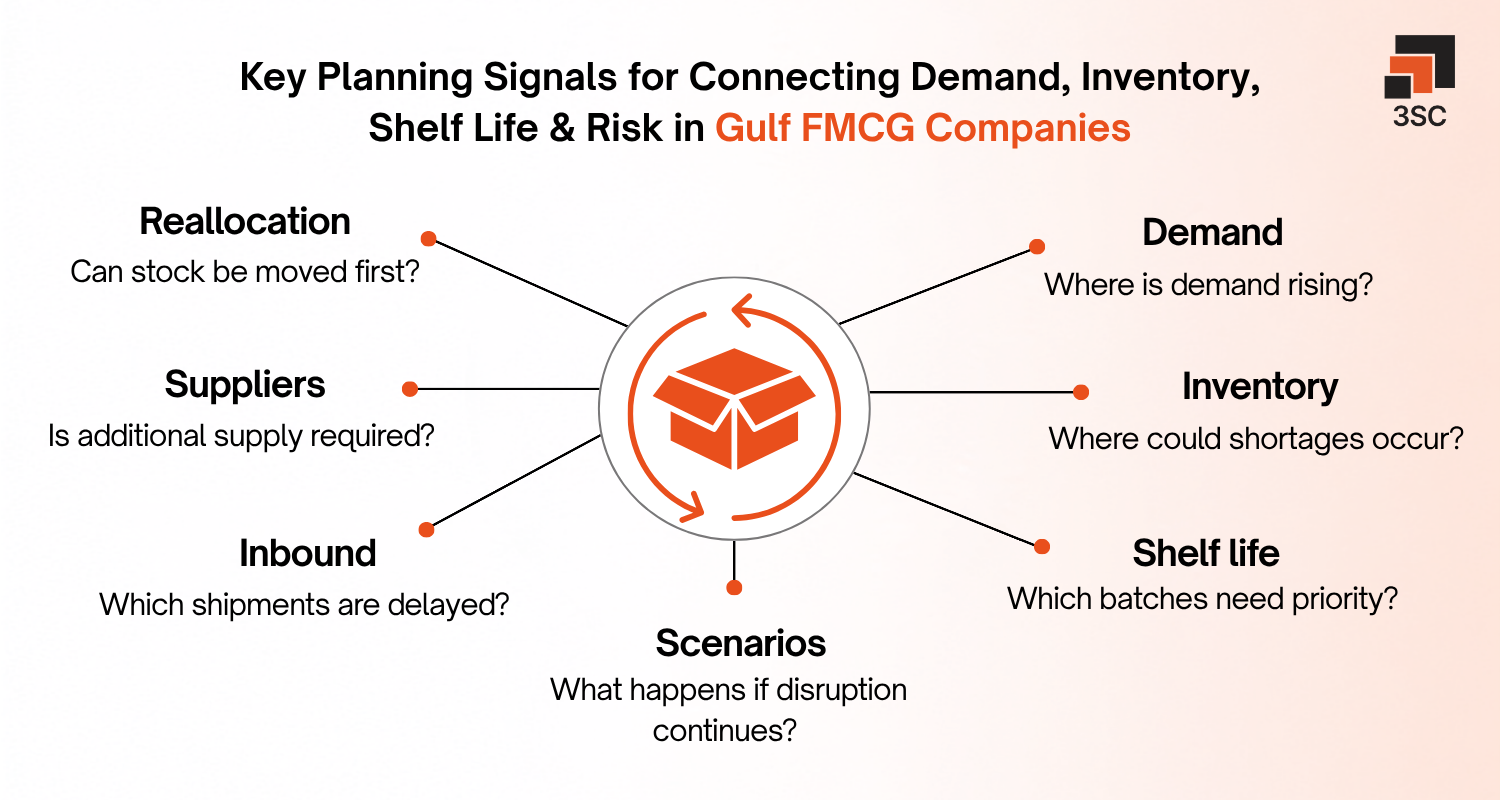
First, it checks whether inventory from other warehouses or channels can cover the gap while considering remaining shelf life. Then, it assesses supplier recovery timelines and transportation alternatives. Only when a supply gap remains does the company consider additional actions such as expedited replenishment. This approach requires moving away from manually monitoring every purchase order and SKU.
Instead, planning systems should automatically highlight exceptions such as:
- Products expected to fall below required inventory coverage before the next arrival.
- Shipments at risk of missing committed delivery dates.
- Batches arriving with insufficient remaining shelf life.
- Suppliers showing repeated delays.
- Inventory imbalances between locations.
- Significant changes between expected and actual demand.
Each exception should have a clear owner across procurement, planning, logistics, and commercial teams so decisions are made using the same information.
Conclusion: Building the Next Generation of Food Security
The Gulf will continue to strengthen its food ecosystem through investments in local production, logistics infrastructure, and cold chain capabilities. However, for FMCG companies, resilience will depend on how effectively they manage the complexity between supply sources and customer demand.
This means having better visibility into incoming shipments, understanding where inventory is needed, protecting product quality throughout the journey, and knowing when action is required before a disruption affects customers.
Food security is not only about having enough stock available. It depends on how effectively companies can anticipate supply risks and make the right decisions before they impact customers. Companies that achieve this balance will be better equipped to maintain availability while navigating the uncertainty of a globally connected food supply chain.
Strengthen food security with a more connected supply chain with 3SC
With 3SC’s Integrated Business Planning (IBP), Demand AI, Risk AI, Control Tower, and iTMS, FMCG companies can connect demand, inventory, supplier risk, logistics, and execution in one decision environment.
Explore how 3SC can help build a more responsive, resilient, and efficient food supply chain across the Gulf.