Seasonal demand planning for Gulf consumer durables companies requires accurate forecasting, optimised inventory allocation and coordinated procurement and distribution. Ramadan, Eid, summer demand and shopping festivals create fluctuations across GCC markets. AI-powered demand forecasting, integrated supply planning and real-time visibility help businesses anticipate demand changes, reduce inventory imbalances and improve product availability during peak sales periods.
Key Takeaways
- Seasonal demand across GCC markets varies by product category, location, weather conditions and promotional activity.
- Long procurement lead times and changing demand patterns increase the risk of excess inventory and stock shortages.
- AI-powered demand forecasting helps businesses anticipate seasonal fluctuations and improve planning accuracy.
- Integrated inventory, supplier and distribution planning improves product availability and fulfilment during peak periods.
- Real-time supply chain visibility supports faster decisions, timely replenishment and better responses to unexpected demand changes.
Seasonal demand plays a significant role in the Gulf’s consumer durables market. From Ramadan and Eid to the summer months and year-end shopping festivals, each period brings shifts in purchasing patterns across product categories and markets.
GCC domestic appliance consumption declined by 12.2% to 114 million units in 2024, even as the market is projected to reach USD 6.6 billion by 2035. This reflects the fluctuations businesses must manage while preparing for long-term market growth.
With consumer preferences varying across GCC markets, unpredictable weather conditions and procurement decisions often made months in advance, businesses face difficult choices about how much stock to secure, where to position it and when to replenish it as demand changes.
Let’s understand the key challenges that make seasonal demand planning complex for consumer durables companies across the Gulf:
Key Challenges in Managing Seasonal Demand Peaks
While seasonal events are predictable, the demand they generate is not always easy to anticipate. Several factors influence how businesses plan inventory, manage suppliers and fulfil customer orders during these periods.
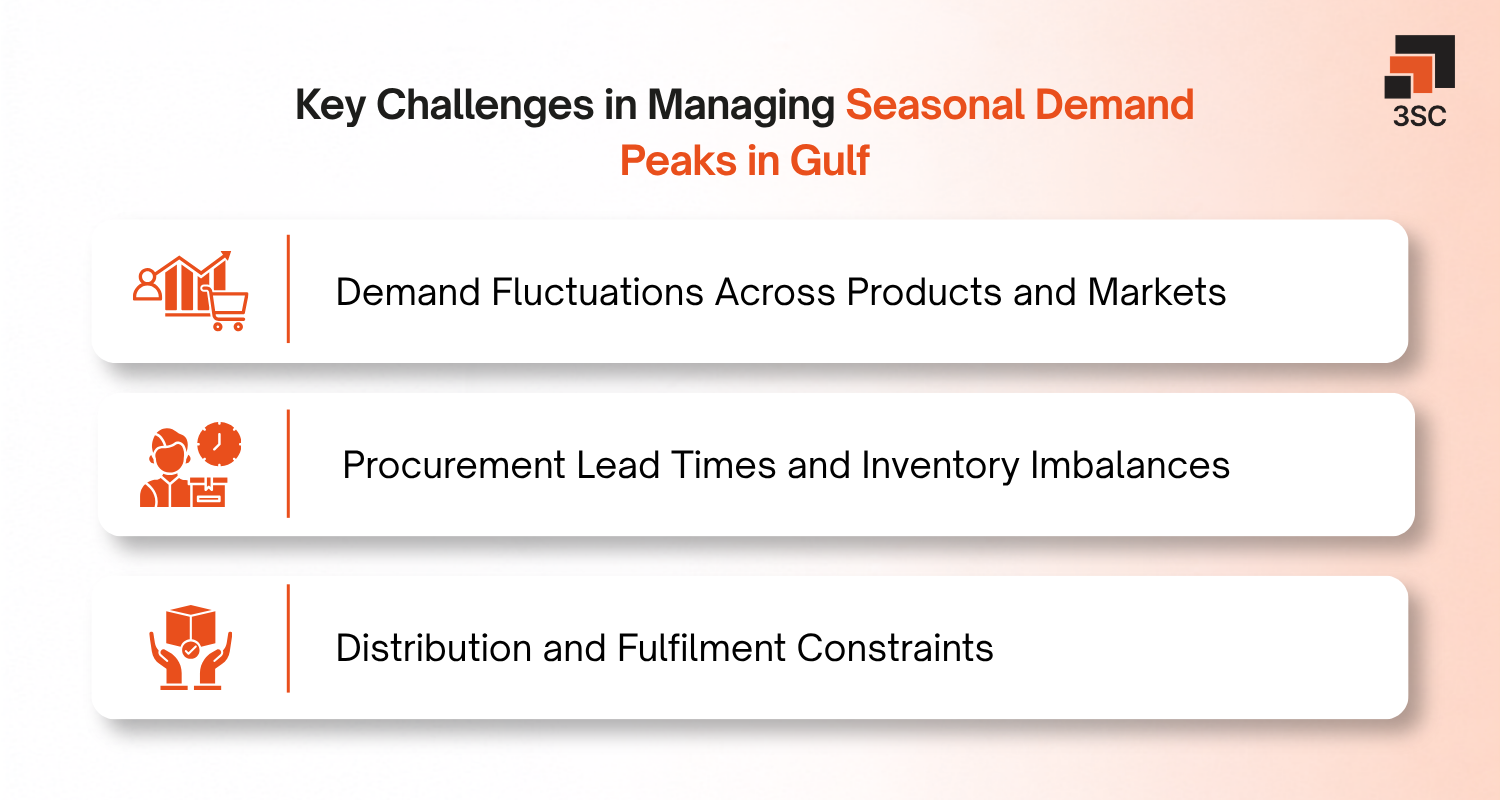
1. Demand Fluctuations Across Products and Markets
The challenge lies in understanding how demand differs across product categories, locations and sales channels. Even within the same seasonal period, purchasing patterns can vary depending on local consumer preferences, promotional activity and market conditions.
These patterns also differ across markets. Saudi Arabia has a geographically dispersed consumer base, while the UAE has a large expatriate population with different purchasing preferences. Consequently, a product performing well in one market may experience slower demand in another.
The shifting Islamic calendar adds further complexity. With Ramadan moving approximately 11 days earlier each Gregorian year, historical sales patterns cannot always be applied to the same months.
For businesses using consolidated regional forecasts, these differences can result in inventory shortages in one location and excess stock in another.
2. Procurement Lead Times and Inventory Imbalances
Seasonal demand planning becomes more difficult when procurement decisions must be finalised well before the selling season.
Many consumer durables sold across the Gulf are imported from Asian manufacturing hubs. Production schedules, shipping availability and customs clearance can extend the time between placing an order and making products available for sale.
Unexpected transportation disruptions can further affect delivery schedules. Meanwhile, country-specific certification and energy-efficiency requirements can limit the ability to redirect products between markets.
Businesses, therefore, face a difficult inventory decision. Higher stock levels improve product availability but increase storage costs and working capital requirements. Lower inventory reduces financial exposure but creates the possibility of shortages during peak sales periods.
The risk becomes greater for electronics and appliances with frequent model upgrades, as unsold inventory may require significant discounting.
3. Distribution and Fulfilment Constraints
Even when inventory is available, delivering products during seasonal peaks presents operational challenges.
Major sales campaigns can generate a sudden increase in orders, placing pressure on warehouse operations, transportation networks and last-mile delivery capacity. This becomes particularly challenging across geographically dispersed markets.
Consumer durables also have specific fulfilment requirements. Large appliances require careful handling, while products such as air conditioners may need installation before the customer can use them. When distribution and installation capacity are planned separately from sales forecasts, businesses can face delivery backlogs even when products are available.
These challenges highlight why seasonal readiness must extend across the entire supply chain, from demand forecasting to final delivery.
How Gulf Consumer Durables Companies Can Prepare for Seasonal Demand Peaks
Managing seasonal demand requires businesses to align procurement, inventory and distribution capacity with changing market requirements. Here are five strategies that can help supply chain leaders prepare more effectively:
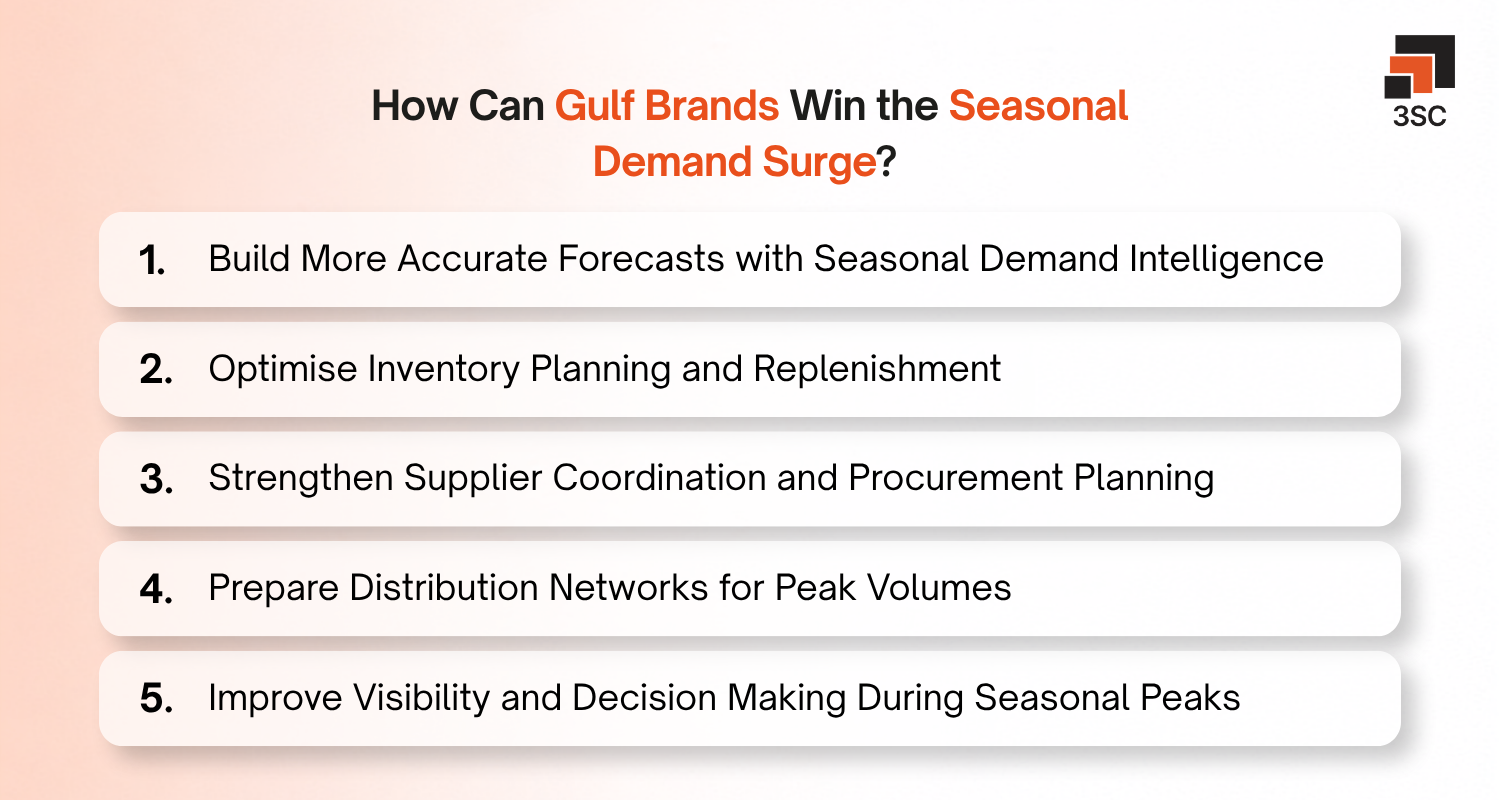
1. Build More Accurate Forecasts with Seasonal Demand Intelligence
Accurate forecasting begins with understanding how demand changes across products, locations and sales channels.
Historical sales provide a starting point, but they must be analysed alongside factors such as weather, promotional activity and the shifting Islamic calendar.
AI-powered demand forecasting can combine these signals to identify emerging purchasing patterns and improve demand projections. Regular forecast updates during peak periods can help businesses adjust procurement and replenishment plans before inventory imbalances develop.
2. Optimise Inventory Planning and Replenishment
More accurate forecasts must translate into inventory decisions that reflect the requirements of different products and markets.
Businesses can segment inventory based on demand variability, product value and lead times to determine appropriate stock levels. Positioning inventory closer to major demand centres can improve availability, while regional distribution hubs can support replenishment across markets.
Scenario planning can further help teams prepare for unexpected demand surges or delayed shipments by evaluating inventory requirements and alternative replenishment options in advance.
3. Strengthen Supplier Coordination and Procurement Planning
With inventory requirements established, businesses need to ensure suppliers can support their seasonal plans.
Sharing demand projections with manufacturers early helps secure production capacity and establish realistic delivery schedules. Phased shipments can also reduce inventory exposure by allowing subsequent deliveries to reflect updated demand expectations.
In this case, Integrated supply planning connects supplier commitments with inventory targets and demand forecasts. This helps procurement teams identify potential shortages early and adjust sourcing or delivery priorities before peak demand begins.
4. Prepare Distribution Networks for Peak Volumes
Inventory availability alone cannot guarantee timely fulfilment when seasonal orders increase.
Businesses should assess warehouse capacity, transportation resources and delivery schedules against expected order volumes. Additional logistics capacity and forward stocking locations can help manage demand across geographically dispersed markets.
For appliances requiring installation, technician availability and appointment scheduling must also be included in capacity planning. Transportation management systems can support delivery planning, shipment tracking and coordination with logistics partners during busy periods.
5. Improve Visibility and Decision Making During Seasonal Peaks
Even with careful preparation, actual demand can differ from forecasts. Businesses need timely information to identify these changes and respond effectively.
Connected supply chain systems can provide end-to-end visibility into sales, inventory, incoming shipments and distribution capacity across markets. AI-driven analytics can highlight emerging shortages, identify excess stock and recommend actions such as inventory transfers or replenishment adjustments.
Clear decision-making responsibilities across planning, commercial and logistics teams can then help translate these insights into timely action, protecting product availability and customer service throughout the season.
Conclusion: Preparing Supply Chains for the Next Phase of Growth
Seasonal demand will continue to influence the Gulf's consumer durables market, bringing opportunities for growth alongside greater planning complexity. Changing consumer preferences, expanding retail channels and evolving market conditions will require businesses to revisit how they prepare for peak periods.
For supply chain leaders, the priority is to establish stronger coordination between demand planning, procurement, inventory and fulfilment. AI-powered forecasting, integrated planning and real-time visibility can help businesses make these decisions with greater accuracy and confidence.
Each seasonal cycle also provides an opportunity to improve. Reviewing forecast performance, inventory availability and fulfilment efficiency can reveal recurring gaps and guide future planning decisions.
Ultimately, success during seasonal peaks depends on how effectively businesses translate demand expectations into supply chain decisions, ensuring products are available when customers need them without compromising operational efficiency or profitability.