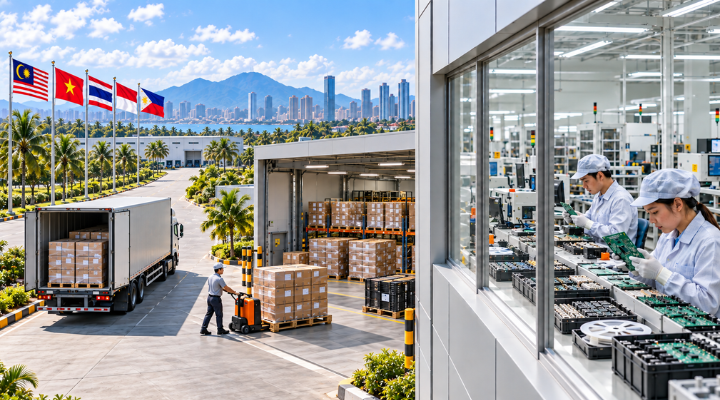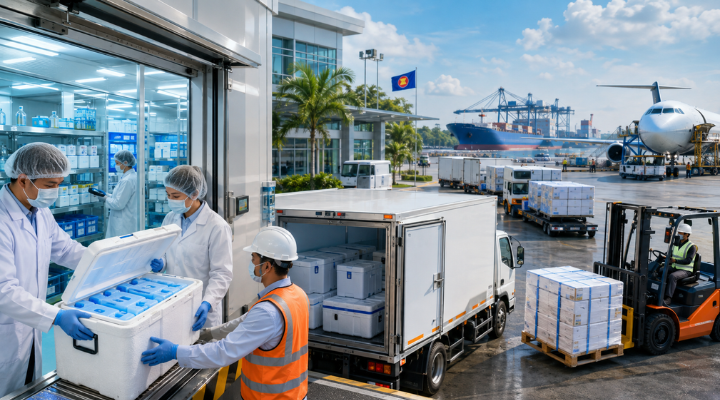
Cold chain performance is becoming a critical factor in how successfully pharmaceutical companies scale across ASEAN. This blog explores the execution gaps that put temperature sensitive products at risk and outlines the operational capabilities needed to improve response, strengthen control, coordinate partners, and protect product integrity across increasingly complex regional distribution networks.
Key Takeaways
- ASEAN pharma growth is increasing pressure on cold chain execution across complex regional networks.
- Geography, tropical conditions, infrastructure gaps, and disruptions create greater risk for temperature sensitive products.
- Real time visibility must be connected to clear ownership and faster exception response.
- Prequalified alternatives and defined playbooks help prevent disruptions from becoming product losses.
- Strong partner coordination is essential to maintain product integrity from origin to final delivery.
Pharmaceutical growth across ASEAN is creating an opportunity that goes far beyond manufacturing expansion and market access. More medicines are moving across countries, healthcare access is widening, and product portfolios are becoming increasingly sophisticated.
Vaccines, biologics, specialty medicines, diagnostics, and other temperature sensitive products are becoming a larger part of the healthcare ecosystem. Each of these products places greater pressure on storage, transportation, monitoring, and delivery.
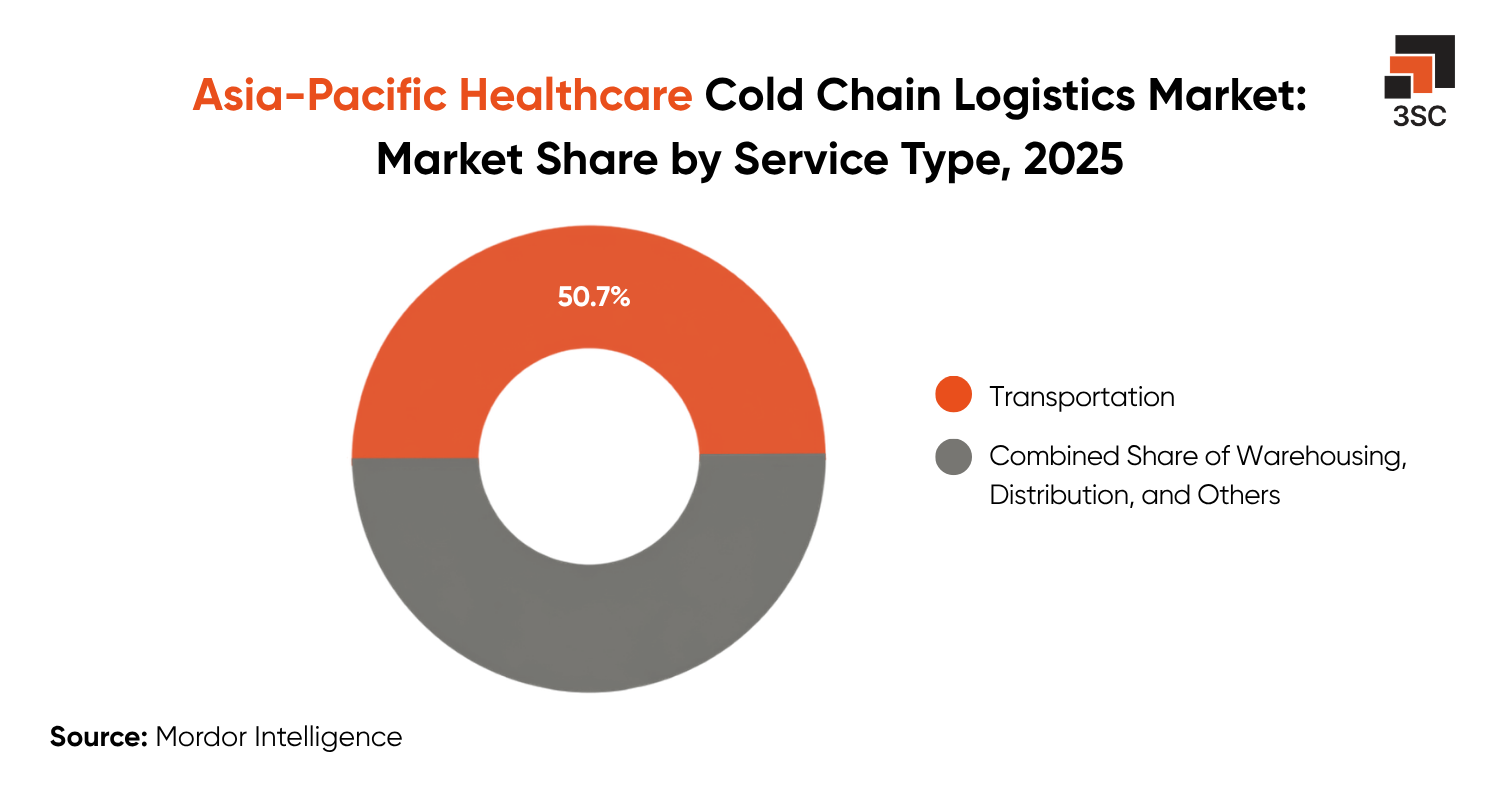
As these products move through increasingly complex regional networks, transportation becomes a critical part of maintaining product integrity. This is reflected in the scale of regional cold chain activity, with transportation accounting for 50.7% of the Asia Pacific healthcare cold chain logistics market in 2025.
For pharmaceutical companies expanding across ASEAN, this creates an important question. Can cold chain execution grow as quickly as the market it supports?
What Makes Cold Chain Execution Difficult Across ASEAN
As pharmaceutical distribution expands across Southeast Asia, the challenge is not simply moving more products. It is maintaining control across more locations, transport modes, handovers, and operating environments.
1. Complex Geography and Multiple Handovers
A temperature sensitive product may move through airports, ports, customs, regional warehouses, local carriers, and final delivery points before reaching a hospital, pharmacy, clinic, or distributor.
In markets such as Indonesia and the Philippines, road, sea, and air transport may all be part of the same journey. Each transfer creates another point where delays, handling errors, or temperature deviations can occur.
2. High Temperature Exposure
High ambient temperatures across much of Southeast Asia can make delays more consequential.
Loading delays, congestion, vehicle breakdowns, power interruptions, or extended customs clearance can expose temperature sensitive products to conditions outside their required range. This means product integrity depends on maintaining temperature control throughout the journey, not only inside warehouses or refrigerated vehicles.
3. Uneven Cold Chain Infrastructure Across Locations
Cold chain infrastructure is not equally available across every market or region. Major cities may offer qualified storage, specialised carriers, backup power, and advanced monitoring systems, while secondary locations may have fewer compliant options.
As pharmaceutical companies expand distribution beyond metropolitan areas, these infrastructure gaps can make continuity harder to maintain.
4. Gaps Between Visibility and Response
Sensors, data loggers, GPS systems, and digital platforms can show where a shipment is and whether conditions are moving toward risk.
But identifying an exception is only the first step. If teams still need to determine who should respond, what action should be taken, or where alternative capacity is available, valuable time can be lost after the problem has already been detected.
5. Rapidly Escalating Disruptions
A delayed flight, flooded road, refrigeration failure, congested port, vehicle breakdown, or warehouse power interruption can quickly change a shipment plan. Without prepared alternatives, teams may begin searching for routes, storage, carriers, or approvals only after the situation becomes urgent. The challenge is therefore not eliminating disruption but preventing it from turning into a product quality issue.
So, what does stronger cold chain execution look like in practice? Let’s look at the capabilities pharmaceutical companies need to manage these risks more effectively and respond with greater speed and control
What Stronger Cold Chain Execution Should Look Like
Addressing these challenges requires more than adding monitoring tools or expanding cold storage capacity.
Pharmaceutical companies in ASEAN, need an execution model that helps teams detect risk early, understand its impact, and take the right action before product integrity is compromised.
1. Define Clear Exception Thresholds
Teams should know exactly when intervention is required. Temperature deviation, transit delay, route change, equipment failure, or extended dwell time should trigger predefined levels of response. Clear thresholds reduce uncertainty and help teams act before the shipment reaches a critical point.
2. Assign Clear Ownership for Every Exception
Every critical cold chain event should have a defined owner. If a shipment approaches a temperature limit, someone must be authorised to decide whether it should continue, move into alternative storage, change route, or undergo quality review. Clear ownership reduces delays between alert detection and corrective action.
3. Build Prequalified Response Options
Alternative routes, storage locations, replacement vehicles, and transfer points should be identified before they are needed. This allows operations teams to activate prepared options instead of searching for solutions during a disruption. Prepared alternatives can shorten recovery time and reduce the risk of product loss.
4. Connect Temperature Data with Shipment Context
Temperature readings are more useful when viewed alongside shipment location, transit progress, expected arrival time, delay duration, and remaining packaging or refrigeration performance. The same temperature deviation can require a very different response depending on where the shipment is and how much journey remains. Combining these signals gives teams a clearer view of actual risk.
5. Create Exception Playbooks Before Disruption Occurs
Teams should already know what happens when a serious cold chain event occurs. Exception playbooks should define escalation paths, decision authority, response actions, communication requirements, quality review steps, and documentation expectations. This makes crisis response faster and more consistent.
6. Make Corrective Actions Fully Traceable
Every significant exception should leave a clear record. Teams need visibility into what happened, what action was taken, who approved it, what the final outcome was, and whether further investigation is required.
This supports compliance while also helping identify recurring weaknesses across routes, equipment, or operating locations. When these capabilities work together, cold chain execution becomes more proactive, structured, and responsive.
While these execution capabilities are essential, they cannot work in isolation. Pharmaceutical distribution depends on multiple external stakeholders, making coordination across the network equally important to maintaining control from origin to final delivery.
Partner Coordination Determines What Happens Between the Nodes
Few pharmaceutical companies control every stage of their distribution network. Manufacturers typically depend on freight forwarders, airlines, logistics providers, customs agents, warehouses, local distributors, carriers, and healthcare facilities.
Each participant may perform its individual task correctly while the shipment still encounters problems between them. That is why cold chain execution increasingly depends on coordination across the entire partner network.
Pharma companies need visibility into where a shipment is, what condition it is in, what could prevent successful delivery, who owns the next decision, and how quickly intervention can occur. Partner performance should therefore be assessed beyond standard transportation measures. Temperature excursions, response times, lane reliability, handover performance, documentation quality, corrective actions, and final delivery outcomes provide a stronger view of operational capability.
The better these partners coordinate, the smaller the gap becomes between identifying a problem and resolving it.
Stronger Execution Will Decide Who Scales Successfully
ASEAN’s pharmaceutical growth story is supported by expanding healthcare demand, greater investment, improving regional connectivity, and increasingly sophisticated product portfolios.
But market growth creates value only when medicines can move safely through the network supporting it. That requires more than cold rooms, refrigerated vehicles, sensors, and compliant facilities. It needs an execution model where every shipment can be monitored, every critical exception has an owner, every partner understands its responsibility, and every disruption has a prepared response.
For pharma companies expanding across ASEAN, stronger cold chain execution will directly influence how confidently they can enter new markets, extend distribution into harder to reach locations, and handle increasingly temperature sensitive portfolios.
At the end of every cold chain is something more important than a successful shipment. There is a patient waiting for the medicine to arrive on time, within specification, and ready to perform exactly as intended.
Strengthen Pharma Cold Chain Execution with 3SC
Bring shipment visibility, exception management, risk intelligence, and partner coordination into one connected execution environment. 3SC helps pharmaceutical supply chains identify emerging risks earlier, respond to disruptions faster, and maintain greater control over temperature sensitive products across complex regional distribution networks.