Key Takeaways
- Real-time visibility tracks your supply chain end to end.
- AI and digital twins turn data into fast decisions.
- IoT and blockchain boost traceability and trust.
- Seeing beyond tier-1 suppliers builds true resilience.
- Unified, secure systems solve data and cost challenges.
Supply chains today are judged by their resilience as much as their efficiency. Yet many organizations still operate with delayed, fragmented, or siloed information, conditions that allow disruptions to surface long before teams can respond. Although real-time visibility is widely acknowledged as essential, its true value and the difficulty of achieving it are often underestimated.
Modern supply chains move quickly and involve complex networks of suppliers, logistics partners, and channels. When information lacks accuracy or timeliness, consequences follow shortages, excess inventory, missed deliveries, and reactive decision-making. The real need is immediate insight, seeing events as they occur, understanding their impact, and acting fast enough to prevent escalation. Companies with real-time supply chain visibility are 2.5 × more likely to be high-performing than those operating with limited transparency, underscoring how critical timely information is to overall performance.
Real-time visibility is not just a technical enhancement; it is a strategic capability that strengthens operational stability. It enables organizations to anticipate risks, improve decision cycles, and maintain continuity even under pressure. Achieving this requires seamless data flow across systems and partners, supported by technologies that turn information into timely, actionable intelligence.
How Real-Time Visibility Enhances Supply Chain Resilience
Real-time visibility transforms how supply chains manage risk by enabling early detection of disruptions. By continuously tracking inventory, shipments, and supplier activity, companies can identify issues like demand surges or route delays before they escalate.
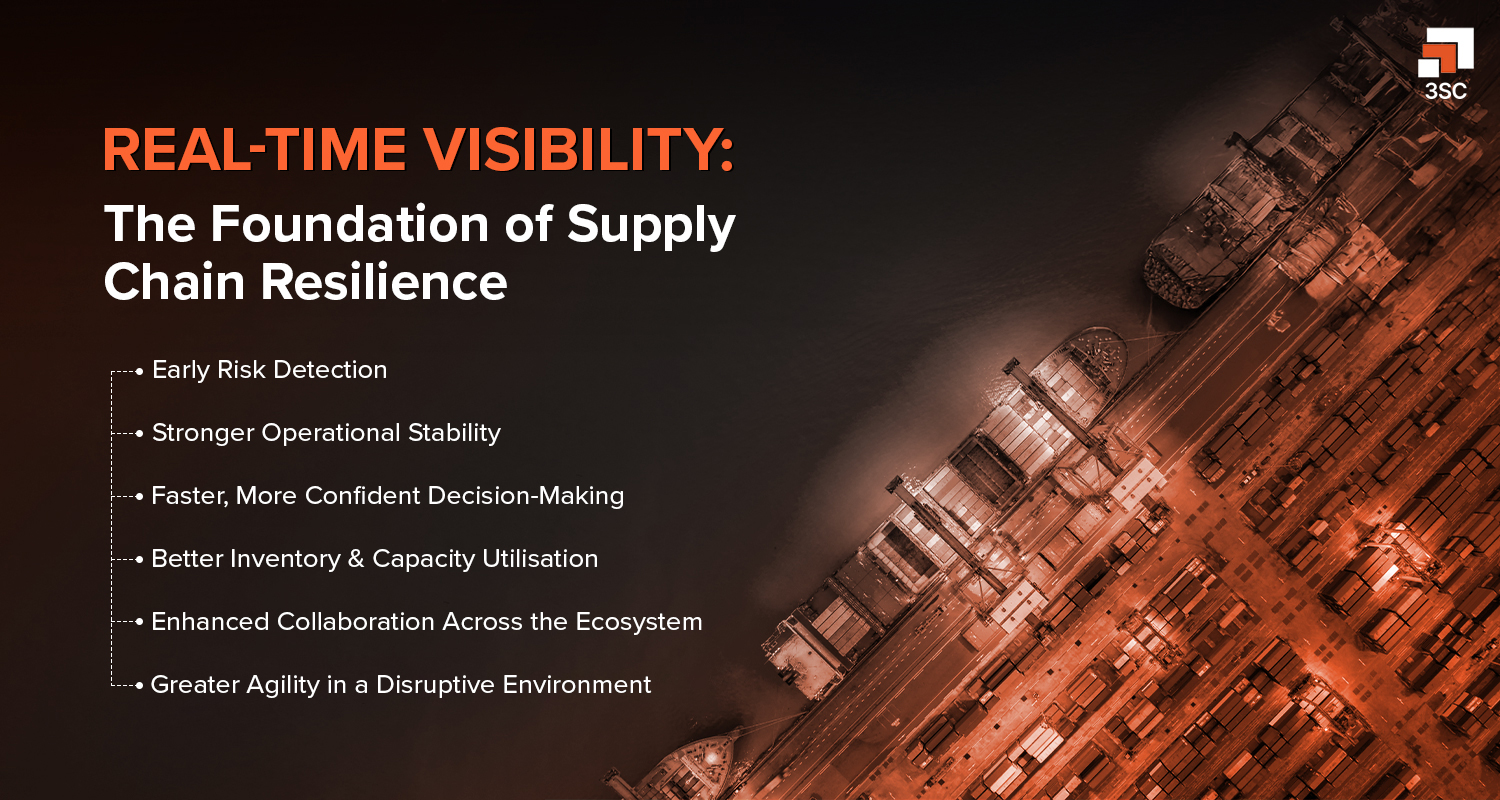
1. Early Risk Detection
Real-time signals reveal disruptions, supplier delays, route deviations, inventory gaps, or demand spikes, as they occur. Organizations gain instant awareness of issues and their downstream impact, enabling intervention before they escalate.
2. Stronger Operational Stability
Accurate, current data keeps planning and execution aligned. Production lines run smoothly, transportation can be rerouted proactively, and inventory remains calibrated to real demand instead of outdated forecasts.
3. Faster, More Confident Decision-Making
Visibility transforms raw data into actionable intelligence. Predictive insights highlight exceptions that require attention, reducing noise and helping teams make decisions with greater speed and accuracy.
4. Better Inventory & Capacity Utilization
Balanced visibility across locations ensures the right stock is in the right place at the right time. This reduces excess inventory, avoids shortages, and improves asset utilization.
5. Enhanced Collaboration Across the Ecosystem
Shared, real-time information strengthens coordination with suppliers, manufacturers, carriers, and distributors. This drives consistency, improves service levels, and helps partners respond collectively to disruption.
6. Greater Agility in a Disruptive Environment
With end-to-end clarity, organizations can react quickly, adapt processes, and maintain continuity under pressure, building true, everyday resilience.
Technology Enablers of Real-Time Visibility
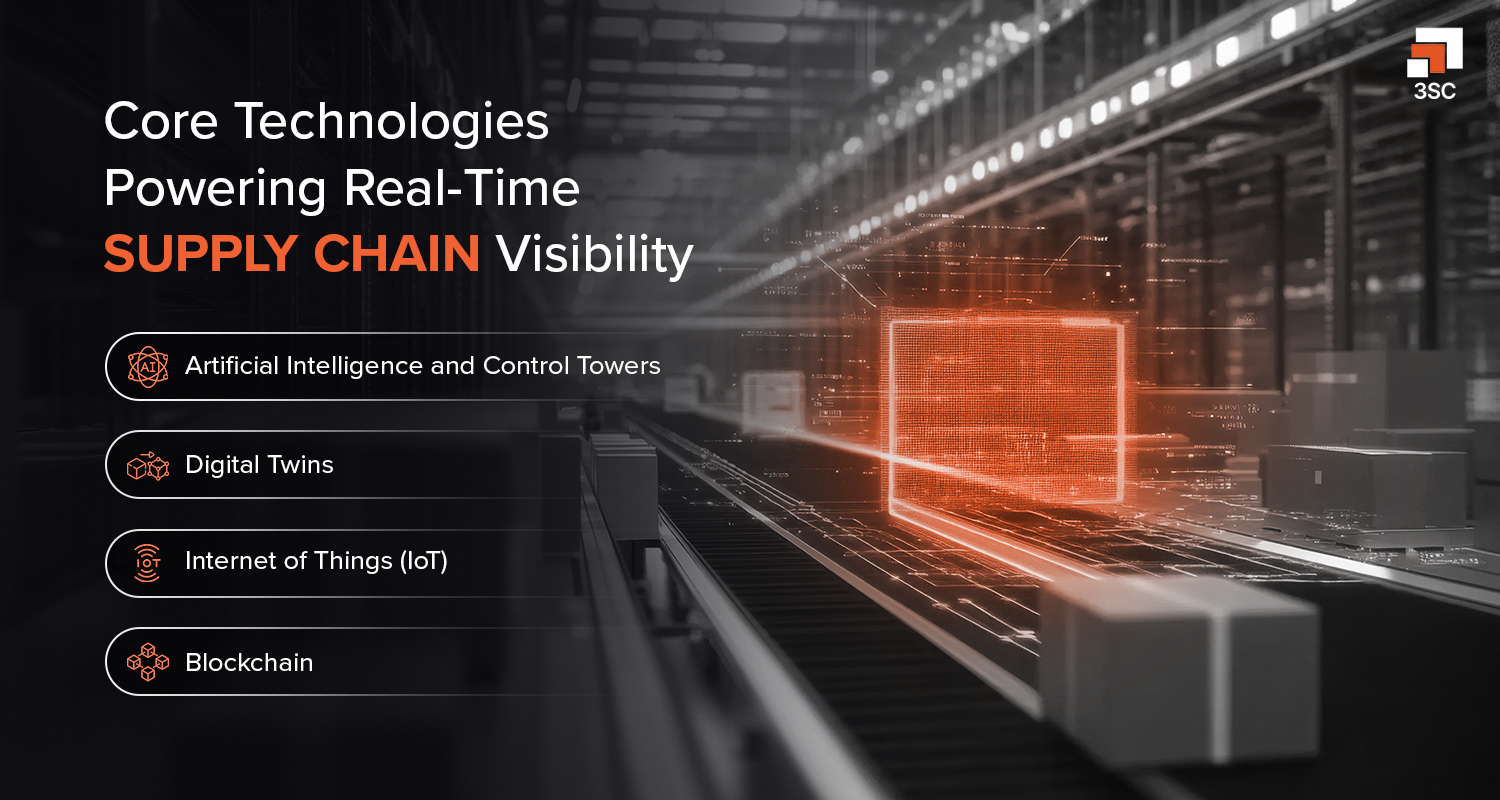
1. Artificial Intelligence and Control Towers
Control towers powered by AI and machine learning are pivotal in transforming raw data into proactive decision-making platforms. These intelligent control towers consolidate real-time feeds, inventory, transport, supplier metrics, into a unified “digital twin” of the entire supply chain.
This empowers organizations to simulate scenarios, forecast risk, and even execute automated corrective actions before issues materialize, shifting from reactive to pre-emptive supply chain management.
2. Digital Twins
Digital twins serve as dynamic, virtual replicas of physical supply chain ecosystems, mirroring real-time data to enable precise scenario planning. They allow companies to model disruptive events, whether a port closure or supplier failure, and explore mitigation strategies without real-world fallout.
3. Internet of Things (IoT)
IoT sensors, deployed on cargo, vehicles, warehouse shelves, and assets, are fundamental to achieving visibility. These devices collect continuous data on location, temperature, humidity, and more, enabling immediate anomaly alerts and condition tracking.
4. Blockchain
Blockchain ensures data integrity and traceability through tamper-proof, decentralized ledgers. In practice, it enables stakeholders to trace product origins, verify conditions, and audit actions across the entire chain. The convergence of blockchain and digital twins offers optimal performance for secure, end-to-end visibility and auditability in smart warehousing and logistics.
Overcoming Visibility Challenges
While real-time visibility offers transformative benefits, implementing it across complex, multi-tiered supply chains presents several critical challenges:
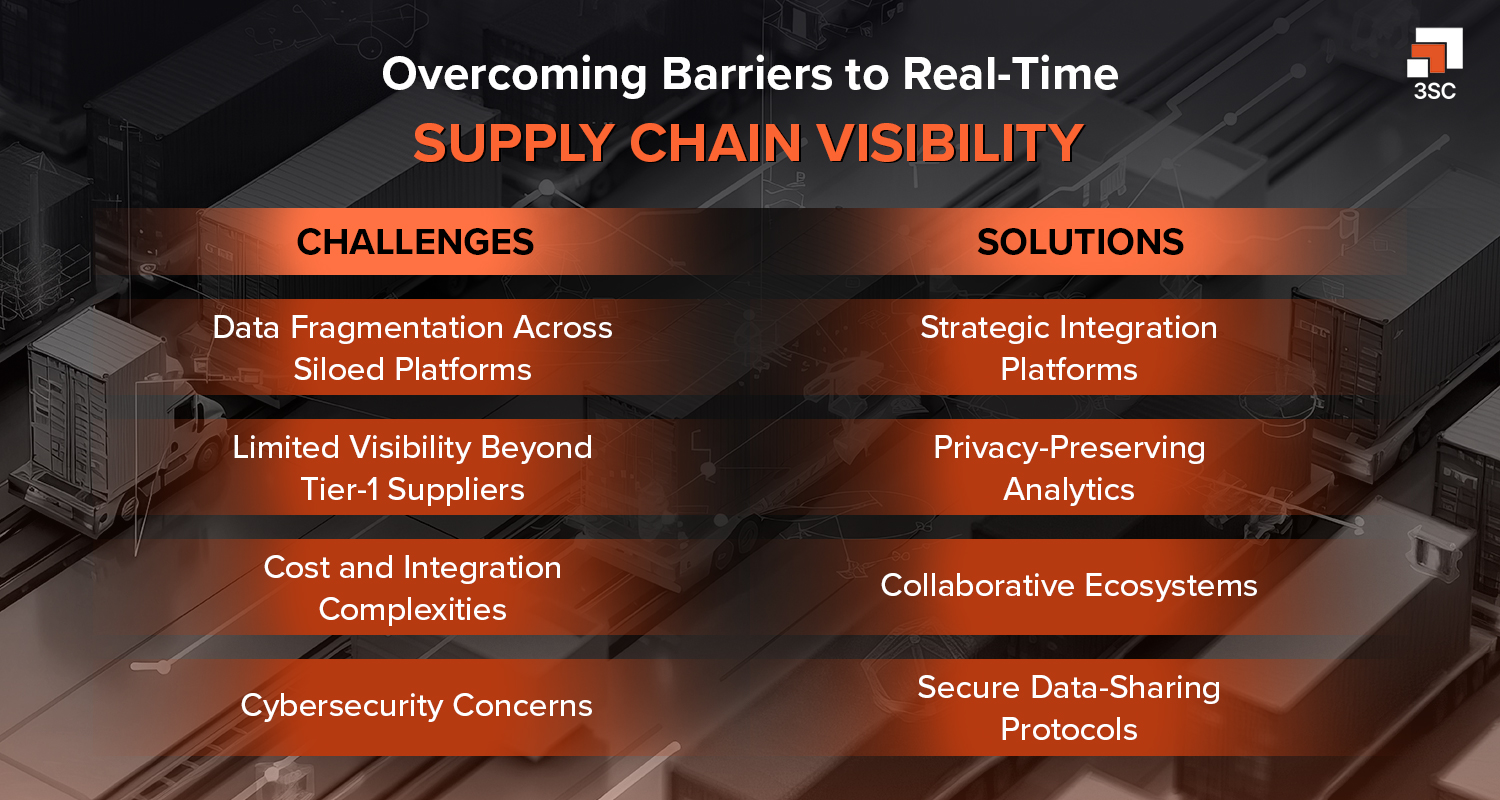
1. Data Fragmentation Across Siloed Platforms
Many organizations operate with disconnected systems, ERP, TMS, WMS, and supplier portals, that don’t communicate effectively. This results in delayed insights, inconsistent data, and operational blind spots, affecting up to 69% of supply chains lacking unified visibility.
Solution: Strategic Integration Platforms
Leading companies are deploying middleware and cloud-based control towers that consolidate all supply chain data into a unified, real-time dashboard. This eliminates silos and enables faster, cross-functional decision-making.
2. Limited Visibility Beyond Tier-1 Suppliers
Most Real-Time Visibility efforts focus on direct suppliers, leaving upstream (tier-2, tier-3) risks undetected. Smaller vendors may lack the digital infrastructure or trust needed to share data openly.
Solution: Privacy-Preserving Analytics
Innovative firms are leveraging federated learning and graph-based AI to uncover hidden supplier relationships and risks, without requiring direct data sharing. This protects confidentiality while expanding visibility.
3. Cost and Integration Complexities
Implementing real-time visibility, especially IoT devices, data infrastructure, and AI systems, requires substantial investment, which can be a barrier for mid-sized and resource-constrained businesses.
Solution: Collaborative Ecosystems
Forward-thinking organizations are building shared platforms with suppliers and logistics partners, setting joint KPIs and engaging in co-investment models. This spreads the cost, strengthens partnerships, and accelerates adoption across tiers.
4. Cybersecurity Concerns
As systems become more interconnected, the risk of cyber threats, particularly from third-party vendors, increases. Weak security in any node can compromise the entire network.
Solution: Secure Data-Sharing Protocols
Companies are adopting encrypted data exchange, blockchain frameworks, and zero-trust architectures to ensure that real-time data remains secure, compliant, and tamper-proof across the supply chain.
Overcoming visibility challenges requires more than just technology, it demands collaboration, trust, and strategic investment. By addressing data silos, upstream blind spots, and cybersecurity risks with the right tools and partnerships, companies can unlock true end-to-end insight. The result is a supply chain that’s not only connected, but also resilient and future ready.
Conclusion
Real-time visibility is not just a technology upgrade; it’s a competitive advantage in a world where uncertainty is constant and speed matters. As supply chains evolve from static structures to dynamic, responsive ecosystems, visibility becomes the foundation for synchronized operations, data-driven agility, and smarter collaboration across all tiers. The organizations that succeed will be those that move beyond isolated improvements and embrace visibility as an integrated, enterprise-wide capability, one that empowers every decision, mitigates every disruption, and drives long-term resilience and growth.
Recommended Read
- Supply Chain Trends 2026
- How to Modernize the Supply Chain?
- What is End-to-End Supply Chain Visibility?