Key Takeaways
- Even strong IBP plans can drift when supply chain disruptions hit execution.
- SKU proliferation and multi-channel demand are increasing planning complexity in F&B.
- S&OE keeps daily operations aligned with strategic IBP plans.
- Real-time visibility and analytics enable faster supply chain decisions.
- Combining IBP with S&OE creates a continuous planning and execution loop.
In 2026, supply chain leaders in the Food and Beverage (F&B) industry face a familiar frustration: even the best plans rarely hold up in reality.
On paper, planning is well-aligned. Demand forecasts, production plans, financial targets, and inventory strategies come together through mature Integrated Business Planning (IBP) processes, creating a unified view across teams.
But once execution begins, variability takes over. Demand shifts, promotions underperform or overdeliver, and supplier delays disrupt supply. Within weeks, even well-aligned plans begin to drift.
This isn’t new, but the pace of disruption is. With major disruptions occurring every few years, organizations have less time to recover and realign. This is where IBP and Sales & Operations Execution (S&OE) come together, bridging the gap between planning and execution.
Why the Gap Between Plan and Reality Is Growing
The F&B supply chain has always been complex, but evolving consumer expectations and structural shifts are widening the gap between planning and execution. Consumers now demand fresh, healthy, and highly personalized options across multiple channels, driving an explosion of SKUs with varying shelf-life constraints.
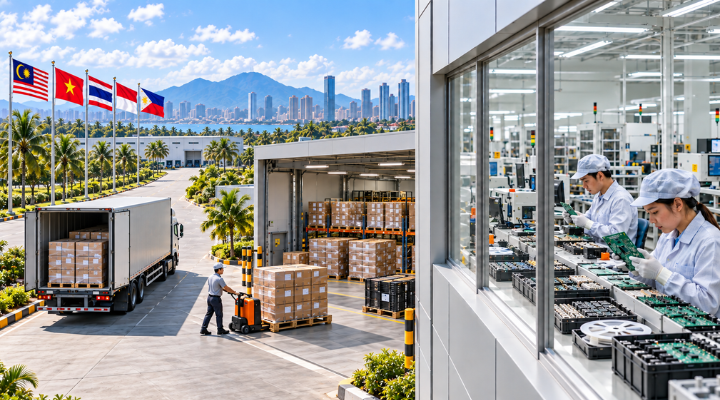
At the same time, supply chains have become more global and tightly interdependent. Even a simple beverage may rely on raw materials sourced from multiple countries, each exposed to geopolitical, climate, and regulatory risks, making supply variability harder to predict and manage.
As a result, complexity is no longer just operational, it directly impacts outcomes.
For F&B companies, this complexity comes with higher stakes. Short product lifecycles and perishable inventory mean even small deviations can quickly translate into stockouts, excess inventory, or waste, reflected in industry trends where nearly 73% of food and beverage companies report increased supply chain losses, and approximately 30% of food produced globally is lost or wasted.
This creates a fundamental mismatch between how supply chains are planned and how they operate.
The Strategic Foundation: Integrated Business Planning
Integrated Business Planning has transformed how organizations align strategic decisions. IBP connects demand forecasts, supply plans, financial targets, and strategic initiatives into a single, cross-functional plan, ensuring that marketing, capacity, and revenue decisions are synchronized before execution begins.
In the highly dynamic F&B sector, IBP serves as the strategic anchor. It provides the roadmap and long-term visibility needed to navigate market shifts and align the organization around a common direction.
However, IBP operates at a strategic horizon, typically with a monthly planning cadence. While this is essential for alignment, it also creates a gap when real-world conditions begin to change faster than plans can be updated.
To address this, organizations are increasingly extending IBP with an operational layer that can respond in real time, bridging the gap between long-term strategy and day-to-day execution.
S&OE: Driving Operational Precision
Sales & Operations Execution (S&OE) provides the operational layer that keeps strategy and execution synchronized. While IBP defines what the company intends to achieve, S&OE focuses on what must happen today to stay aligned with that plan.
S&OE operates at a shorter horizon, typically daily or weekly, and continuously evaluates whether current operations remain aligned with the IBP goals. When deviations occur, S&OE enables organizations to respond quickly:
- Demand Agility: If point-of-sale data signals a demand surge, production schedules can be adjusted before stockouts occur.
- Supply Resilience: If a supplier delay threatens production, planners can evaluate alternative sourcing or product substitutions immediately.
- Inventory Balance: If imbalances appear across distribution centres, shipments can be reallocated to maintain service levels.
By introducing a structured cadence for operational decision-making, S&OE ensures that small disruptions are addressed early, before they escalate into larger failures. Together, IBP and S&OE create a closed-loop system: IBP sets the direction, and S&OE keeps execution aligned in real time.
Feature | Integrated Business Planning (IBP) | Sales & Operations Execution (S&OE) |
Primary Horizon | 3–18 Months (Strategic/Tactical) | 0–12 Weeks (Operational) |
Granularity | Product Family / Aggregate | SKU / Location Level |
Focus | Financial Alignment & Capacity | Order Fulfilment & Service Levels |
Cadence | Quarterly | Weekly |
Building Resilience Through Faster Decisions
Resilience in F&B supply chains is not just about better plans; it’s about how quickly decisions can be made when conditions change. As disruptions become more frequent, organizations need a structured way to translate signals into timely, aligned actions.
This urgency is reflected in industry trends; F&B supply chains are nearly three times more likely to make operational decisions due to disruptions compared to other industries.
This is where the combined strength of IBP and S&OE becomes critical. While IBP provides the strategic direction, S&OE establishes the operating cadence that enables faster, cross-functional decision-making. By creating clear forums, ownership, and decision cycles, organizations can respond in a coordinated manner, ensuring execution stays aligned with the broader plan, even in dynamic conditions.
The Future: Toward Continuous Decision-Making
The line between planning and execution is no longer just blurring, it is being intentionally removed. Instead of operating as sequential layers, IBP and S&OE are evolving into a continuous loop, where strategy informs execution in near real time, and execution continuously feeds back into strategy.
This shift is being enabled by emerging technologies. AI-driven demand sensing, predictive risk models, and control tower platforms are reducing the time between signal, decision, and action, moving organizations away from periodic planning cycles.
As a result, the operating model itself is changing. The focus is no longer on tracking adherence to a plan, but on making the right decision in the moment.
Those that adopt continuous decision-making early will not only respond better to disruption but operate with greater stability in an increasingly unpredictable environment.
Conclusion
Food and beverage supply chains have always been complex. But in 2026, the pace of disruption, accelerating demand shifts, tighter supply interdependencies, and shrinking recovery windows, means that complexity now demands a faster response than traditional planning cycles can provide.
IBP remains the strategic foundation: aligning teams, setting direction, and ensuring financial and operational decisions move together. S&OE is what makes that strategy executable day to day, catching deviations early and keeping operations aligned before small gaps become costly failures. Together, they create the closed loop that modern F&B organisations need, one where strategy and execution are no longer separated by weeks, but continuously connected.
The gap between plan and reality will never fully close. But the organisations that invest in bridging it, with the right processes, cadences, and technologies, will be the ones that absorb disruption without losing ground. In an industry where margins are tight and the cost of misalignment is measured in waste and lost service, that capability is not just an advantage. It is a necessity.