Key Takeaways
- Industrial supply chain control must protect production, asset uptime, project timelines, and customer commitments, not just freight movement.
- Inbound visibility helps companies detect supplier and shipment risks before they disrupt plant operations.
- Strong supplier collaboration reduces delays, improves accountability, and gives teams clearer control over execution.
- MRO planning ensures critical spares, tools, and maintenance materials are available before uptime is affected.
- Control towers help industrial companies prioritize exceptions, coordinate decisions, and improve service, cost, and execution reliability.
Industrial supply chains run on tightly connected dependencies. A supplier delay, missing spare, late project cargo movement, or logistics exception can quickly affect production plans, asset uptime, customer commitments, and cost performance.
Industrial companies include manufacturers and asset-heavy businesses across sectors such as automotive, chemicals, engineering, energy, metals, machinery, infrastructure, and industrial equipment. Their supply chains often involve complex supplier networks, plant operations, maintenance requirements, and project-based logistics.
Yet many companies still manage these signals separately across procurement, plants, maintenance, logistics, and project teams. This makes it harder to identify risks early, understand their business impact, and coordinate the right response before disruption spreads.
Deloitte noted that the average lead time for production materials was 79 days in April 2024, still higher than the 2019 average of around 65 days. For industrial companies, longer lead times increase the need for earlier visibility, tighter supplier coordination, and faster exception management.
As manufacturers continue to face cost pressure, supplier uncertainty, and rising operational complexity, supply chain control needs to become more connected across suppliers, plants, logistics partners, maintenance teams, and project operations.
Control Starts Before the Material Reaches the Plant
Most industrial supply chain issues begin much before a truck reaches the plant gate or a vessel arrives at port. They begin when a supplier misses a production milestone, delays documentation, ships partial quantity, or fails to flag a capacity constraint early enough.
By that time, the shipment is already delayed and teams have fewer choices. The plant may have planned production around that material. Maintenance may have scheduled a shutdown around that spare. A project team may have aligned contractors, equipment, and site resources based on a delivery date that is no longer realistic.
This is why inbound visibility matters. It gives companies a clearer view of purchase order status, supplier readiness, dispatch timelines, shipment movement, expected arrival, and possible delays before they become operational disruptions.
More importantly, it connects those updates to business impact. A delayed shipment may be the raw material required for a batch, the spare needed for a planned outage, or the component holding up a project milestone. When teams can see that impact early, they can decide whether to expedite, resequence production, use alternate stock, shift maintenance work, or escalate the supplier.
Visibility is valuable only when it gives the business time to act.
Related read - End-to-End Supply Chain Visibility
Supplier Collaboration Needs to Move Beyond Follow-Ups
Once companies improve inbound visibility, they often find that delays are not caused by one major failure. They are caused by weak coordination across small but important milestones.
A supplier may confirm an order but delay production. Another may complete production but wait on inspection. A third may be ready to dispatch but struggle with documentation or pickup coordination. Across hundreds of orders, these gaps create uncertainty for plants and project teams.
Traditional follow-ups through emails, calls, and spreadsheets cannot manage this complexity for long. Supplier collaboration must become more structured, with clear updates on order milestones, commit dates, capacity constraints, dispatch readiness, quality clearance, and exceptions.
This gives procurement teams better visibility into which suppliers are reliable, which orders are slipping, and which risks need attention. Over time, it improves accountability, sourcing decisions, supplier partnerships, and operational resilience. Once supplier commitments become clearer, companies can connect them directly to plant-level priorities.
Plants Need Visibility They Can Actually Use
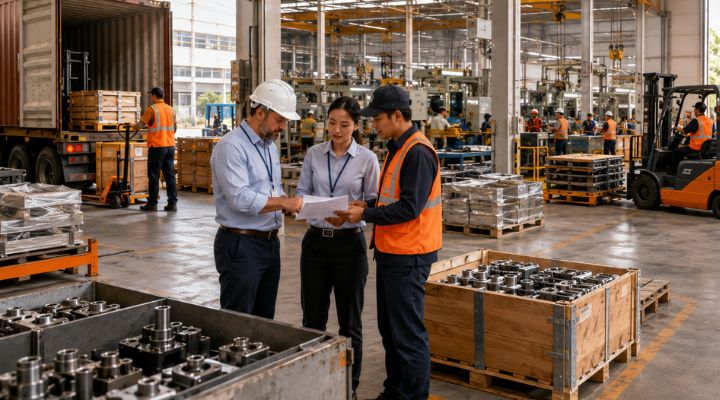
For plant teams, supply chain control is practical. It is about knowing whether the next shift can run, whether production needs to be resequenced, whether inventory can cover a delay, and whether customer orders can still be fulfilled.
The challenge is that supply chain information often sits in different places. Procurement may know the supplier status. Logistics may know the shipment status. Planning may know the inventory position. The plant may know the production risk. If these views are not connected, every exception becomes a coordination exercise.
A connected operating model helps plant teams understand supply risk in usable terms. If an inbound material is delayed, they should be able to see which production orders are affected, what alternate materials or inventory are available, and whether the schedule can be adjusted.
This also improves cost control. Earlier risk detection gives teams more options to avoid premium freight, emergency procurement, idle capacity, and overtime. Control is not only about protecting service. It is also about reducing the hidden costs of late decisions.
But production material is only one part of the industrial picture. The same discipline is needed for the parts and resources that keep assets running.
MRO Planning Protects Uptime
MRO stands for Maintenance, Repair, and Operations. It covers the spare parts, tools, consumables, and maintenance-related materials needed to keep plants, machines, and industrial assets running.
It may not always receive the same attention as production material, but its impact is just as critical. A missing spare can delay a planned shutdown, extend equipment downtime, or disrupt maintenance even when the team, asset, and schedule are ready.
Good MRO planning is not about stocking everything. It is about knowing which assets are critical, which spares are essential, which parts have long lead times, and which maintenance activities carry the highest operational risk if material is unavailable.
When MRO planning is connected with supplier visibility, inventory, maintenance schedules, and logistics, companies can move from emergency buying to planned readiness. They can identify shortages before shutdown windows, reallocate parts between sites, prioritize critical assets, and reduce downtime risk.
As industrial companies invest in smart manufacturing and advanced equipment, uptime becomes even more valuable. Waiting for a spare is no longer just a maintenance issue. It can affect throughput, safety, service levels, and customer commitments.
Project Cargo Requires Stronger Execution Governance
Industrial projects often involve complex cargo movements: heavy equipment, large machinery, oversized components, engineered items, and site-critical materials. These shipments are different from routine freight because they involve more stakeholders, more dependencies, and less room for delay.
A project cargo movement may require special permits, port coordination, route planning, handling equipment, customs documentation, site readiness, and installation planning. If one milestone slips, the impact can spread quickly. Contractors may wait. Commissioning may move. Customer timelines may be affected. Costs may increase without showing up immediately as a logistics problem.
This is why project cargo needs stronger governance. Companies need visibility across the full journey, from supplier readiness and inspection to dispatch, port movement, customs clearance, inland transportation, and final site delivery. They also need to connect each milestone to the project schedule so that delays are understood in business terms.
Without this connection, project teams often depend on manual coordination and individual experience. That may work when the network is small, but it becomes risky when projects scale or when experienced people are stretched across multiple priorities.
A governed execution model creates structure. It helps teams identify which milestones are at risk, who needs to act, what decisions require approval, and how delays should be managed before they affect the larger project plan.
This is where a control tower becomes the connecting layer.
How a Control Tower can turn Exceptions into Decisions
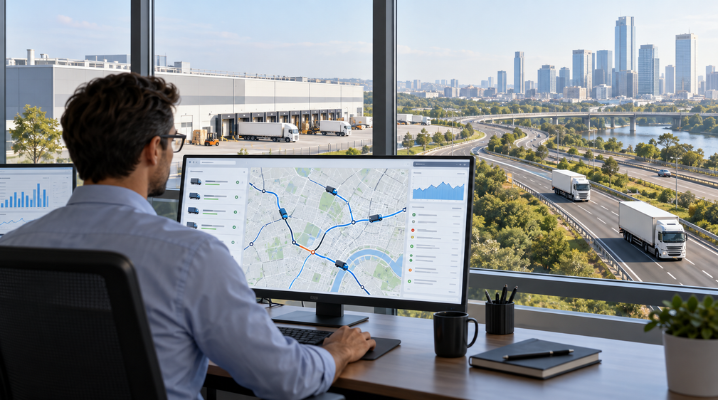
A supply chain control tower should not be just a screen that shows where shipments are. For industrial companies, it should help teams answer the questions that matter during execution:
- What is delayed, short-shipped, blocked, or at risk?
- Which plant, asset, production order, project milestone, or customer commitment will be affected?
- Can the risk be absorbed through available inventory, alternate stock, or schedule changes?
- Does the issue require supplier escalation, premium freight, production resequencing, or leadership approval?
- Who owns the next action, and how quickly does the decision need to be taken?
The real value of a control tower is prioritization. Not every delay has the same business impact. Some delays can be absorbed. Others affect production, maintenance, project timelines, or customer delivery. A strong control tower separates routine delays from business-critical risks. It connects exceptions to service, cost, production, maintenance, and project impact. It also improves governance by making decisions more traceable, so teams can see what happened, who acted, what option was chosen, and what outcome followed.
As agentic AI becomes more relevant in manufacturing and supply chain operations, this layer can become even more powerful. AI agents can monitor risk signals, assess potential impact, recommend alternatives, and initiate workflows with human approval.
But the foundation still matters. Without connected data, clear processes, and trusted governance, even advanced technology becomes another disconnected layer. The control tower works best when it becomes part of how the business runs every day, not just a dashboard used during escalations.
CSCO Lens: Turning Control into Business Performance
For CSCOs and supply chain leaders, industrial supply chain control is not only about tracking material movement. It is about protecting production continuity, asset uptime, working capital, project delivery, and customer commitments through faster, better-governed decisions.
This requires leaders to connect operational signals with business KPIs. Supplier OTIF, PO milestone adherence, material availability for production, MRO stockout rate, downtime due to material unavailability, premium freight cost, inventory turns, project milestone adherence, and exception closure time can all show whether the supply chain is becoming more reliable, responsive, and cost disciplined.
A stronger control model should also define clear exception rules, impact scoring, decision ownership, escalation paths, SLA-based response times, and an audit trail of decisions. Over time, closed-loop learning from recurring supplier delays, logistics issues, and past disruptions can help companies improve both planning and execution reliability.
Building Control Across the Industrial Network
Industrial supply chains are not disrupted by isolated events alone. Supplier delays, logistics constraints, inventory gaps, maintenance risks, and project dependencies now affect each other more directly.
This makes supply chain control a network-wide capability. Suppliers, plants, maintenance teams, project cargo teams, logistics partners, and decision-makers need to work from a shared understanding of priorities, risks, and required actions.
Modern industrial supply chain control is not about removing every disruption. It is about reducing surprises, improving response speed, protecting uptime, strengthening cost discipline, and making execution more reliable across the industrial network.
Build Stronger Supply Chain Control with 3SC
3SC helps industrial companies connect inbound visibility, supplier collaboration, MRO planning, and control tower governance in one operating view, enabling teams to detect risks earlier and act faster. With 3SC, businesses can reduce surprises, protect uptime, improve cost control, and drive reliable execution across suppliers, plants, and logistics partners.