Key Takeaways
- Freight settlement reconciles freight bills, verifies charges, and ensures timely carrier payments.
- A smooth process reduces disputes, builds carrier trust, and boosts logistics efficiency.
- Systems auto-generate freight bills post-delivery, reducing manual effort and errors.
- Bills are verified, submitted, and approved digitally, speeding workflow and reducing delays.
- Records are securely stored for access, audits, and better cost control.
Freight settlement has traditionally been a tedious, manual, and error-prone process, heavily reliant on paperwork, scattered email threads, and manual data reconciliation. These outdated methods often resulted in billing delays, charge disputes, and operational inefficiencies that strained logistics operations. However, with the advent of automation and digital platforms, the freight settlement process has undergone a significant transformation becoming faster, more accurate, and far more transparent. A streamlined, tech-enabled approach not only reduces errors and accelerates payments but also fosters trust and stronger collaboration between shippers and carriers, which is critical for long-term logistics success.
How Freight Settlement Process Works?
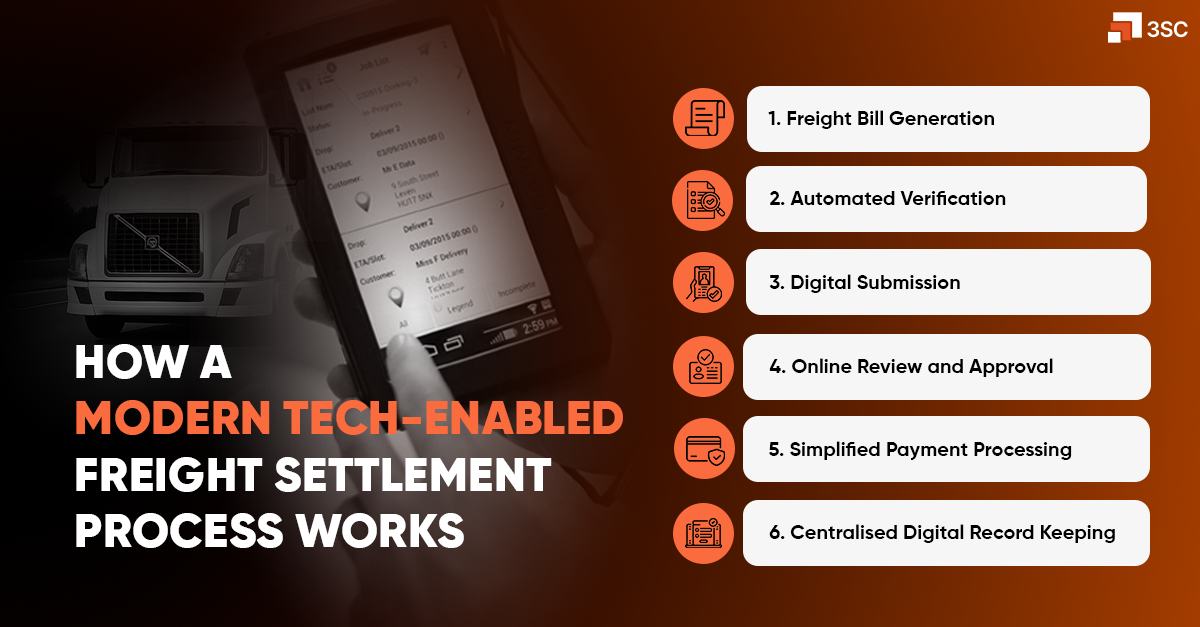
- Freight Bill Generation
- Automated Verification
- Digital Submission
- Online Review and Approval
- Simplified Payment Processing
- Centralised Digital Record Keeping
Here’s how a modern, tech-enabled freight settlement process works:
1. Freight Bill Generation
After a delivery is completed, the system automatically triggers the creation of a comprehensive freight bill. This bill includes all critical shipment data such as origin and destination, route details, vehicle type, load specifics, service levels, applicable tariffs, fuel surcharges, and any additional fees. The automated generation process not only speeds up billing but also ensures data accuracy by pulling information directly from the transportation management system (TMS) or delivery confirmation logs. By eliminating the need for manual data entry, companies significantly reduce the risk of human error and billing discrepancies, laying a solid foundation for a reliable settlement process.
2. Automated Verification
Once the freight bill is generated, it is immediately validated through an automated matching process. The system compares the billed charges against pre-defined contractual rates, agreed service terms, shipment documents (like the electronic proof of delivery), and accessorial charges. Any inconsistencies such as incorrect rates, double charges, or unauthorised add-ons are automatically flagged for review. This intelligent verification mechanism helps identify issues early, prevents overpayment, and reduces the time spent on manual audits. It enhances control over freight spending and increases confidence in the billing accuracy.
3. Digital Submission
Following verification, the freight bill is digitally submitted to the shipper via a secure, integrated platform. This eliminates the dependency on manual communication methods such as email chains, postal invoices, or spreadsheets. With digital submission, all stakeholders receive billing information in real-time, improving the speed and reliability of the process. The structured data format ensures completeness and consistency, reducing the back-and-forth typically associated with missing or incorrect information. It also enables quick routing of invoices to the right departments for review or approval.
4. Online Review and Approval
The submitted bill becomes immediately accessible on a centralised platform where shippers can review all relevant cost components and shipment details. Line-item visibility, supporting documents, and audit trails are provided for full transparency. Any discrepancies or queries can be addressed directly within the platform through built-in communication or commenting tools, eliminating the inefficiencies of scattered coordination. The centralised system ensures that approvals are streamlined, traceable, and governed by proper workflows, reducing delays and minimising administrative overhead.
Related read - Freight Settlement Challenges and Solutions
5. Simplified Payment Processing
Once a bill is approved, the system automatically initiates payment scheduling according to the agreed payment terms whether it's 15, 30, or 45 days. Integrated with financial systems, the platform supports automated payment triggers, reminders, and status tracking. This eliminates the need for manual follow-ups or spreadsheet-based tracking of due dates. Carriers receive payments on time, improving their cash flow and strengthening trust in the shipper relationship. For shippers, it enhances financial predictability and reduces the risk of late-payment penalties or strained carrier partnerships.
6. Centralised Digital Record Keeping
Every document and transaction from freight bills to approvals, disputes, and payments is stored securely in a centralised digital repository. This enables easy access for audits, compliance checks, and financial analysis at any time. Historical records can be searched and retrieved instantly, supporting detailed cost reviews, trend analysis, and supplier performance evaluations. The centralised system improves transparency, reduces the risk of data loss, and helps organisations meet regulatory and internal governance requirements with ease.
With centralised digital record keeping completing the loop, the freight settlement process becomes not just efficient, but fully transparent and audit-ready, setting the stage for broader strategic gains across the supply chain.
Conclusion
In today’s fast-paced supply chain environment, freight settlement has become a strategic enabler rather than just a back-office task. By embracing automation and centralised digital platforms, companies can eliminate manual bottlenecks, minimise disputes, and ensure timely, accurate payments. More importantly, it lays the foundation for stronger shipper-carrier relationships, built on trust, transparency, and accountability. As logistics continues to evolve, modernising freight settlement is a key step toward building a more resilient and agile supply chain.
Simplify Freight Bill Audits with 3SC
Transform your logistics operations with 3SC’s Freight Bill Audit (FBA) platform. Automate audits, resolve discrepancies effortlessly, and gain complete visibility into freight costs. Save time, reduce errors, and optimise spend with an end-to-end solution designed for accuracy and efficiency. Start your journey toward smarter, cost-effective logistics with 3SC. Connect with us today.