Southeast Asia's chemical industry is creating new opportunities for growth, but it is also making cross-border supply chains more complex. As regional manufacturing expands, supply chain leaders need connected planning, customs readiness, inventory visibility, resilient logistics networks, and stronger governance to execute consistently across multiple countries. Companies that combine these capabilities with an integrated control tower will be better positioned to reduce disruption, improve compliance, and support long-term regional growth.
Key Takeaways
- Southeast Asia has become a strategic operating region rather than simply an alternative sourcing location.
- China+1 is creating more regional supply chains, not necessarily simpler ones.
- Supply chain performance now depends on network design as much as manufacturing capacity.
- Cross-border execution requires integrated planning, customs governance, inventory strategy, and partner coordination.
- The strongest chemical supply chains will be those built around governed decision-making rather than reactive execution.
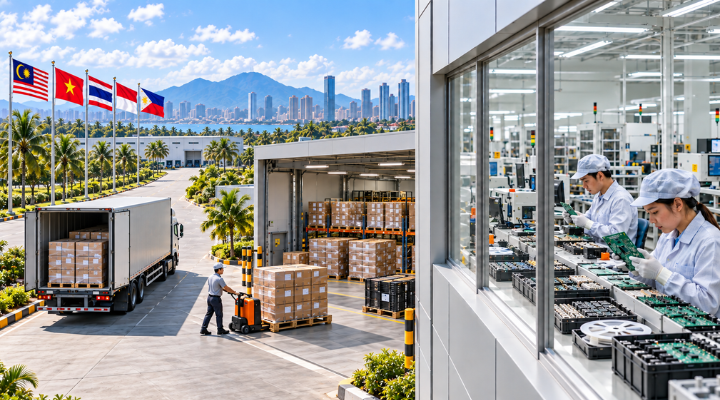
Southeast Asia is no longer just an alternative manufacturing location. It is becoming a strategic operating region for chemical producers as companies diversify beyond China while staying connected to Asian supply networks. Investment is accelerating across Vietnam, Malaysia, Thailand, Indonesia, and Singapore, creating new opportunities for specialty chemicals, industrial materials, packaging inputs, polymers, coatings, and process chemicals.
The shift is already reflected in investment trends. ASEAN attracted US$226 billion in foreign direct investment in 2024, with manufacturing investment rising nearly 150% to US$44 billion, reinforcing the region's growing role in global industrial supply chains.
For supply chain leaders, however, expansion creates a different challenge. The question is no longer where growth will occur. It is how to build a regional operating model that can move products across multiple countries while maintaining cost control, compliance, inventory visibility, and customer service.
As China+1 evolves, competitive advantage will depend less on adding suppliers or warehouses and more on making the right network decisions.
China +1 Is Changing More Than Manufacturing
China +1 is often discussed as a manufacturing strategy, but for chemical companies it fundamentally changes how supply chains operate.
Unlike many industries, chemical production rarely moves entirely from one country to another. China continues to supply critical feedstocks, intermediates, and finished materials, while Southeast Asia increasingly supports blending, packaging, contract manufacturing, regional distribution, and downstream processing.
This creates hybrid supply networks where materials may originate in China, undergo additional processing in Southeast Asia, and then move to customers across ASEAN, India, Europe, or North America.
Every additional production node introduces new customs processes, documentation requirements, transportation handoffs, storage decisions, regulatory obligations, and operational dependencies.
The question therefore shifts from "Where should we manufacture?" to "How should the network operate?"
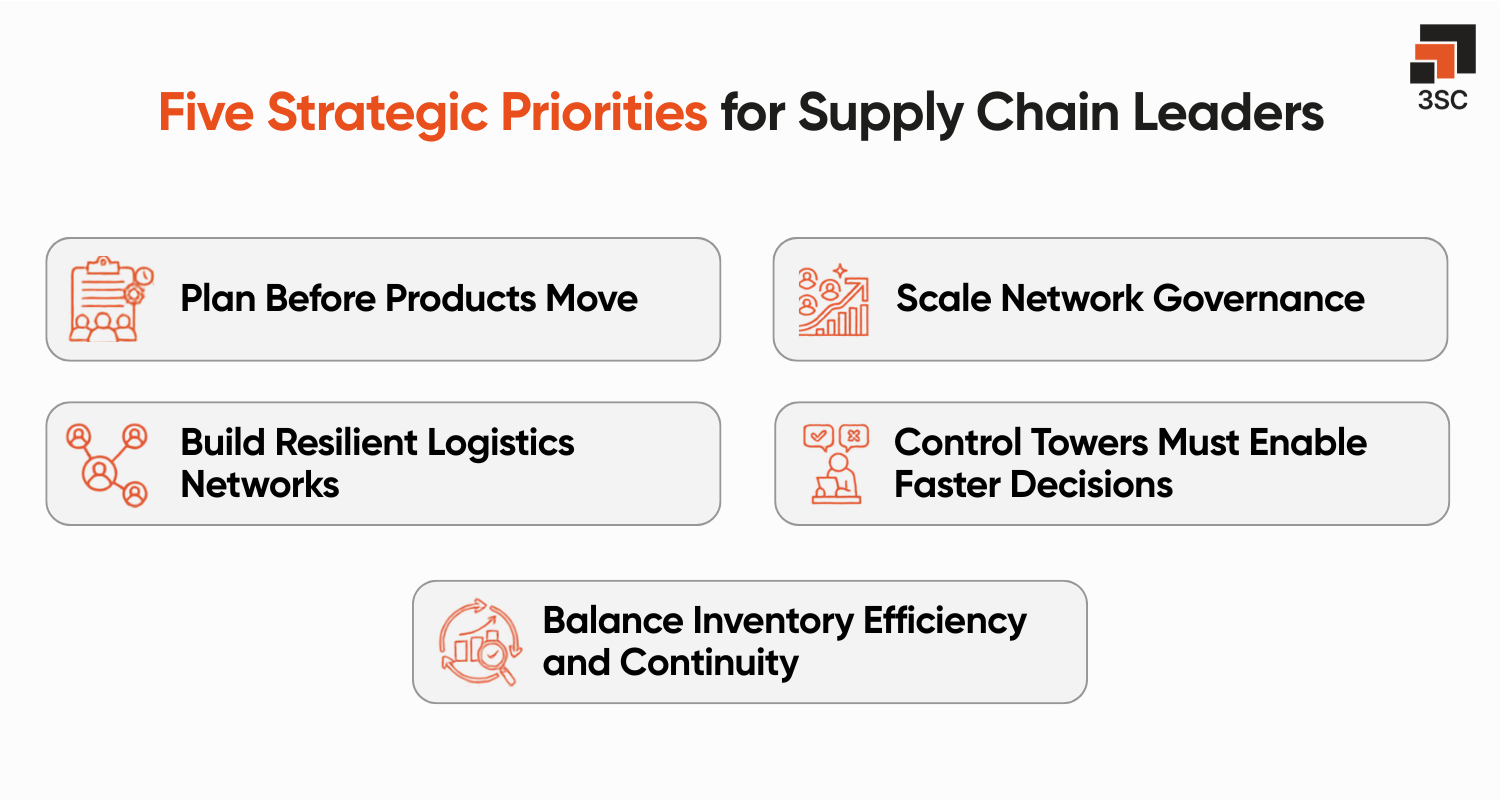
That requires supply chain leaders to rethink five critical decisions.
The Five Strategic Decisions Supply Chain Leaders Must Make
As Southeast Asia becomes a more integral part of global chemical supply chains, success will depend less on expanding the regional footprint and more on designing an operating model that can execute consistently across multiple markets. These five strategic decisions will shape cost, service, resilience, and long-term competitiveness.
1. Plan Before Products Move
Once organisations establish their regional manufacturing footprint, the next challenge is ensuring products move across borders without creating delays, unexpected costs, or compliance risks. In chemical supply chains, these issues rarely begin at customs—they originate much earlier during planning.
Every shipment depends on accurate product classifications, rules of origin, hazardous goods documentation, import permits, safety data sheets, and country-specific regulatory approvals. When these requirements are managed only after production is complete or transportation has been booked, even small documentation errors can disrupt production schedules, increase landed costs, and affect customer commitments across multiple markets.
Cross-border planning therefore needs to connect sourcing decisions, trade compliance, documentation governance, and transportation planning into a single process rather than treating them as separate activities.
Measure to Monitor | Why It Matters |
|---|---|
First-Pass Customs Clearance | Measures border efficiency by tracking shipments cleared without additional inspections or rework. |
Documentation Accuracy | Ensures compliance readiness by minimizing documentation errors and customs delays. |
Customs Holds | Indicates clearance performance and highlights bottlenecks in the customs process. |
Duty Variance | Helps control landed costs by identifying unexpected duty or tax fluctuations. |
However, moving products efficiently is only one part of the equation. As companies expand across Southeast Asia, they must also decide where inventory should be positioned so that regional growth improves service without creating unnecessary working capital or storage costs.
2. Balance Inventory Efficiency and Continuity
Inventory decisions become significantly more complex once supply chains operate across multiple countries. Consolidating inventory into regional hubs may reduce working capital and simplify replenishment, but it can also increase recovery time when ports, transportation corridors, or border crossings are disrupted. Conversely, holding inventory closer to demand improves responsiveness while increasing inventory carrying costs and specialised storage requirements.
For chemical companies, inventory planning cannot be separated from storage strategy. Hazardous materials, temperature-sensitive products, specialised tanks, licensed facilities, and product segregation requirements all influence where inventory can realistically be positioned. The objective is not simply to minimise inventory levels, it is to place inventory where it protects customer service while balancing resilience, compliance, and cost.
Every strategic trade-off has operational consequences. Lower inventory improves working capital but increases disruption exposure. Regional consolidation drives efficiency but extends recovery time during disruptions. Local buffering strengthens resilience at the cost of higher licensed-storage expenses, while bulk storage improves efficiency but creates stricter product segregation requirements.
Measure to Monitor | Why It Matters |
|---|---|
Days of Supply | Measures inventory efficiency by showing how long current inventory can meet demand. |
Stock-out Frequency | Tracks service continuity by monitoring how often products become unavailable. |
Expiry Exposure | Assesses inventory quality by identifying products at risk of expiring before use or sale. |
Licensed-Storage Utilisation | Measures storage optimisation by tracking the effective use of licensed warehouse capacity. |
Even the most effective inventory strategy depends on how reliably products move between manufacturing sites, storage locations, and customers. That makes logistics resilience and partner performance equally important in supporting regional operations.
3. Build Resilient Logistics Networks
Regional resilience depends on more than transportation capacity. It requires qualified logistics corridors, alternate gateways, trusted partners, and consistent governance across freight forwarders, customs brokers, warehouse providers, and transport operators to maintain reliable execution under changing condition
As regional supply chains become more interconnected, organisations become increasingly dependent on logistics providers, customs brokers, warehouse operators, tank terminals, and transportation partners. At the same time, differences in infrastructure, border procedures, regulatory environments, and port capacity across Southeast Asia introduce varying levels of operational risk.
Building resilience therefore requires more than selecting the lowest-cost transportation provider. Organisations need qualified alternative corridors, secondary ports, backup logistics partners, and additional storage options that allow operations to continue when disruptions occur. At the same time, consistent governance across logistics partners helps ensure that safety, compliance, service quality, and reporting standards remain aligned throughout the regional network.
Measure to Monitor | Why It Matters |
|---|---|
OTIF | Measures customer service performance by tracking on-time, in-full order deliveries. |
Border Dwell Time | Evaluates cross-border efficiency by measuring the time shipments spend at border checkpoints. |
Demurrage Costs | Indicates logistics performance by tracking costs incurred due to shipment or container delays. |
Temperature Excursions | Protects product integrity by monitoring deviations from required temperature ranges. |
Backup Capacity | Measures network resilience by ensuring alternative logistics capacity is available during disruptions. |
Even with resilient logistics networks, disruptions cannot always be prevented. What ultimately differentiates high-performing supply chains is how quickly they identify issues, coordinate responses, and make informed decisions before customer service is affected.
4. Control Towers Must Enable Faster Decisions
As chemical supply chains expand across Southeast Asia, disruptions in one country can quickly affect inventory availability, production schedules, transportation capacity, and customer commitments elsewhere. Managing these interconnected operations requires more than visibility into shipment status, it requires the ability to understand business impact and respond before problems escalate.
Modern control towers should therefore connect planning, logistics, inventory, customs, compliance, and partner performance into a single operating view. By combining real-time visibility with standardised workflows, exception management, and clearly defined ownership, organisations can prioritise the issues that matter most and reduce the time between identifying a disruption and taking corrective action.
Measure to Monitor | Why It Matters |
|---|---|
Time to Detect | Enables early risk identification by measuring how quickly disruptions or exceptions are detected. |
Time to Decide | Measures decision responsiveness by tracking how fast teams evaluate and act on emerging issues. |
Exception Ageing | Supports operational discipline by monitoring how long unresolved exceptions remain open. |
Recovery Time | Measures supply chain resilience by tracking the time required to restore normal operations after a disruption. |
Technology alone, however, cannot deliver consistent execution. As regional operations grow, organisations also need governance models that define how decisions are made, who owns them, and how performance is measured across countries and partners.
5. Scale Network Governance
As organisations expand across Southeast Asia, governance becomes the foundation for consistent execution. Without common operating standards, decision rights, and performance expectations, individual markets often respond differently to the same operational challenges, creating inconsistent service, higher costs, and greater compliance risk.
Regional governance should establish standard processes across planning, customs, logistics, inventory management, and partner operations while ensuring every stakeholder works with the same data, service definitions, and escalation procedures. This creates a more predictable operating model that can support regional growth without increasing operational complexity.
Measure to Monitor | Why It Matters |
|---|---|
Compliance Adherence | Ensures regulatory consistency by tracking adherence to applicable laws, standards, and policies. |
Partner Performance | Measures service reliability by evaluating supplier and logistics partner performance against agreed SLAs. |
Process Standardisation | Promotes operational consistency by ensuring standardized processes across locations and teams. |
Business Continuity Readiness | Strengthens regional resilience by assessing preparedness for disruptions and recovery scenarios. |
With these foundations in place, organisations are better positioned to manage increasingly complex regional supply chains while responding faster to market changes, regulatory requirements, and customer expectations.
Looking Beyond 2026
Southeast Asia will continue to strengthen its role in global chemical supply chains as manufacturing diversification and regional trade accelerate. At the same time, according to a 2025 industry outlook forecasts 2.4% global chemical production growth in 2026, while highlighting continued geopolitical uncertainty, shifting trade policies, and uneven regional demand. This means supply chain performance will increasingly depend on operational execution rather than production capacity alone.
For supply chain leaders, China+1 is no longer just a sourcing strategy, it is a regional operating model. Organisations that connect network design, cross-border planning, inventory strategy, logistics resilience, and execution governance will be better positioned to build resilient, compliant, and competitive chemical supply chains across Southeast Asia.
3SC helps chemical companies strengthen cross-border supply chain execution across Southeast Asia by connecting planning, logistics, inventory, compliance, and partner performance within a unified operating view. With early visibility into shipment risks, documentation gaps, customs readiness, inventory constraints, and operational exceptions, teams can prioritise issues before they affect production or customer commitments, enabling more predictable, compliant, and resilient regional operations.